

 Find a book


Title
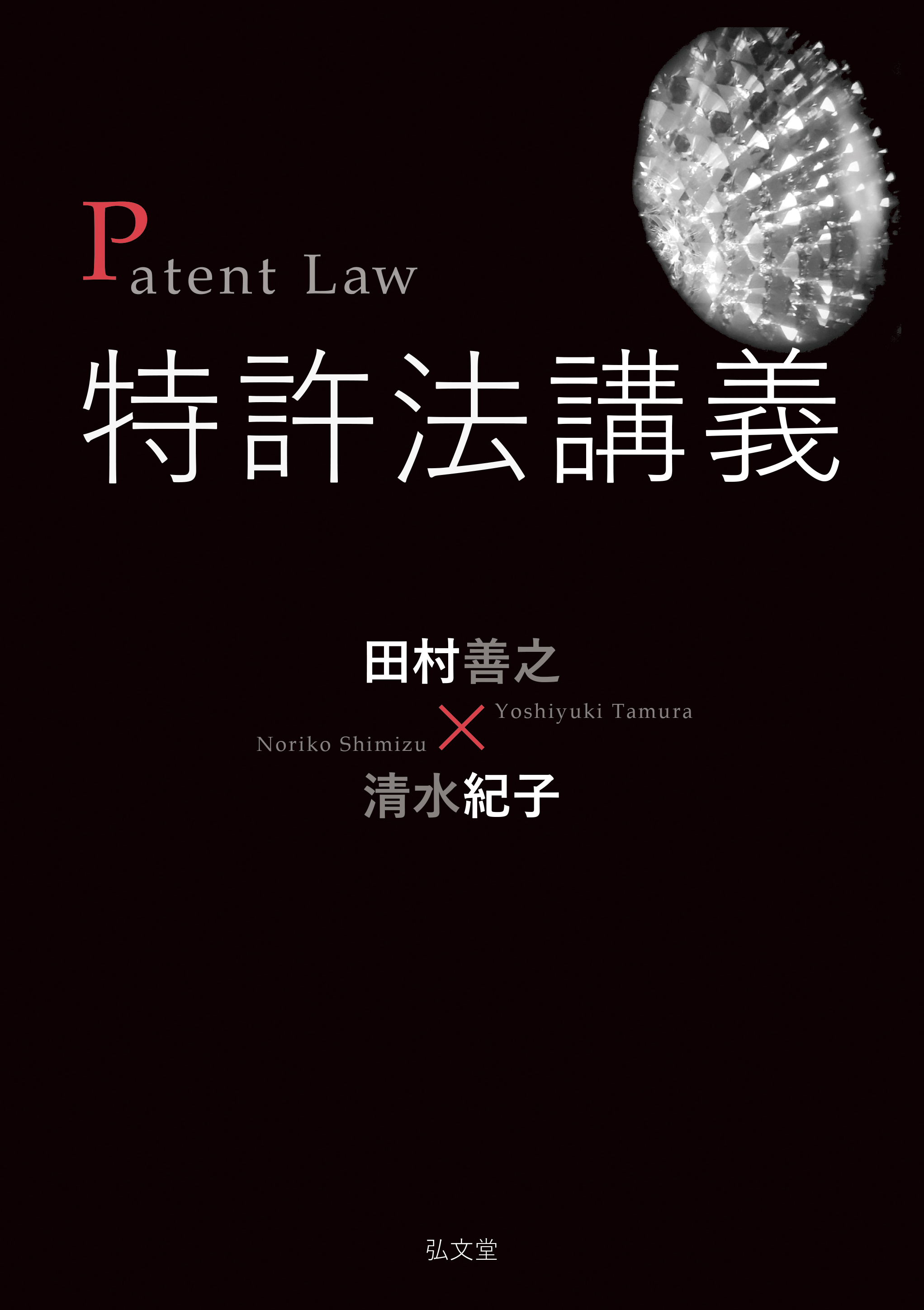
Tokkyo Ho Kougi (Lecture on Patent Law)
Size
496 pages, A5 format, softcover
Language
Japanese
Released
April 11, 2024
ISBN
978-4-335-35963-7
Published by
Koubundou
Book Info
See Book Availability at Library
Japanese Page
 eBook
eBook
This book's features can be summarized in the following five points.
First, this is a patent law textbook written in colloquial language, based on recordings of patent law lectures held for the law school and graduate school at the University of Tokyo Graduate Schools for Law and Politics. In oral classes and lectures, I rely on rapid speech and slides to convey the amount of information, adding words while keeping an eye on the audience's reactions. This avoids the drawback of over-packing that often plagues my writing. On the other hand, co-author Noriko Shimizu, Lecturer at Sapporo Medical University, has attempted to resolve issues such as redundancy that often accompany colloquial language.
Second, while some parts were omitted in class due to time constraints, basic knowledge that would be beneficial for use as a textbook has been added in a colloquial style. As a result, although this book is a transcript of a lecture written in colloquial language, I believe the amount of information contained therein is comparable to that of a standard textbook written in literary language.
Third, on the other hand, I have endeavored to describe the progress of my research as much as possible. Of course, this book's primary goal is to be a colloquial textbook, and it refrains from delving into detailed issues. However, the level has not been compromised. By incorporating as much of my recent research as possible, the resulting content is something I could never have written 10 years ago.
Fourth, I focused on a systematic structure. To understand patent law, a complex web of diverse systems, it is essential to have a bird's-eye view of the whole. To achieve this, I believe that patent law should be systematized and explained as simply and functionally as possible. As a result, after explaining the significance of the patent system in Chapter 1, Chapter 2 explains the patent requirements subject to patent examination, and Chapter 3 explains the application and examination procedures. Chapter 4 discusses the battle over infringement. It begins with a list of the main arguments of the attacking patent holder, focusing on infringement lawsuits. Next, I discuss the alleged infringer's defenses. After that, I discuss invalidation trials and other defensive measures outside of infringement lawsuits. Finally, I discuss the effects of infringement. Chapter 5 then moves on to the economic use of patent rights, which have thus been artificially established for actions that were originally free. It begins with an explanation of inventors and employee inventions as issues of original ownership, before moving on to issues such as licenses. The final chapter, Chapter 6, deals with international aspects.
Fifth, this book delves into technical matters where appropriate. Simply using abstract terms like "inventions" and "allegedly infringing items" can make it difficult to grasp the actual issues and how they are addressed. My approach to teaching is that a certain level of technical understanding is also necessary for a grounded discussion. As a result, this book includes a wide variety of examples, ranging from traditional machine tools and chemical products to IoT and biotechnology.
(Written by TAMURA Yoshiyuki, Professor, Graduate Schools for Law and Politics / 2025)
Related Info
Review:
Kohsuke Tanaka (Intellectual Property Law and Policy, Vol. 69, 1-6 December 2024)
http://hdl.handle.net/2115/93516