

 Find a book


Title
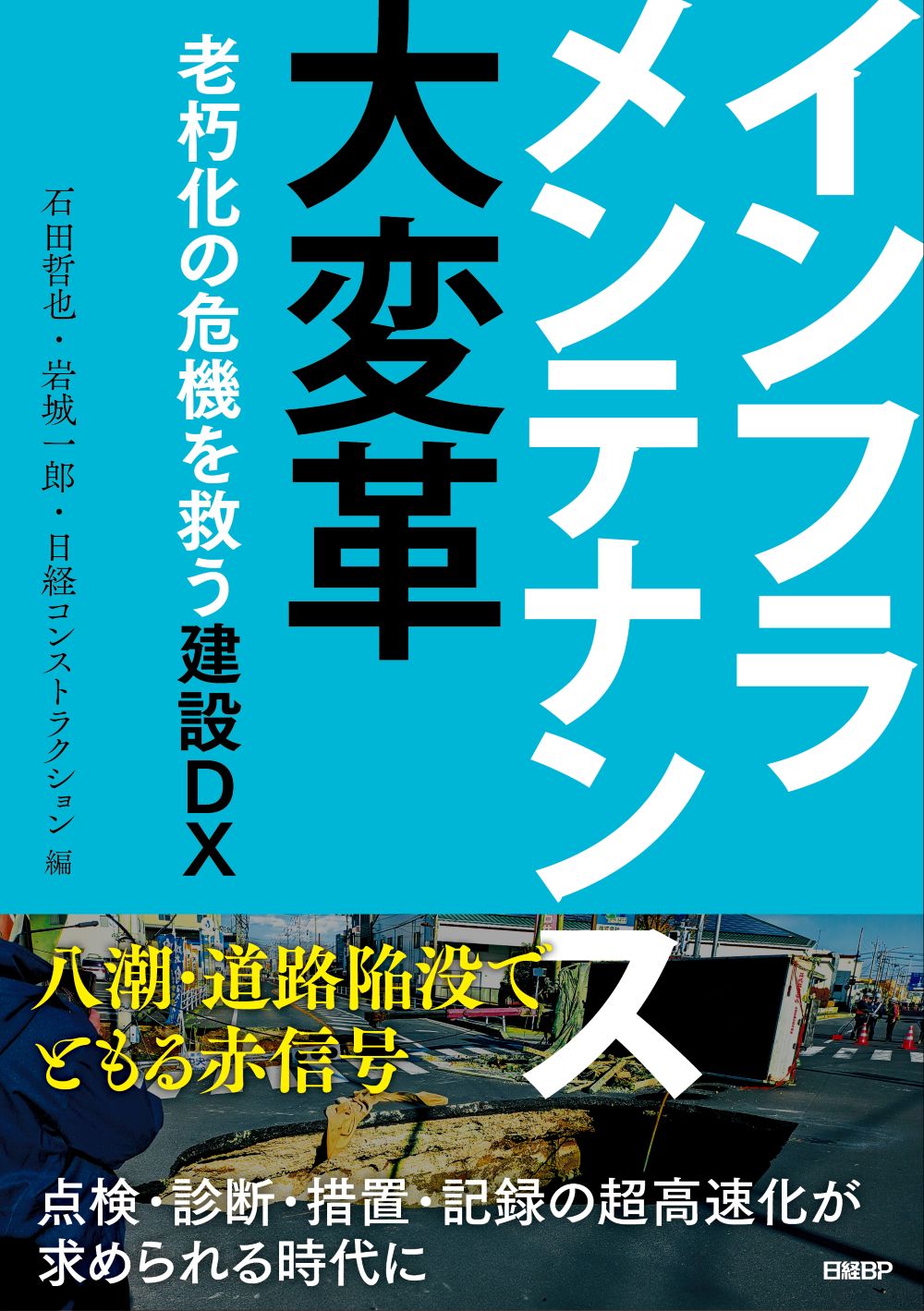
Infra-maintenance Dai henkaku (Infrastructure Maintenance Transformation: Construction DX to Save Aging Infrastructure)
Size
320 pages, A5 format
Language
Japanese
Released
April 21, 2025
ISBN
9784296207848
Published by
Nikkei BP
Book Info
See Book Availability at Library
Japanese Page
Bridges, tunnels, water supply and sewer systems—these pieces of infrastructure are so deeply embedded in our daily lives that we rarely notice them. Yet when a failure occurs, our normal routines and economic activities can be instantly disrupted. The large-scale road collapse in Yashio City, Saitama Prefecture, in January 2025 was a stark reminder of this reality. A vast amount of infrastructure built during Japan’s period of rapid economic growth is now more than 50 years old, and deterioration is quietly but steadily advancing. With mounting fiscal constraints and a shortage of skilled labor, keeping infrastructure in sound condition has become one of the most critical challenges for sustaining society.
This book documents efforts to tackle that challenge. Specifically, it draws on the activities of a national research initiative under the Cross-ministerial Strategic Innovation Promotion Program (SIP), launched by the Cabinet Office of Japan. SIP is a framework that brings together knowledge from universities, government, industry, and start-up companies to address pressing social issues. In the “Smart Infrastructure Management System” project introduced here, diverse partners are working together in an All-Japan framework to put advanced technologies into practice. The process of social implementation is never straightforward: from building a shared vision to applying methods in the field, from technical validation to institutional and regulatory reform, it involves continuous trial and error. Through these experiences, readers can see how university-based research connects with society at large.
Infrastructure maintenance is often associated with the “three Ds”: dirty, difficult, and dangerous. This book presents a different vision—transforming it into the “three Cs”: Cool, Creative, and Challenging. By making full use of digital technologies, we aim to approach problems in innovative ways that are not only effective but also inspiring. For example, we adopt a “sandbox” approach—establishing controlled testing environments where emerging technologies can be thoroughly validated, refined, and improved. This iterative process builds the foundation for full-scale implementation, shifting infrastructure maintenance from routine work to a dynamic, forward-looking activity.
The message is clear: infrastructure is a national asset, and maintaining it is not merely a cost but an investment in the future. Well-maintained infrastructure strengthens economic sustainability, enhances quality of life, and secures a safer and more resilient society. Far from being a mundane task, infrastructure maintenance is a dynamic endeavor that carries the power to shape our collective future.
For students aspiring to study civil and infrastructure engineering, this book offers a glimpse into how research and practice can transform society. I hope it will inspire readers to see infrastructure maintenance as not only essential, but also exciting—and perhaps to join in the new projects and collaborations that will shape the infrastructure of tomorrow.
(Written by ISHIDA Tetsuya, Professor, School of Engineering / 2025)
Related Info
Addressing Challenges in Social Infrastructure
Innovation of Printing Construction (NHK WORLD JAPAN Nov 14, 2025)
https://biz.jibtv.com/programs/addressing_challenges_in_social_infrastructure/