

 Find a book


Title
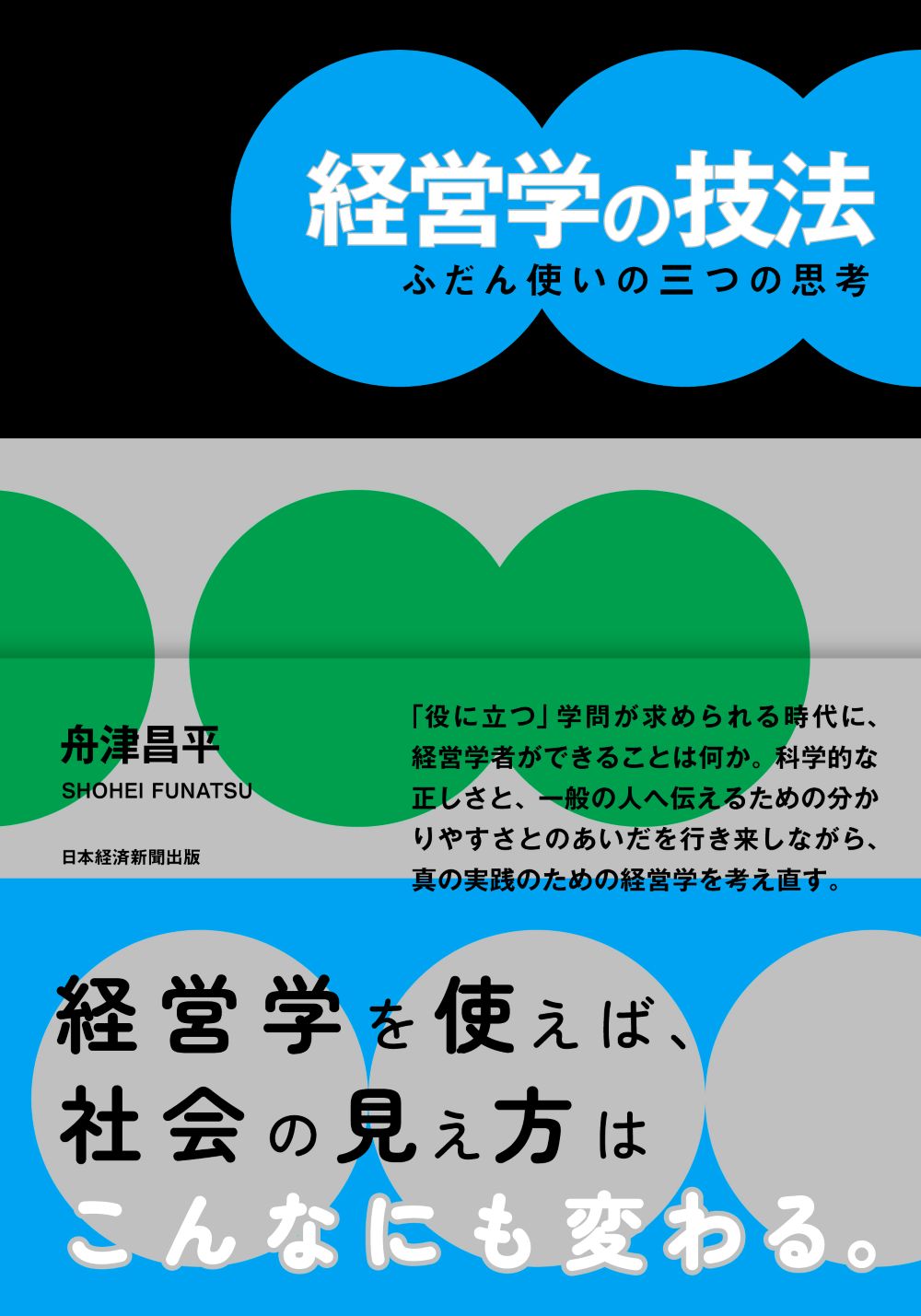
Keieigaku no giho (The art of management studies - Three thinking methods for everyday life)
Size
264 pages, 127x188mm
Language
Japanese
Released
November 20, 2024
ISBN
9784296120567
Published by
Nikkei Business Publications, Inc.
Book Info
See Book Availability at Library
Japanese Page
Since the COVID-19 pandemic, terms such as “expert” and “evidence” have become increasingly common in the media and elsewhere. In other words, it seems that experts are now expected to present evidence to society. “Scientific,” “rigorous,” and “evidence-based” information is in ever greater demand, and initiatives such as Evidence-Based Management (EBM), which seek to apply scientific knowledge to management, are steadily gaining ground.
But what exactly do we mean by “scientific,” “rigorous,” and “evidence”? In my experience, these are highly ambiguous terms that are difficult to define using a single, unified definition. In other words, even if we insist that rigor is essential for expert knowledge, the very concept of “rigor” is itself not rigorous. Moreover, to seriously study such ambiguous and multifaceted concepts, four years of undergraduate education is hardly sufficient; one would likely need to pursue at least a master’s degree. Herein lies a dilemma: the more experts attempt to simplify and convey such knowledge conveniently—without this background—the more likely it is that their specialized knowledge will become inaccurate.
This book is written for undergraduate students and businesspeople. Its aim is to communicate essential knowledge to those who lack the time to study “scientific,” “rigorous,” or “evidence-based” concepts in depth, while framing these discussions from a management perspective. Specifically, it addresses concepts such as performance-based pay, bureaucratic organizations, scientific management, and management science, terms that are widely used yet often misunderstood. This book explains these key concepts with an eye to applying management theory in real life.
In addition, it consistently explores why principles that seem simple and self-evident at first glance often fail. Consider, for example, the idea that “linking performance to rewards motivates all employees to deliver results,” the so-called “performance-based approach.” This seemingly straightforward system of tying pay to outcomes rarely functions effectively on its own, at least within corporate structures. If you cannot immediately explain why this is so, or if you feel uncertain about your ability to analyze this question comprehensively, I encourage you to read this book.
Another underlying theme is whether disciplines such as management studies are truly “useful.” People have sought useful knowledge for centuries; everyone wants to know whether something is useful and tends to dismiss what is not. But what, in fact, does “useful” mean? If you wish to acquire useful knowledge at university, I hope this book will help you reflect on that very question.
(Written by FUNATSU Shohei, Assistant Professor, Graduate School of Economics / 2025)