The University of Tokyo
Website for International Students

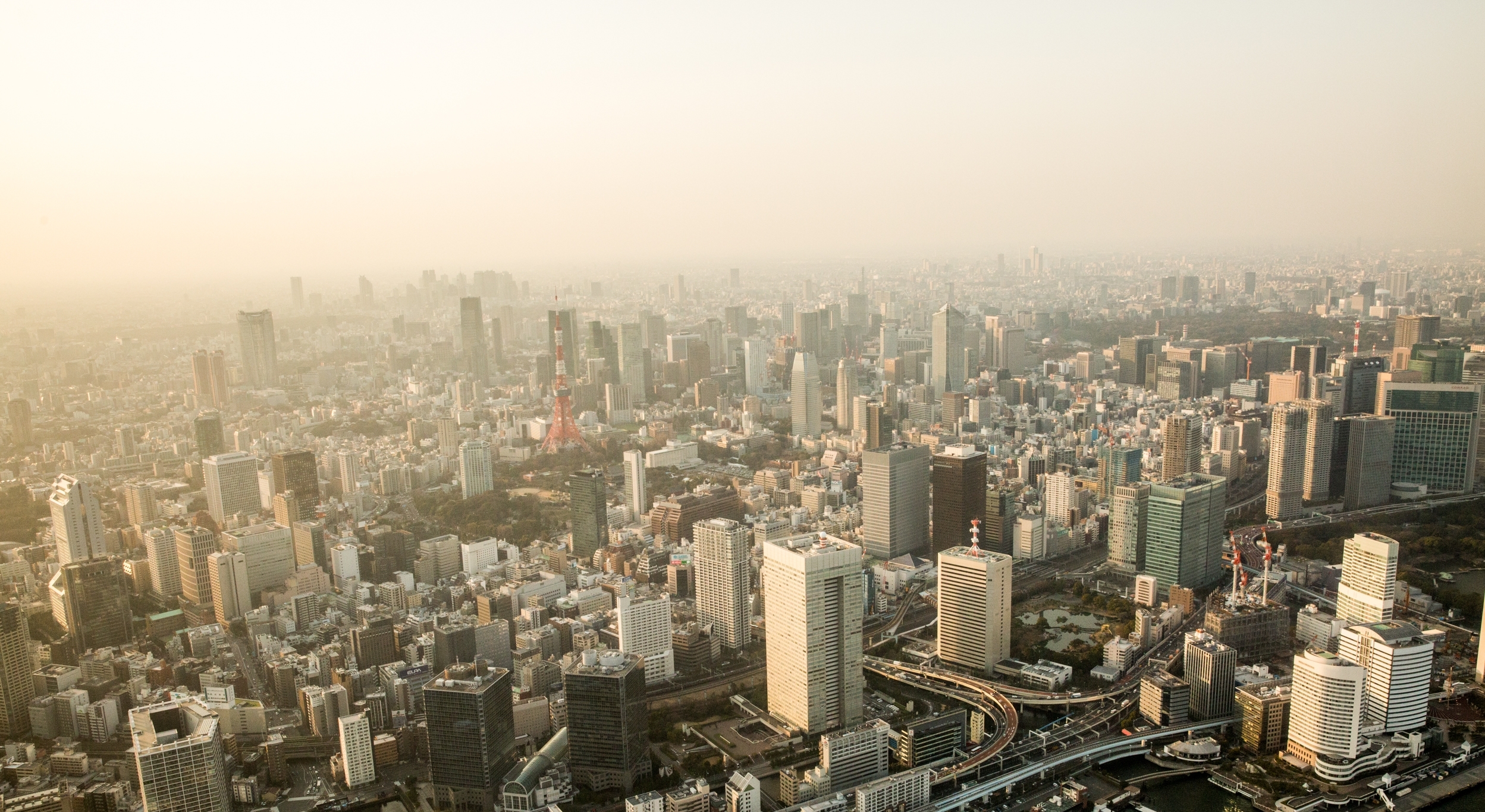
The cost of living in Tokyo—especially housing—is the highest in Japan. Rent in Tokyo has been rising every year, and even a small one-room apartment for a single person typically costs around 80,000 to 100,000 yen per month. Even if you are scheduled to receive a scholarship, it usually takes about one to one and a half months for the first payment to be provided. Therefore, newly arrived international students must bring enough money to cover their initial living expenses.
Regarding food expenses, many international students spend more than Japanese students due to differences in eating habits and the difficulty of finding familiar ingredients. Many spend around 50,000 to 60,000 yen per month.
For students living with their families, living expenses are generally 1.5 to 2 times higher than those of students living alone. To avoid financial stress that may affect your studies, please gather sufficient information in advance and prepare carefully for your living costs.
Reference: "Survey on Student Life Conditions (International Students)"
https://www.u-tokyo.ac.jp/adm/inbound/en/support-ieso-st.html
Understanding and managing your personal finances is essential for maintaining financial stability throughout your life as an international student. Please keep in mind that tuition waivers and scholarships are not guaranteed every year; therefore, it is important to plan your finances carefully before starting your studies. Additionally, students who plan to work part-time should have a basic understanding of tax payments and other financial obligations.
Income earned from part-time jobs, taxable research fellowships/grants are subject to "Income Tax" and "Resident Tax."
Income tax is calculated based on your income from January to December of each year. Using the “Certificate of Withholding Tax” (Gensen Choshu Hyo) that you receive from your employer around December, please check whether income tax has been properly withheld from your salary (i.e., deducted at source) and whether the final tax adjustment (Year-end tax adjustment) has been correctly carried out.
Resident tax is calculated based on your income from January to December of the previous year. In your first year in Japan, you will not be taxed because you have no income in Japan for the preceding year that serves as the basis for taxation. From your second year onward, if you have income, you may be required to pay resident tax depending on the amount. The tax amount is notified around June each year, and a payment slip will be sent to you by the city/ward office.
☆Tax treaties (agreements on taxation between the Government of Japan and your home country) may exempt you from paying income tax in some cases. As the provisions can change and vary significantly depending on the country, your residence status, and the length of your stay in Japan, the rules are quite complex. Please check the relevant information for your home country on your own.
<Frequently Asked Questions>
■I have a part-time job. I heard that if I have income, I need to pay taxes. How much tax do I have to pay?
The amount of tax you need to pay varies depending on your total income for one year (January to December) and other factors such as your family situation, where you live, and so on.
Please note that privately financed international students who cover all their living expenses and tuition with part-time earnings in Japan may exceed the income thresholds for resident tax and income tax, and therefore may be subject to taxation.
■If my income increases, are there any additional payments I need to make besides taxes?
If your income in the previous year exceeds the threshold for resident tax, the rate of reduction (discount) applied to your National Health Insurance (NHI) premiums may decrease. It may also affect various types of subsidies and exemptions.
For example, if someone had previously received only a scholarship and had no income from a part-time job, but then starts a part-time job or begins receiving taxable research grants or living allowances, their income may increase. Depending on the amount, the reduction rate for your NHI premiums in the following year may be lowered (i.e., the amount you have to pay may increase).
■Are scholarships considered income?
Many common scholarships are not considered income (they are non-taxable). However, some types of funding—such as research fellowships, grants, or stipends for living expenses—may be treated as income (e.g., salary income or miscellaneous income), depending on their nature. These are subject to taxation.
(Reference) If you are staying in Japan as an international researcher under Japan Society for the Promotion of Science (JSPS 日本学術振興会/学振), the payments you receive are considered a “maintenance allowance (滞在費 Taizai-hi)” and are not treated as income. (For tax-related classification, please refer to the “JSPS Postdoctoral Fellowships for Research in Japan Program Guidelines.” On the other hand, even though it comes from the same organization (JSPS), the monthly stipend received by JSPS Research Fellows (PD, DC1, DC2) is classified as salary income for tax purposes and is therefore subject to income tax.
■I have heard that I can receive a tax refund. How can I do so?
You do not have to pay income tax unless your gross annual (JAN-Dec) income exceeds a certain amount. If income tax is withheld from salaries or there is an overpaid withholding income tax, you may receive a refund of the amount of tax withheld by filing “Kakutei Shinkoku (final tax return/tax refund claim)” In order to do so, please go to the Tax Office in the district where you reside or through e-tax (Online National Tax Return Filing and Tax Payment System). You can file your tax returns retrospectively for five years. You need to submit a “源泉徴収票Gensen Choshu Hyo (Certificate of Withholding Tax)” that your employer issues you in December. You will need your My Number (Individual Number) when filing your tax return.
■This is my second year in Japan. The NHI contribution amount is higher compared to last year. Why?
Contributions are calculated based on the previous year income. You do not have any previous year income in Japan in your first year. This is why your first year contribution amount is low (reduced).
In your second year and after, whether it is reduced or not depends on how much you earned in the previous year. If the NHI contribution amount is increased compared to the previous year, in most cases, the reason is either following a) or b).
a) You have not gone through the procedure for declaration of (no or low) income.
→You may be eligible for reductions or exemptions by filing a resident tax (non-taxation) declaration at the city/ward office, declaring that you had no or low income.
b) Because you moved after January 1, your income information has not yet been shared between your previous city/ward office to your current city/ward office.
→Please consult the National Health Insurance counter at your current city or ward office and inform them that you moved after January 1 and that you had no or low income in the previous year.
c) Your previous year income is high.
If you leave your NHI premiums unpaid, you may be charged late fees, and it could affect procedures such as the renewal of your residence status. If you have difficulty making payments or are unsure what to do, please consult your university or city/ward office as early as possible.
■I do not have a part-time job. My only income is from a scholarship and financial support from my family. Is it okay if I do not complete any procedures?
If you file a resident tax (non-taxable) declaration at your city/ward office tax section (税務課 Zeimu-ka), you may be eligible for a reduction or exemption of your NHI premiums for the following year. From the next year onward, the necessary forms will be sent to you by the city/ward office. This declaration must be submitted every year.
If the procedure is not completed, your income situation may not be properly assessed, and your NHI premiums may become higher than necessary.