

 Find a book


Title
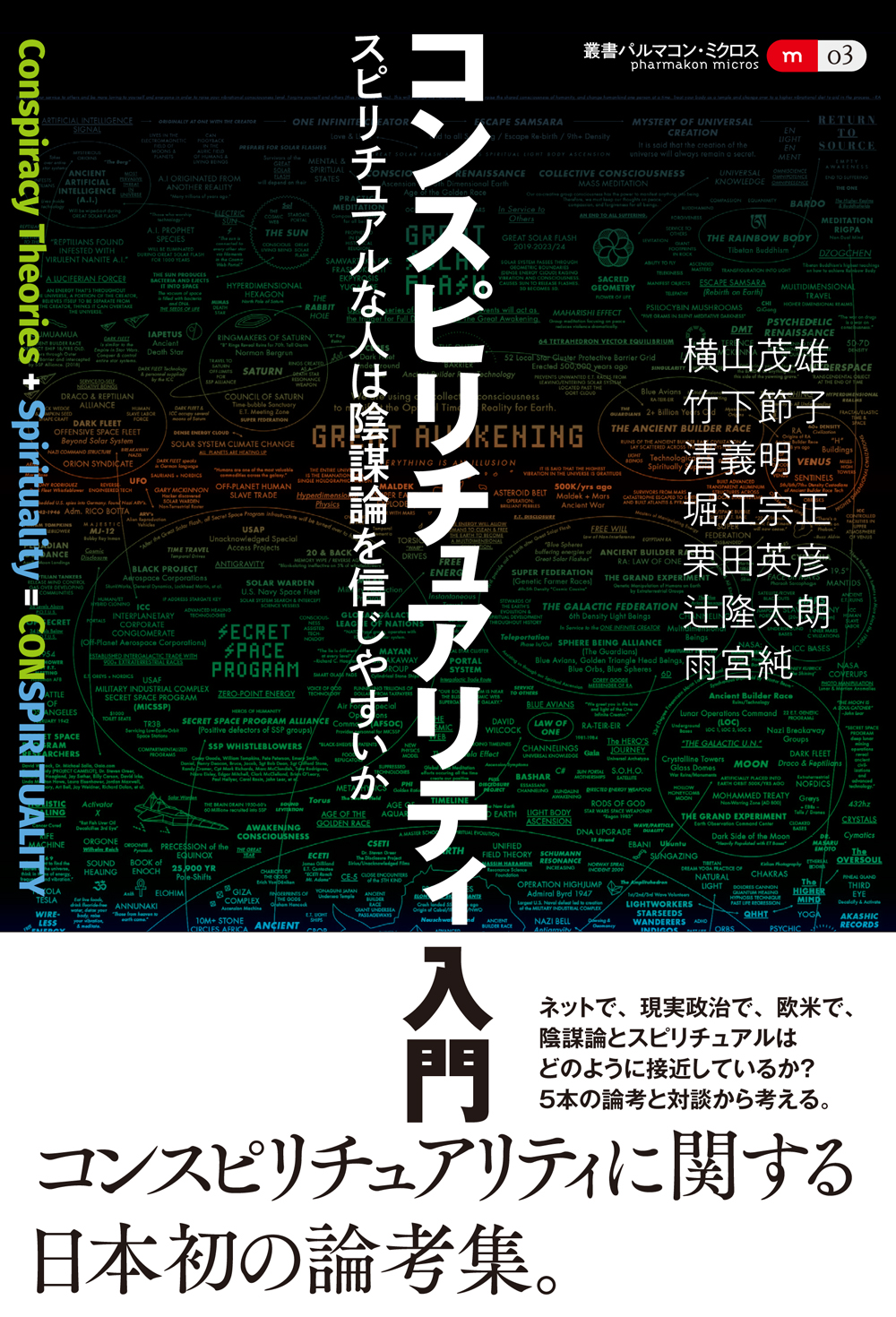
Pharmakon Micros 03 Conspirituality Nyumon (Introduction to Conspirituality - Do Spiritual People Tend to Believe in Conspiracy Theories?)
Size
296 pages, 127x188mm
Language
Japanese
Released
March 23, 2023
ISBN
9784422701271
Published by
SOGENSHA Inc.
Book Info
See Book Availability at Library
Japanese Page
 eBook
eBook
This volume introduces and examines the hypothesis that forms of spirituality strongly associated with conspiracy theories have emerged. In my chapter, I analyze the relationship between COVID-related conspiracy theories and spirituality using data from a survey on views of life and death during the pandemic.
The analysis shows that loneliness, exclusivity, and trust in social media are key background factors behind conspiracy beliefs. These factors contribute to a condition that may be described as a kind of “self-mind-control,” in which individuals selectively accept only information that suits their own views. The typical supporters are young men, and the common assumption that “elderly men are prone to conspiracy theories” is not supported.
It also became clear that SBNR (spiritual but not religious) individuals are more strongly associated with conspiracy beliefs than other groups. However, in proportional terms, conspiracy believers still constitute a minority within the SBNR population. Furthermore, Shinto faith and practices such as meditation and reading spiritual books were associated with belief in conspiracy theories. They were also associated with loneliness and exclusivity, but did not show a significant correlation with trust in social media. Therefore, these religious and spiritual characteristics cannot be equated with those who actively spread conspiracy theories online.
At the same time, certain forms of religion and spirituality appear to suppress conspiracy beliefs. In particular, beliefs in transcendent beings and practices such as prayer — more common among younger women — seem to help alleviate loneliness and anxiety, thereby reducing the tendency toward conspiracy thinking. Elderly men engaged in traditional religious practices (such as funeral Buddhism) tend to have low trust in social media and show little support for conspiracy theories in the first place.
As a whole, the volume acknowledges some degree of connection between spirituality and conspiracy theories, but treats it not as a simple causal relationship. Rather, it is understood as a cultural phenomenon linked to anxiety, distrust, and the search for meaning in contemporary society. In particular, individualized forms of spirituality outside institutional religion (SBNR) are noted for their affinity with distrust of authority and a preference for alternative forms of knowledge, which can create conditions conducive to conspiracy thinking. At the same time, the diversity of these forms is also emphasized.
Since the publication of this volume, the second Trump administration has begun, ushering in a situation that could be described as the normalization of conspiracy theories. The 2026 military intervention in Venezuela and the arrest of the president and his spouse were justified by the belief in “narco-terrorism,” while the attack on Iran was launched under the belief that it was an act of self-defense against the threat of nuclear weapons. At the same time, the Trump administration’s connections with Evangelicalism, Pentecostalism, and prosperity theology have become more explicit. This may be better described not as conspirituality — conspiracy-oriented spirituality — but rather as “conreligiosity,” that is, conspiracy-oriented religiosity. In considering the current situation in which religion and conspiracy theories influence politics, and even international politics, this volume offers valuable insights.
(Written by HORIE Norichika, Professor, Graduate School of Humanities and Sociology / 2026)