

 Find a book


Title
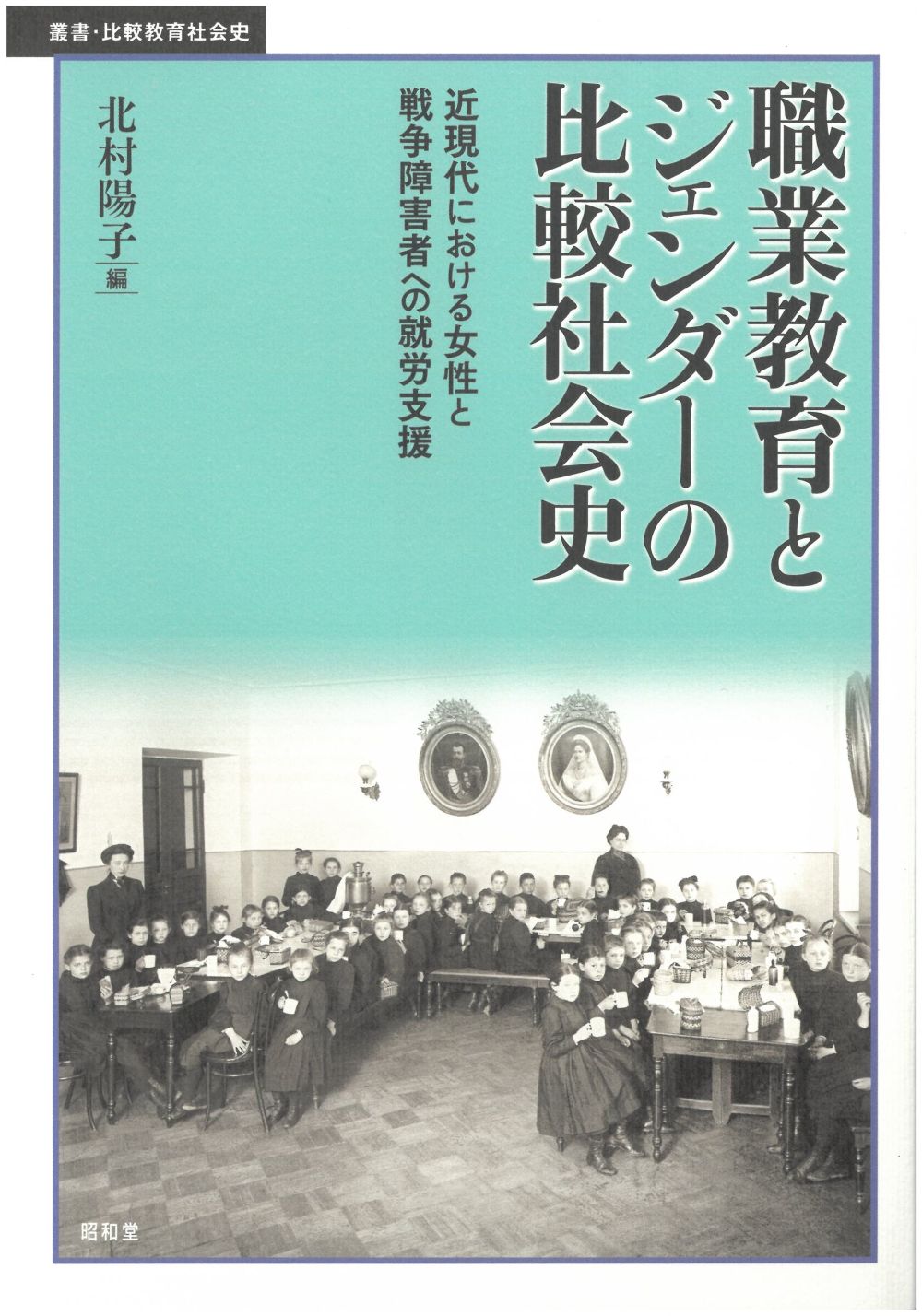
Comparative history of education and society Syokugyu kyoiku to gender no hikakusyakaishi (A Comparative Social History of Vocational Education and Gender - Supporting employment of women and war-disabled persons in the modern era)
Size
278 pages, A5 format
Language
Japanese
Released
January 15, 2025
ISBN
9784812224014
Published by
Showado
Book Info
See Book Availability at Library
Japanese Page
This book, A Comparative Social History of Vocational Education and Gender, examines and compares several case studies of gender-specific characteristics within vocational education from the 19th to the 20th century. It focuses on the mid-career employment challenges faced by women (with limited access to education or vocational training) and war-disabled persons (those who were injured or became ill during war) in modern and contemporary Europe, and Japanese societies where men were more privileged.
Part I is a collection of essays related to women's vocational education. Negative discourses regarding women’s vocational education as a prerequisite for employment were prevalent in modern and contemporary Europe and Japan, similar to discourses around women's schooling and employment. Very few women in these regions were permitted to pursue vocational education, much like school education and employment. Consequently, women who received any form of education constituted a minority. Part I presents the nature of vocational education for women in modern Russia, Japan, Germany, Britain, and Mexico.
Following the General Mobilization Order (Levée en masse) in revolutionary France in 1793, a society of universal military service emerged. Vocational education for war-disabled people, the subject of Part II, was developed as a welfare initiative. These disabilities were acquired later in life within a modern society that favored men. The emergence of civil society following the French Revolution brought new challenges, including the social reintegration of men discharged from military service because of injury or illness. This was only recognized as a major problem in the latter half of the 19th century, when advances in weaponry and medical care resulted in an increasing number of wounded soldiers surviving the battlefields.
Hundreds of thousands, or even millions, of working-age men (aged 20–40 years) returned with physical and mental disabilities. How did modern European and Japanese societies respond to this unprecedented social upheaval? War-disabled persons became ubiquitous in these belligerent nations, and were gradually regarded as a societal norm. Their reintegration into society became a pressing concern that persisted after the war and increased in severity. Part II examines how Japan, Russia, Germany, and France aimed to create pathways for war-disabled individuals to return to work, allowing them to be breadwinners for their families. The role of the breadwinner was traditionally seen as masculine in these regions. Hence, this approach positioned war-disabled individuals facing employment difficulties as capable of fulfilling this masculine role.
(Written by KITAMURA Yoko, Associate Professor, Graduate School of Humanities and Sociology / 2025)