

 Find a book


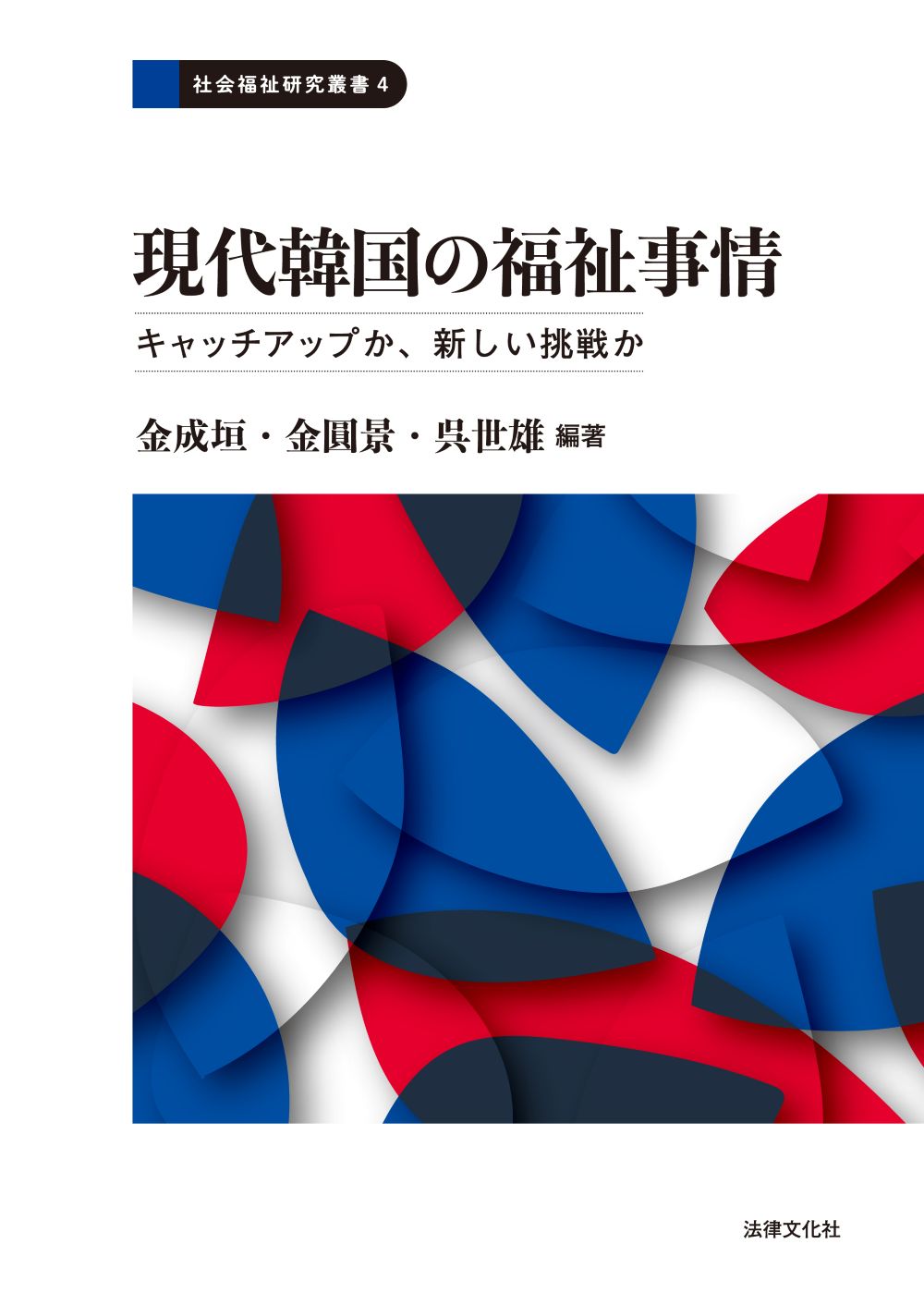
Title
Social Welfare Studies Series 4 Gendai Kankoku no Fukushi Jijo (Welfare in Contemporary South Korea - Catch-up or a New Challenge?)
Size
320 pages, A5 format
Language
Japanese
Released
January, 2025
ISBN
978-4-589-04381-8
Published by
Horitsu Bunka Sha
Book Info
See Book Availability at Library
Japanese Page
 eBook
eBook
The rapid aging of South Korea’s population has drawn widespread attention. While Japan required 24 years for the proportion of older persons to increase from 7% to 14%—a pace already considered swift by international standards—South Korea reached the same level within 18 years. The total fertility rate likewise declined precipitously, from 1.59 in 1990 (Japan: 1.54) to 1.47 in 2000 (Japan: 1.36), and further to 0.84 in 2020 (Japan: 1.30), indicating an even steeper demographic decline than in Japan. The Asian Financial Crisis of the late 1990s also triggered widespread unemployment and poverty. Subsequently, South Korea introduced new forms of public assistance and expanded social insurance coverage, laying the institutional foundation for its modern social security system. Simultaneously, however, the crisis exposed a growing population in precarious employment—individuals inadequately protected by existing schemes—presenting an enduring policy challenge.
This volume offers an in-depth examination of welfare in contemporary South Korea, focusing on the configuration and ongoing reform of its social security institutions. The book is distinguished by two notable features.
First, each chapter begins with a “why” question—for instance, “Why has the tax-based basic pension expanded?”, “Why is enrollment in private ‘dementia insurance’ increasing?”, or “Why do pronatalist policies yield limited outcomes?” These questions clearly articulate each chapter’s analytical focus and invite readers into the central debates shaping Korean welfare policy.
Second, the volume characterizes South Korea’s social security reforms through the concepts of the “social service state,” “non–social insurance institutions,” and “quasi-universalism.” These are interpreted as manifestations of a post-catch-up challenge: South Korea’s endeavor, as a late-developing welfare state, to transcend institutional imitation and chart an innovative path distinct from the trajectories of advanced welfare states. Each chapter contributes unique empirical insights into Korean welfare practices, yet all share a common intellectual orientation toward understanding this transformative endeavor.
The volume comprises an introductory chapter outlining the research agenda and the three reform features, followed by seventeen thematic chapters—each beginning with a “why” question—and a concluding chapter. Chapters 1 to 3 analyze reforms in cash benefits, including social insurance and public assistance; Chapters 4 to 12 address employment and care-related service provisions; and Chapters 13 to 17 explore the organization and delivery of diverse welfare services. Together, these analyses illuminate both the achievements and persistent challenges—“the light and shadow”—of welfare reform in South Korea, while also clarifying its divergence from the Japanese experience.
Emerging social risks such as population aging and labor market insecurity are not unique to South Korea; they also affect Japan and other advanced societies. Although the socioeconomic and political contexts of the two countries differ, a rigorous understanding of South Korea’s experience offers valuable implications for Japanese policy formation and practice. Authored by Korean scholars trained and engaged in teaching and research in Japan across sociology, social welfare, and political science, this volume serves as an academic and policy bridge connecting welfare discourse between Japan and South Korea.
(Written by Kim Sung Won, Professor, Graduate School of Humanities and Sociology / 2025)