

 Find a book


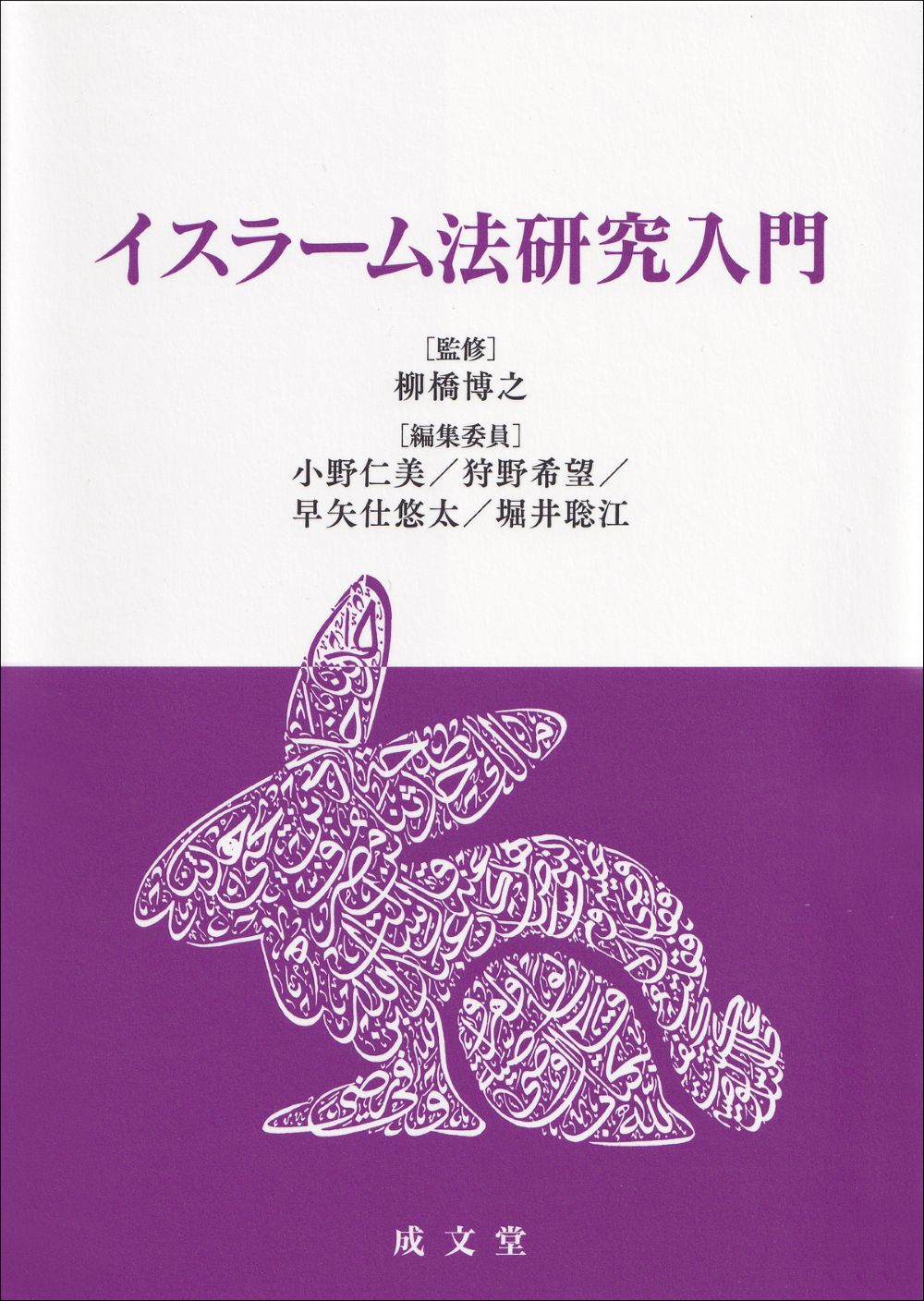
Title
Islam-ho kenkyu nyumon (Handbook of Studies in Islamic Law)
Size
324 pages, A5 format, softcover
Language
Japanese
Released
March 10, 2025
ISBN
978-4-7923-3455-0
Published by
Seibundo Publishing Co., Ltd.
Book Info
See Book Availability at Library
Japanese Page
This handbook is intended to be an introduction to the study of Islamic law, in particular for students and researchers who aim to study or have studied Islamic law. However, it is not comprehensive and is limited to the study of Sunni positive law, except for one section dedicated to the study of legal documents during the Qajar period.
This book comprises four chapters. Chapter One describes the generality of Islamic legal systems and surveys the development of studies on Islamic law in the West from the nineteenth century to the present. The five sections of Chapter Two are dedicated to the doctrinal development of the five Sunni schools of law–the Hanafi, Maliki, Shafii, Hanbali, and Zahiri–with a survey of the representative works of positive law in each school. Chapter Three deals with the Hadith, a corpus of the sayings and deeds of the Prophet Muhammad, in particular, the traditional understanding of the Islamic world and the antithesis proposed by Western scholars regarding the formation of authoritative Hadith collections and arguments about the authenticity of the Hadiths recorded in these works. Chapter Four discusses the generality of legal documents, followed by a survey of these documents conserved in the archives of various Islamic countries such as Turkey and Iran and non-Islamic countries such as Russia, among many others. Each section of these chapters ends with a bibliography of primary and secondary sources.
This book is far from comprehensive. Its scope is limited to the premodern period, Middle Eastern countries, and Sunni positive laws. This is primarily because of the fields of the authors, who are interested in the positive laws of the Sunni schools or the legal documents conserved in Sunni countries. However, the subjects dealt with in the volume present useful information, even for scholars who have long studied Islamic law. For example, each section of Chapter Two describes the history of doctrinal development since the formative period, with an emphasis on the genealogy of the authors of the representative works of each school and their significance in the context of doctrinal development. However, few studies have been conducted based on this concept. This handbook will enable those interested in Sunni positive law to select sources that best serve their purposes.
Chapter Four represents the current level of research on legal documents conducted by Japanese scholars. The authors of this chapter have a long experience studying documents found in various countries, ranging from Morocco to Russia, and are familiar with their reading, which requires detailed knowledge of the manner in which documents vary depending on time and place.
(Written by YANAGIHASHI Hiroyuki, Professor Emeritus, Graduate School of Humanities and Sociology / 2025)