


 Find a book


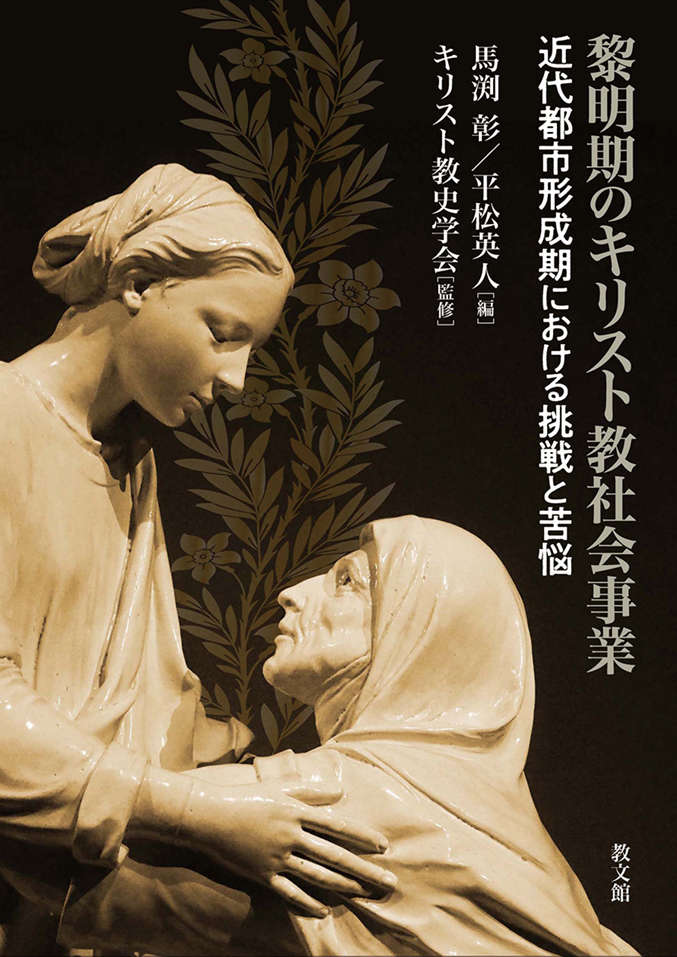
Title
Reimeiki no kirisutokyo shakaijigyo (Christian Social Work at the Dawn of the Modern World - Challenges and Struggles in the Formation of Modern Cities)
Size
168 pages, A5 format
Language
Japanese
Released
September 18, 2024
Published by
Kyobunkwan
Book Info
Japanese Page
Long before the welfare state was established in the 20th century—primarily in Western European countries—and the right to life was guaranteed for all citizens, Europeans practiced charitable activities, such as helping the poor. Based on Christian faith, these were acts of love for one’s neighbors. For example, the essence of this practice is expressed in the Old Testament in Isaiah 58:7, “Is it not to break your bread with the hungry And bring the homeless poor into the house; When you see the naked, to cover him; And not to hide yourself from your own flesh?” (New American Standard Bible). Therefore, Christianity and the welfare state have a long and established relationship.
The history of Christianity and the welfare state encompasses the Industrial Revolution that began in England in the mid-18th century. The subsequent modernization fundamentally transformed the nation, society, and everyday lives. City populations in England doubled within a few decades of the start of the Industrial Revolution. By the 19th century, when the Industrial Revolution began to take shape in earnest, England entered an era of “cities.” Hundreds of thousands of people were concentrated in urban areas. The poor suffered under harsh working conditions, including low wages, long working hours, poor sanitation, and inadequate living conditions. Mutual assistance within the framework of the pre-modern status system and charitable activities by Christian churches did not provide an adequate safety net. In addition, economic recessions intensified the crises, causing the streets to be flooded with unemployed people, and an increase in illnesses and deaths due to malnutrition and epidemics. This phenomenon, called “pauperisms” (mass poverty) at the time, was recognized as a new “social problem.” It became a serious challenge for the Christian Church, which lacked the experience, skills, and financial resources required to respond adequately.
This book focuses on the various difficulties brought about by this great historical upheaval, exploring how struggling individuals both renewed their traditional worldviews and created new ones. Its chapters describe the cultural and social spaces of modern cities where various worldviews coexisted. Protestant England is our initial focus, where the national church was the cornerstone of the state system. Thereafter, the book extends its discussion to Germany, where Catholicism and Protestantism have historically coexisted in tension. Finally, we discuss the United States, where various Christian denominations carried out voluntary activities in the absence of a national church. Christians formed and developed a global network of activities and ideas that transcended both time and national and regional frameworks. Amid this upheaval of an extent rarely seen in human history, they also acted according to regional beliefs. By re-examining the historical significance of faith-based social practices, we aim to explore and overcome the challenges faced by the welfare state in the highly secularized 21st century.
(Written by HIRAMATSU Hideto, Lecturer, Graduate School of Arts and Sciences / 2025)