


 Find a book


Title
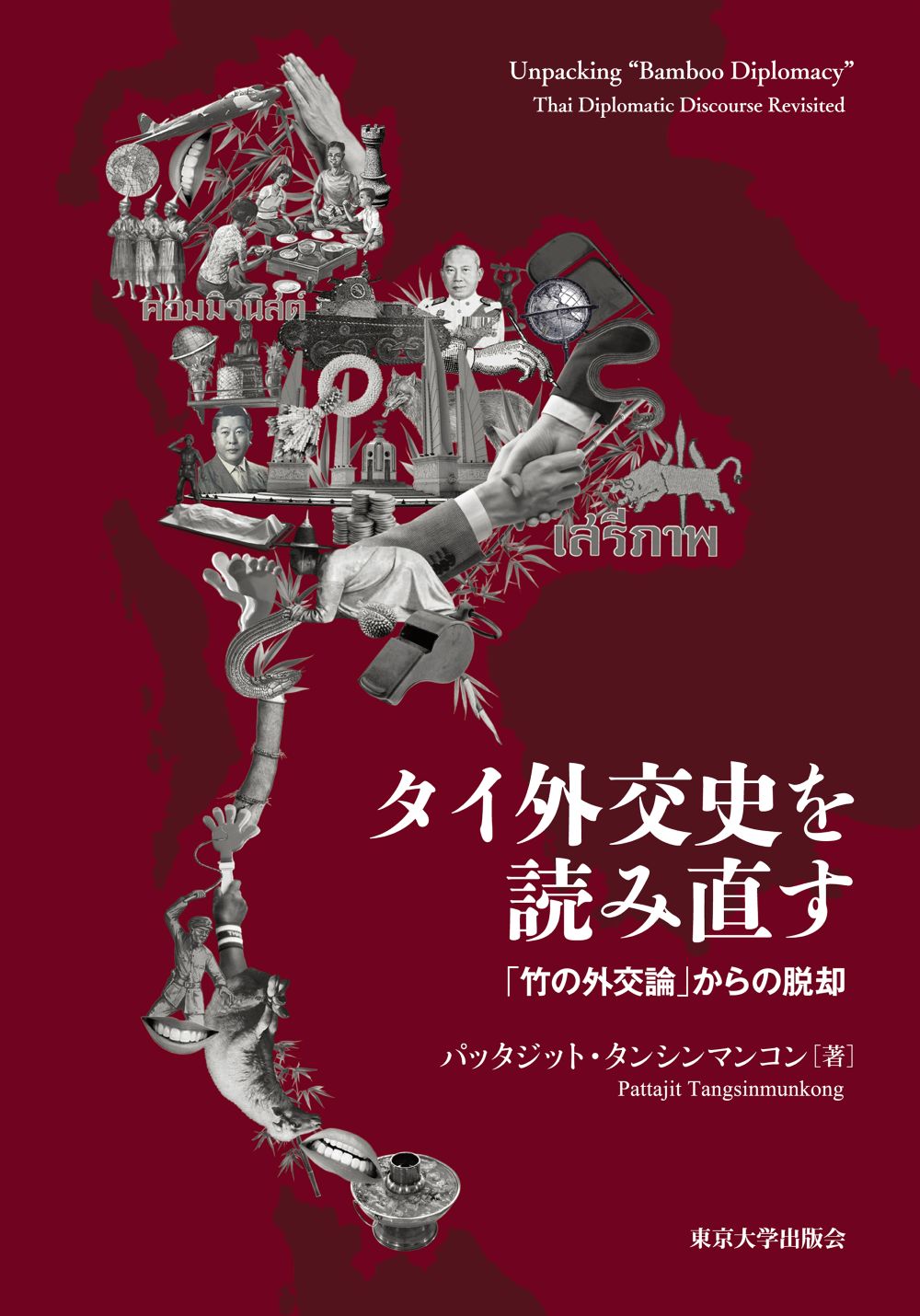
Thai Gaikoshi wo Yominaosu (Thai Diplomatic Discourse Revisited - Unpacking “Bamboo Diplomacy”)
Size
296 pages, A5 format
Language
Japanese
Released
March 11, 2025
ISBN
978-4-13-036293-1
Published by
University of Tokyo Press
Book Info
See Book Availability at Library
Japanese Page
 eBook
eBook
The purpose of this dissertation is to critically examine the concept of “Bamboo Diplomacy” (Thai: Pai-Lu-Lom), a mainstream idea in traditional Thai diplomatic discourse, and to introduce a new historical perspective. The term "bamboo diplomacy" is frequently used to describe Thailand’s diplomatic success. It suggests that, under the leadership of astute monarchs and political figures, Thailand adapted flexibly to the prevailing influences of major powers such as China, Britain, France, Japan, and the United States, much like bamboo bending with the wind. Consequently, Thailand remains the only country in Southeast Asia never colonized by foreign powers, maintaining its independence to this day. This discourse is still widely used to promote Thai exceptionalism and nationalism by highlighting the wisdom of its leadership, national uniqueness, and the continuity of its diplomatic tradition.
This dissertation positions "Bamboo Diplomacy" as a subject of critique. It explores the complex relationships between foreign policies and the perceptions of Thai leaders, media, intellectuals, and the general public amidst dramatic changes in international and domestic politics from the 1960s to 2020s. Utilizing diplomatic documents, essay collections, media, and previous studies in Thai, Japanese, English, and Chinese, this work reveals Thai diplomatic history as a series of conflicts, miscalculations, and shifting stances rather than a coherent narrative. By reintroducing the conflicts faced by various actors, their responses, and the logic behind their choices into the narrative of diplomatic history, the book offers a new perspective that takes its readers beyond traditional Thai diplomatic history.
This dissertation comprises seven chapters. The introductory chapter outlines the general framework and issues of the “Bamboo Diplomacy” discourse, presenting key questions and an analytical framework. Chapter 1 provides a historical overview and introduces the concept of the “small state mentality.” Chapters 2 through 5 analyze the relationship between actual foreign policy, various actors’ political thoughts on diplomacy, and external influences from the 1960s to 2020. The final chapter discusses the relationship between the discourse on bamboo diplomacy, the small state mentality, international perceptions, and nationalism.
(Written by Pattajit TANGSINMUNKONG, Lecturer, Institute for Advanced Studies on Asia, Interfaculty Initiative in Information Studies / 2025)
Related Info
The 15th (2026) Mishima Kaiun Academic Award (natural sciences and humanities) (Mishima Kaiun Memorial Foundation 2026)
https://www.mishima-kaiun.or.jp/en/description/
The 23rd Asia Pacific Research Prize - Commendation winner (Asia Pacific Forum, Awaji Conference Japan August 1, 2024)
https://www.hemri21.jp/awaji-conf/english/project/commendation/23rd/awards/winner02.html
Interview:
Meet Jay Pattajit Tangsinmunkong-Historical Perspectives of Southeast Asia (The University of Tokyo | YouTube Jan 22, 2024)
https://www.youtube.com/watch?v=4cCO8YzbR0E
Book Review:
Reviewed by Professor Okamoto Takashi (Yomiuri Shimbun May 23, 2025)
https://www.yomiuri.co.jp/culture/book/reviews/20250519-OYT8T50067/