

 Find a book


Title
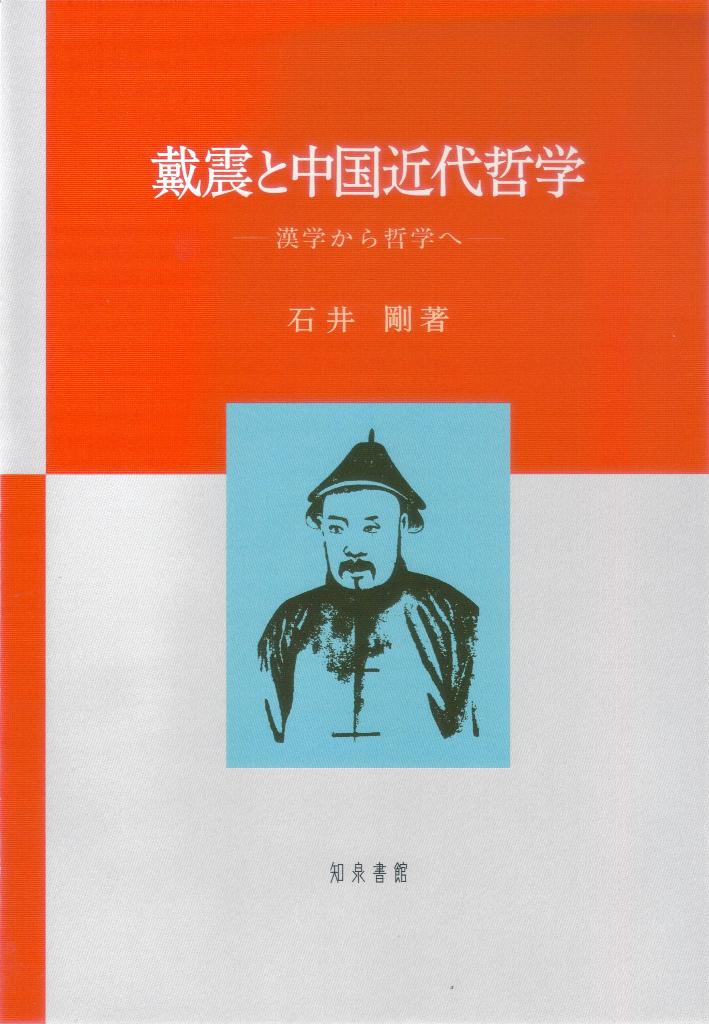
Tai Shin to Chugoku kindai tetsugaku (Dai Zhen and Chinese Modern Philosophy - From Philology to Philosophy)
Size
464 pages, A5 format
Language
Japanese
Released
January 15, 2014
ISBN
9784862851697
Published by
Chisen Shokan
Book Info
See Book Availability at Library
Japanese Page
In the field of Chinese philosophy, few would deny that Dai Zhen (1724–1777) was one of the most representative philosophers of the Qing dynasty. However, to characterize him simply as a philosopher is in fact problematic. China has a long philosophical tradition, such as Confucianism, Daoism and so forth, which can be traced back more than twenty-five centuries. Throughout this long history, various philosophical currents have continued to develop down to the present day. Nevertheless, scholars familiar with the intellectual history of China often regard the Qing dynasty as a non-philosophical age. At that time, the most prominent intellectual movement was Evidential Learning (kaozheng xue), which is usually understood as a Chinese form of philology. Among his contemporaries, Dai Zhen was celebrated primarily as the most distinguished evidential scholar rather than as a philosopher.
The concept of philosophy originated in the Western tradition. Even today, many philosophers maintain that philosophy is a particular mode of thinking that belongs exclusively to the Western world. In the late nineteenth century, the term “philosophy” was introduced into Japan, where European academic systems were adopted in the process of building a modern nation-state. The academic disciplines of “Chinese philosophy” and “history of Chinese philosophy” were coined by scholars at Tokyo University under the influence of German idealist philosophy. This means that Chinese philosophy was shaped according to a dominant conception of philosophy prevalent in the late nineteenth and early twentieth centuries, and that the view of the Qing dynasty as a non-philosophical age was itself a product of this conception. In reality, however, the question “What is philosophy?” remains open, as philosophy lacks a fixed definition. In other words, asking what philosophy is is itself a deeply philosophical question.
By taking Dai Zhen as its central case, this book attempts to challenge the dominant view that regards the Qing dynasty as a non-philosophical age, while also raising questions about what Chinese philosophy is, and even what philosophy itself is. Why does Dai Zhen provide a particularly suitable example for raising these questions? This is because modern intellectuals attempted to reconstruct Dai Zhen’s thought as philosophy, despite his earlier reputation as a distinguished evidential scholar.
How, then, did they succeed in representing Dai Zhen—an exemplary evidential scholar—as a philosopher? In early twentieth-century China, intellectuals who sought to transcend the long dynastic past and construct a modern nation widely acknowledged the importance of philosophy. Correspondingly, when they attempted to identify philosophical thought in the Qing dynasty, the historical period closest to their own, they came to recognize Dai Zhen’s significance. However, their approaches to philosophizing Dai Zhen’s intellectual system varied greatly, depending on their differing understandings of the concept of “philosophy.” As a result, Dai Zhen’s works generated multiple images of philosophy, which modern intellectuals drew upon in developing their own conceptions of philosophy.
This book focuses on the interpretations of Zhang Taiyan (1869–1936), Liang Qichao (1873–1929), Wang Guowei (1877–1927), Liu Shipei (1884–1919), and Hu Shi (1891–1962) in order to delineate different versions of “Dai Zhen’s philosophy.” Some of these interpretations are not regarded as philosophical knowledge within the dominant contemporary understanding of Chinese philosophy. In this sense, the book demonstrates alternative possibilities of Chinese philosophy that have either been forgotten or have yet to receive due attention.
(Written by ISHII Tsuyoshi, Professor, Graduate School of Arts and Sciences / 2026)
Table of Contents
Part I: Discussions of Philosophy and Dai Zhen before the Emergence of “Dai Zhen’s Philosophy”
Ch. 1. Discourses of Philosophy during the Late Qing Dynasty: Liang Qichao and Wang Guowei on Dai Zhen
Ch. 2. Nationality and Revolution: Liu Shipei and Zhang Taiyan on Dai Zhen
Part II: Analysis of the Discourse on “Dai Zhen’s Philosophy”
Ch. 3. The Formation of the Discourse on “Dai Zhen’s Philosophy”: The Influence of Liang Qichao and Hu Shi
Ch. 4. The Discourses of Classical Learning under the Influence of Western Scholarship: Dai Zhen’s time and Thought
Part III: From Dai Zhen to Chinese Modern Philosophy
Ch. 5. The Historical Philosophy of Desire and Ethics: From Dai Zhen to Liu Shipei
Ch. 6. The Emergence of Philosophy from Philology: Zhang Taiyan’s Qiwu Philosophy and the Linguistic Approach
Conclusion: From Philology to Philosophy
Related Info
Reviewed by Kyungnam Moon (Harvard-Yenching Institute June 2, 2015)
https://www.harvard-yenching.org/research/dai-zhen-and-chinese-modern-philosophy-philology-philosophy/