

 Find a book


Title
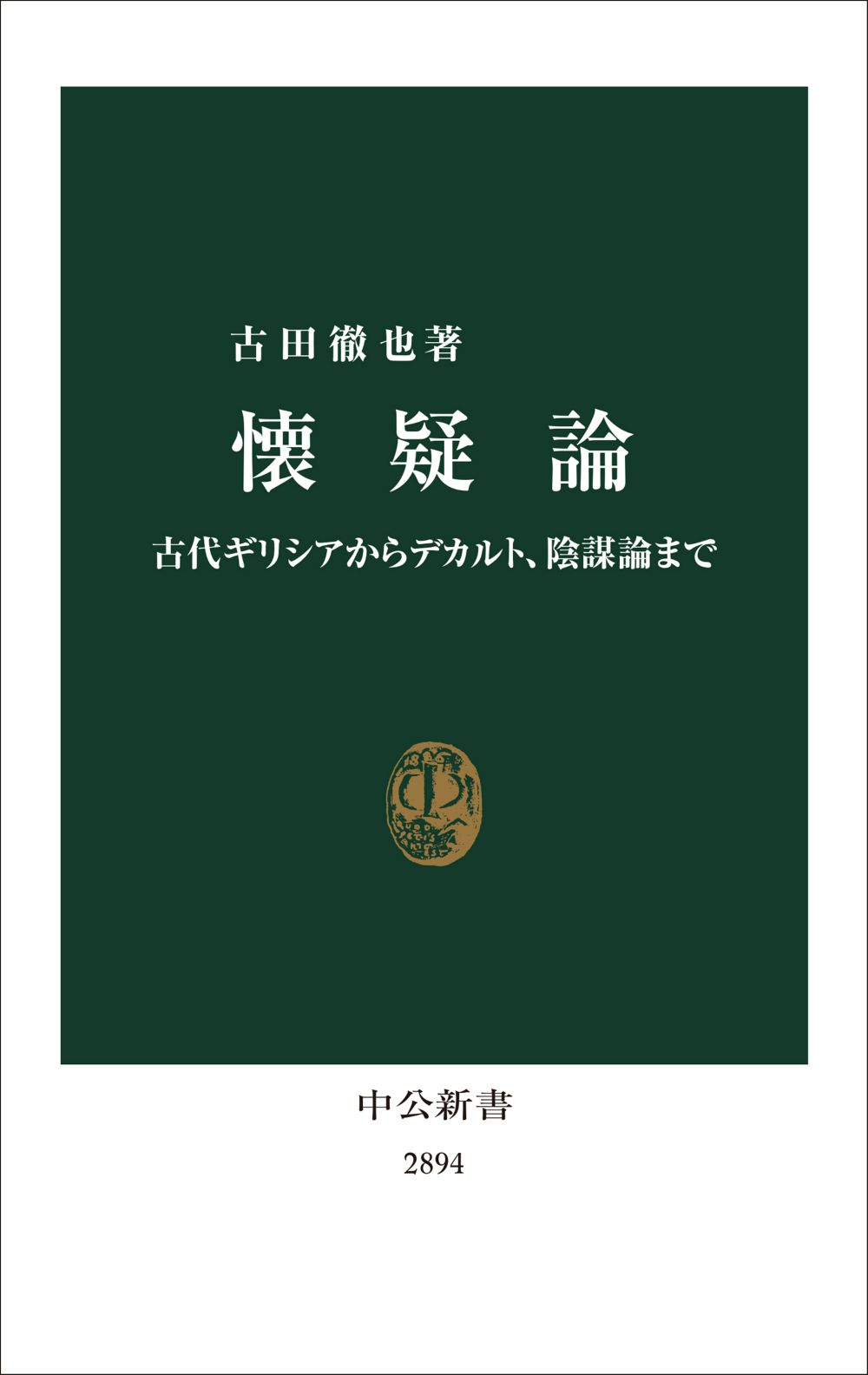
Chuko Shinsho 2894 Kaigiron (Skepticism - From Ancient Greece to Descartes and Conspiracy Theories)
Size
256 pages, paperback pocket edition
Language
Japanese
Released
February 20, 2026
ISBN
978-4-12-102894-5
Published by
CHUOKORON-SHINSHA. INC.
Book Info
See Book Availability at Library
Japanese Page
The general term “skepticism” can refer to any position that questions whether things are right or true and refrains from making judgments on such matters. What is truly right? What is true? Alternatively, is truth a tangible concept? These are precisely the questions that skepticism provokes. Skepticism manifests in several ways. Some skeptics wonder whether our perception of reality could actually be a dream or a mere illusion. Others question whether we can ever attain a definitive knowledge of past events, whereas others doubt the existence of absolute good and evil. Skepticism, therefore, encompasses an extensive array of perspectives.
An examination of the history of philosophy reveals that these diverse forms of skepticism have persisted since antiquity. Yet skepticism appears to have acquired notable traction in the contemporary world. In the present day, rapidly changing information disseminates worldwide, as individuals across the world continually interact, interfere, and come into conflict with one another. In many places, long-established customs and traditional values are being scrutinized. Traditional authorities and religions, once expected to guide individuals toward righteousness, are likewise losing their influence in many parts of the world.
How can we overcome skepticism and ascertain what is truly correct? Or is skepticism impossible to overcome? Indeed, is skepticism something that should be overcome in the first place? These questions are undoubtedly of paramount importance to contemporary society. However, before we can address these issues, we must first clarify the true nature of skepticism.
Today, the term ‘skepticism’ is often applied widely—or, more accurately, loosely—even in reference to mere criticism or deliberately contrarian claims. It is also often used in ways that render it virtually indistinguishable from “conspiracy theory.” Should this careless usage become widespread, the definitions of “skepticism” and “conspiracy theory” themselves will become ambiguous, complicating the identification of the phenomena that rightfully belong under those classifications.
What, then, distinguishes skepticism from conspiracy theories? Moreover, how does skepticism differ from the position known as “relativism”? This book explores the nature of skepticism from various perspectives, including comparisons with these related positions. However, its primary focus is to retrace the forms that skepticism has assumed in the history of European philosophy and the roles it has fulfilled. In doing so, we will observe that the character of skepticism underwent a profound transformation with Descartes.
This book specifically focuses on its central argument by juxtaposing two forms of skepticism: skepticism as a practice or way of life, which predominated in antiquity, and skepticism as a theoretical doctrine that gained significant prominence in the modern period. Although the latter will be subjected to rigorous criticism, the former will be demonstrated to possess positive value in addressing the pertinent issues.
(Written by FURUTA Tetsuya, Associate Professor, Graduate School of Humanities and Sociology / 2026)