

 Find a book


Title
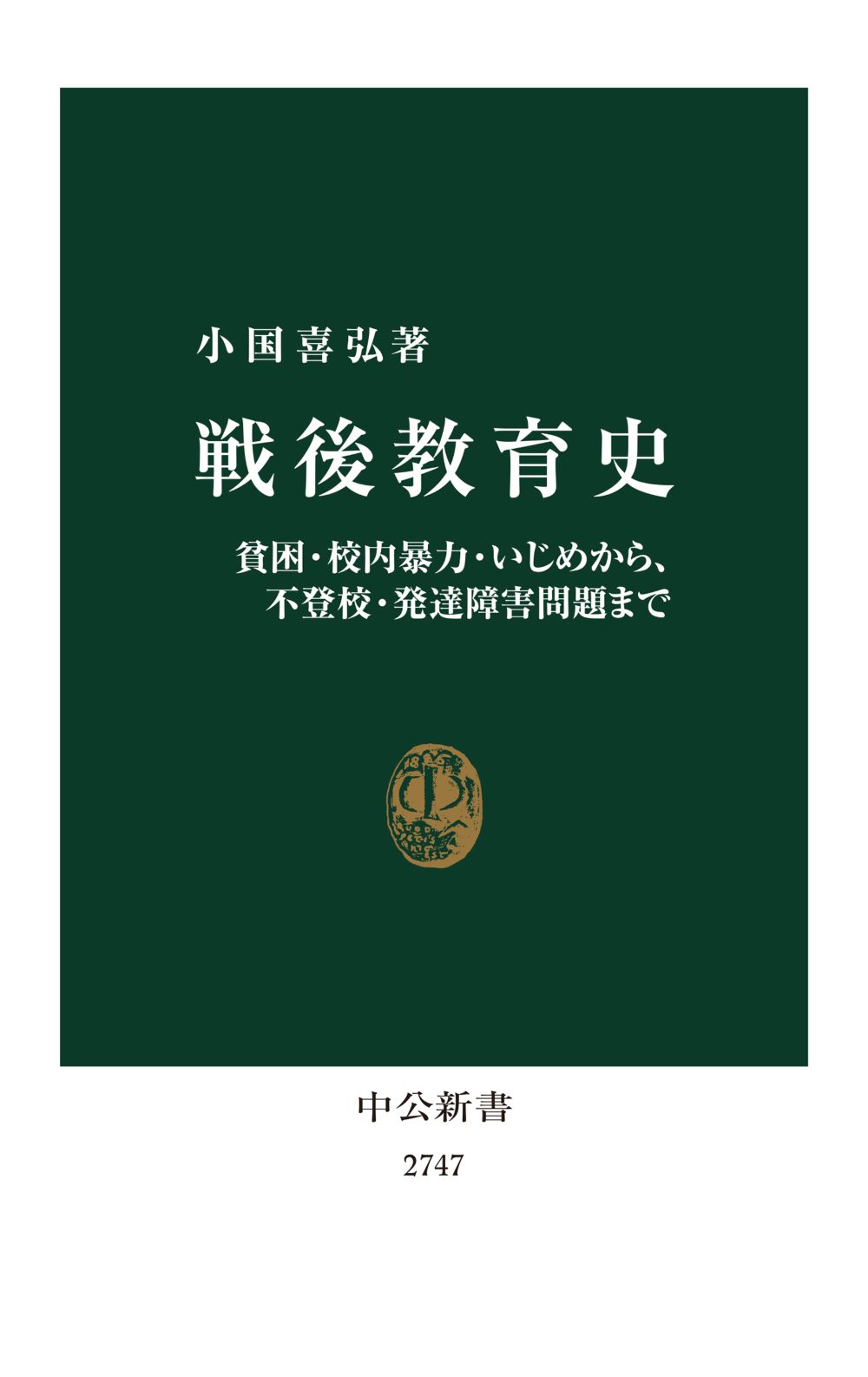
Chuko Shinsho 2747 Sengo Kyouikushi (A History of Postwar Japanese Education - From Poverty, School Violence, and Bullying to School Refusal and Developmental Disability Issues)
Size
336 pages, paperback pocked edition
Language
Japanese
Released
April 20, 2023
ISBN
978-4-12-102747-4
Published by
CHUOKORON-SHINSHA. INC.
Book Info
See Book Availability at Library
Japanese Page
Beyond the Logic of Exclusion: Toward Schools of Coexistence
Japanese school education currently stands at an unprecedented and critical crossroads. The number of students refusing to attend school continues to break records, and the rate of child suicide remains alarmingly high. Schools, which once functioned as a “uniform human resource development system” supporting the growth of Japanese society, are ceasing to be safe “havens” where many children can feel secure. Why have schools become such stifling places? The book A History of Postwar Education attempts to answer this question by unraveling the approximately 80-year history from the 1945 defeat in World War II to the present day, specifically from the perspective of the “excluded,” to expose the root causes of the pathologies plaguing modern education.
The book focuses particularly on visualizing the “mechanism of exclusion” that has persisted throughout postwar education. This analysis is built upon two major perspectives.
The first perspective is the absence of the “child” as a subject of rights. Although Article 26 of the Japanese Constitution guarantees the “right to receive an education,” for decades this has been interpreted merely as the right of children to passively receive educational content decided by adults. When Japan ratified the Convention on the Rights of the Child in 1994, it should have marked a turning point where children were recognized not just as objects of protection but as subjects of rights with the freedom to express opinions and participate in decision-making. However, nearly 30 years later, children’s “voices” regarding school rules, events, and daily learning remain largely suppressed. The book argues that this distorted structure—where autonomy and participation are stripped away under the guise of “protection” (“this is for your own good”)—is the primary reason that children are robbed of their agency and the joy of learning.
The second perspective examines the history of separation disguised as “special needs education.” The book questions how the line is drawn regarding who is considered a “disabled child” and excluded from regular classrooms. This demarcation has been rewritten not by medical criteria but by the ideal labor force required by the industry of each era. Under prewar militarism, physical robustness was demanded. During the high economic growth period, the discipline and processing skills to adapt to factory labor were required. In the modern era, centered on the tertiary service industry, high communication skills and the ability to “read the air” (social cues) are excessively valued. This shift in social demands is the true background behind the explosion in children diagnosed with “developmental disorders” today. Children have not changed; rather, the societal box of “normalcy” has narrowed, intensifying the pressure to exclude those who do not fit.
In 2016, Japan ratified the Convention on the Rights of Persons with Disabilities, signaling a time to steer toward inclusive education in which all children learn in the same local classrooms. Yet, the reality is an acceleration of “separation” under the name of special needs education. To restore happiness to children, we must resist this logic of exclusion. We must regenerate schools from being institutions of “ability selection” into places for learning the “art of coexistence.” This book offers a vital perspective for achieving that future.
(Written by KOKUNI Yoshihiro, Professor, Graduate School of Education / 2025)