

 Find a book


Title
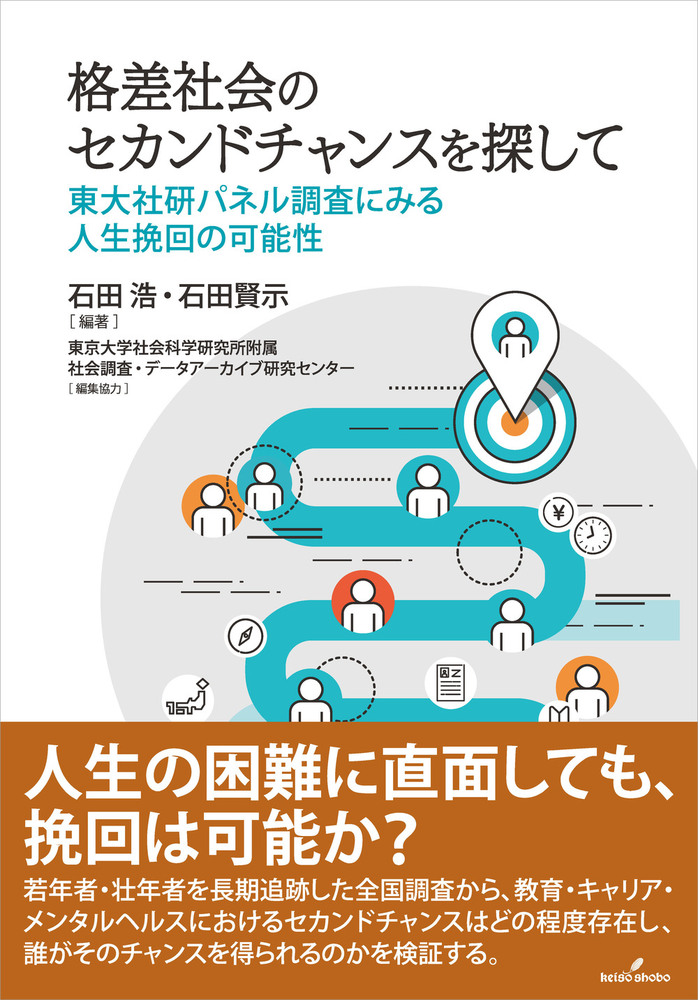
Kakusa Shakai no Second Chance wo Sagashite (In Search of Second Chances in a Divided Society: The Possibility of Life Course Reorientation - Evidence from the Japanese Life Course Panel Surveys)
Size
256 pages, A5 format
Language
Japanese
Released
February, 2024
ISBN
978-4-326-60367-1
Published by
Keiso Shobo
Book Info
See Book Availability at Library
Japanese Page
 eBook
eBook
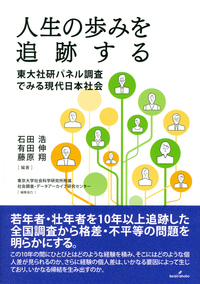
In Search of Second Chances in a Divided Society explores how people who have found themselves at a disadvantage in Japanese society subsequently recover from those setbacks and gain the opportunity to start over—that is, “second chances.” The book aims to carefully trace, over time, who is likely to face disadvantage and how those who experienced setbacks manage to overcome them. To this end, rather than relying on cross-sectional data at a single point in time, the study employs longitudinal data that follow the same individuals over an extended period, thereby capturing changes across their life courses. Specifically, it draws on data from the Japanese Life Course Panel Surveys conducted by the University of Tokyo, which has tracked the same individuals for nearly twenty years.
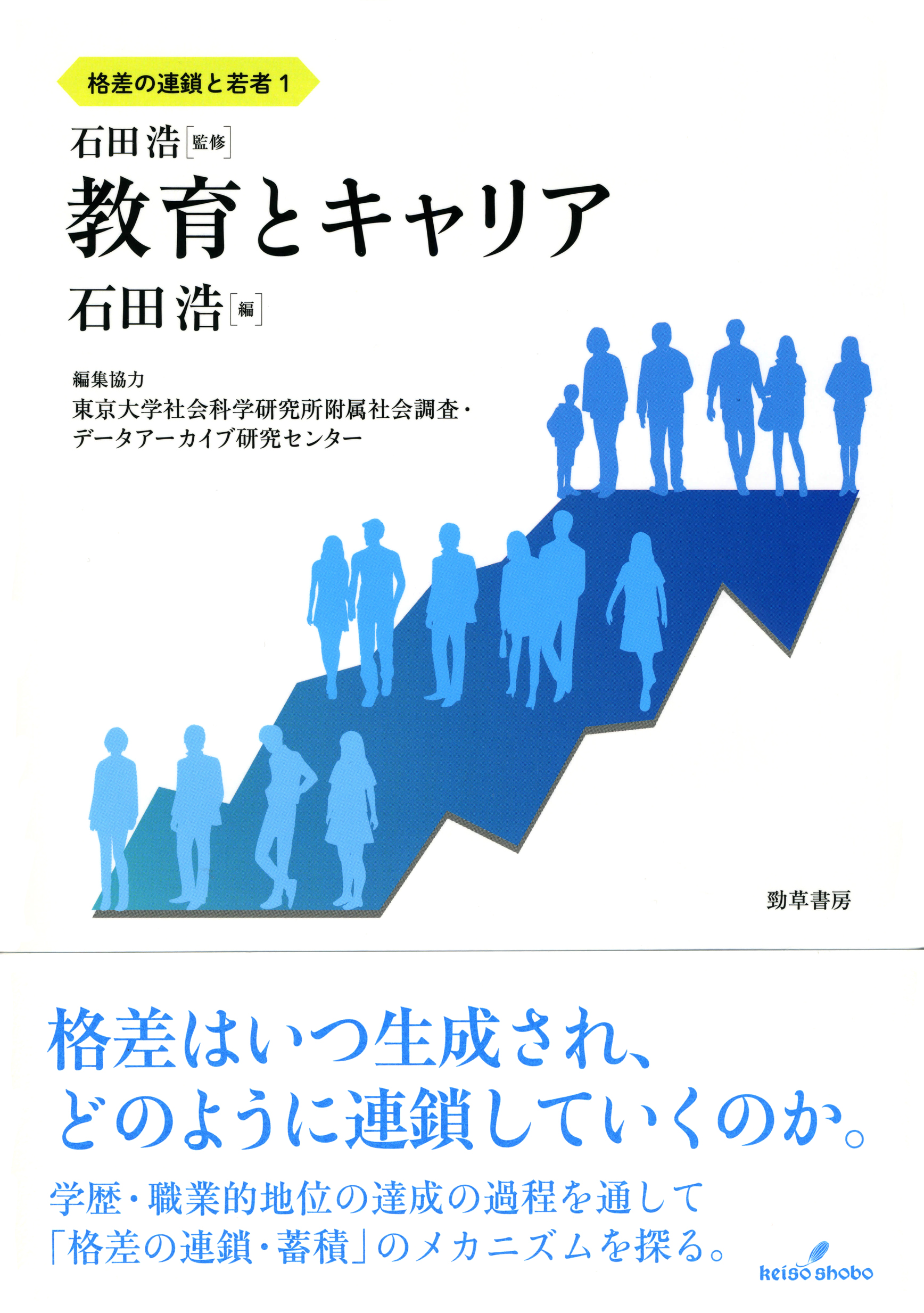
People may encounter disadvantage at various stages of life, and this book focuses on the emergence of disadvantage across diverse contexts. Part I examines disadvantage in the early stages of the life course. Chapter 1 investigates whether disadvantages associated with family background (such as being raised in a poor family) persist into adulthood. Chapter 2 analyzes the characteristics of individuals who enroll in evening divisions of higher education institutions and examines socio-economic disparities between them and graduates of daytime programs. Chapter 3 focuses on those who drop out of universities, junior colleges, technical colleges, and vocational schools, examining the disadvantages they face and their subsequent recovery.
Part II turns to occupational careers and economic life. Chapter 4 explores the likelihood of obtaining regular employment after a period of unemployment or labor force withdrawal, with particular attention to the role of social networks. Chapter 5 examines the self-employed, analyzing transitions from self-employment to regular employment and conceptualizing the attainment of better working conditions as a form of second chance. Chapter 6 addresses experiences of poverty, investigating the characteristics of those who fall into poverty and the possibilities for escaping it.
Part III, “Recovery from the Perspective of Mental Health,” examines processes of recovery through the lens of mental well-being. Chapter 7 analyzes the relationship between adverse childhood experiences and mental health in adulthood, identifying protective factors that may mitigate the negative effects of early-life hardship. Chapter 8 focuses on the negative impact of unemployment on mental health and considers whether this impact is alleviated by individual resilience or support from others. Chapter 9 examines the relationship between parental loss and deteriorating mental health, identifying characteristics of individuals who are more likely to recover from the grief of bereavement.
The concluding chapter reflects on the possibility of second chances amidst inequality in contemporary Japan. While disparities in advantage and disadvantage may appear fixed when observed at a single point in time, situating them within the temporal framework of individual life courses reveals substantial possibilities for recovery and escape from disadvantage. In other words, the book demonstrates that a certain degree of second chances does exist in contemporary Japanese society. In the conclusion, using the perspectives of structure (social institutions) and agency (individual actions) as guiding principles, the book discusses both the actions individuals can take to secure second chances and the broader societal challenges that must be addressed to support them.
(Written by ISHIDA Hiroshi, Professor Emeritus, Institute of Social Science / 2026)
Related Info
A Comprehensive Study of Cumulative Advantages/Disadvantages and the Life Course
https://www.u-tokyo.ac.jp/adm/uci/en/projects/sdgs/projects_00082.html
Seminar:
Nissan Seminar: Hiroshi Ishida (Tokyo), 'Are There Second Chances in Japan? The Life-Course Dynamics of Disadvantage and Recovery' (Nissan Institute of Japanese Studies April 30, 2026)
https://www.nissan.ox.ac.uk/event/nissan-seminar-are-there-second-chances-in-japan-the-life-course-dynamics-of-disadvantage-and