

 Find a book


Title
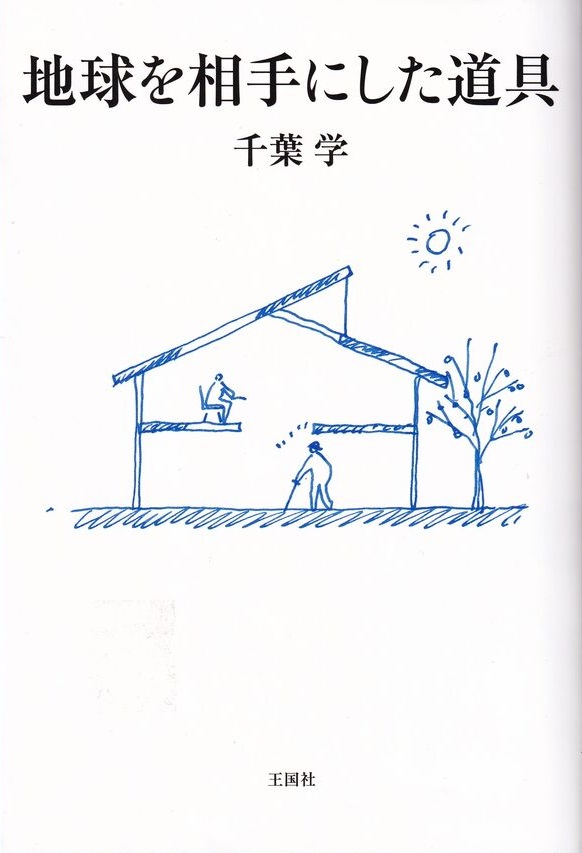
Chikyu wo Aitenishita Dogu (Tools for the Earth)
Size
224 pages, 127x188mm
Language
Japanese
Released
January, 2025
ISBN
9784860730789
Published by
Okoku Co., Ltd.
Book Info
See Book Availability at Library
Japanese Page
This book is a collection of writings the author has written throughout his career as an architect. Many of these pieces were written after the Great East Japan Earthquake of 2011. The title, "Tools for the Earth," embodies the belief recognizing the tool-like aspects of architecture, and especially of tools for the Earth, will be an important perspective when considering the future role and design of architecture. That said, it may be difficult to imagine whether architecture is a tool, or what exactly a tool for the Earth is. Furthermore, the connection to the Great East Japan Earthquake may not immediately be apparent.
For example, farmers use tools such as shovels, sickles, hoes, and spades. These are used appropriately depending on the condition of the land, such as digging deep into the soil, plowing, or weeding. A more familiar example is cooking. Skilled cooks likely own several knives and chooses the best knife for each ingredient, whether slicing or chopping. The tools we use to interact with the earth's produce, whether it be the soil or ingredients, have all evolved beautifully in response to how humans utilize and interact with them. The richness of tools is a reflection of the earth's richness. At the same time, it's worth noting that mastering these tools also sharpens our senses. Just as a skilled chef can determine the quality of an ingredient the moment he or she cuts it.
In this way, tools used to interact with the earth are, in a sense, the crystallization of a rich dialogue with it. And the author believes that architecture, too, was originally a tool of this kind. Architecture’s vital role was to allow us to gain a deeper understanding of the natural environment of the land, to become more sensitive to the changing seasons, and even to be in touch with the subtleties of human nature. However, in recent years, architecture has become overemphasized in its technology and its symbolic transmission of high airtightness and insulation, privacy, security, and surface finishes, completely diminishing this aspect of architecture as a tool. At the same time, these buildings have dulled the delicate sensitivity humans innately have toward nature, local areas, and communities. This is why the author believes architecture must once again become a tool that mediates the relationship between people and the Earth. Unless we physically cultivate an understanding and sensitivity toward nature through architecture, environmental problems will never be fundamentally resolved. What is needed is not vast amounts of data, but a high-resolution dialogue with the voice of the Earth.
The Great East Japan Earthquake was an opportunity to once again recognize the vulnerability of architecture and cities that are overly dependent on technology, and the importance of connections between people. This book traces the author’s ongoing reflection what architecture and cities should be like in the wake of this experience. But it also includes many topics that are easy to understand even for those without an architectural background. It would be delightful if it were read by a wide audience.
(Written by CHIBA Manabu, Professor, School of Engineering / 2025)