

 Find a book


Title
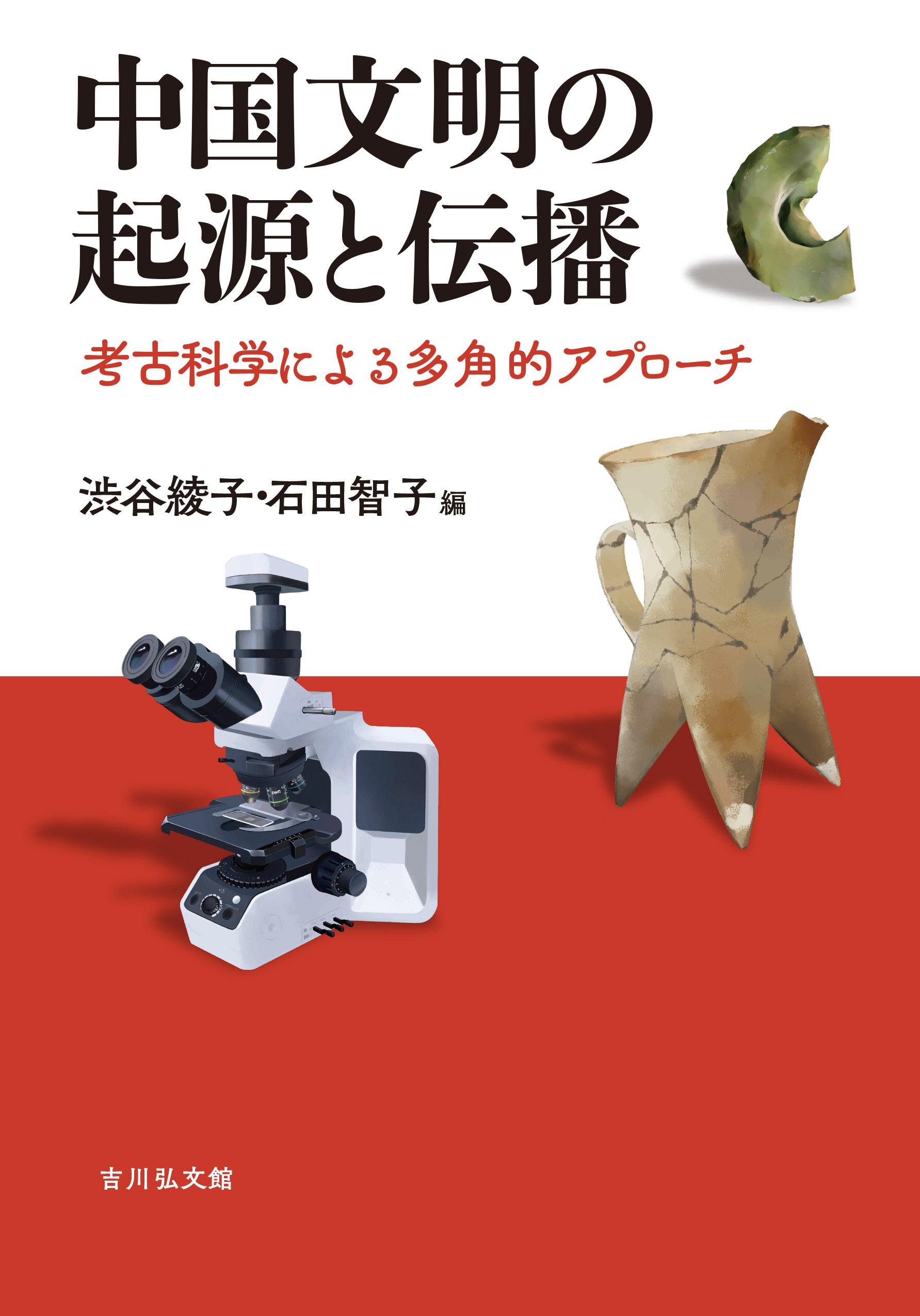
Chugoku bunmei no kigen to denpa (The Origins and Diffusion of Chinese Civilization - A Multidisciplinary Approach through Archaeological Science)
Size
250 pages, A5 format
Language
Japanese
Released
October 08, 2025
ISBN
9784642093699
Published by
Yoshikawa Kobunkan
Book Info
See Book Availability at Library
Japanese Page
 eBook
eBook
This book, ‘The Origins and Diffusion of Chinese Civilization: A Multidisciplinary Approach through Archaeological Science’, is an academic publication systematising the pioneering achievements of the planned research project, ‘Deduction of Production Sites through Analysis of Archaeological Remains’. The project is part of the Grants-in-Aid for Scientific Research Grant-in-Aid for Transformative Research Areas (A): ‘A New Archaeology Initiative to Elucidate the Formation Process of Chinese Civilization’. Recent archaeology has dramatically progressed in archaeological science, building upon traditional morphological studies and textual historiography, while forging close collaboration with natural and physical sciences. These interdisciplinary approaches are no longer merely supplementary tools but have become an indispensable paradigm for reconstructing historical narratives, particularly in elucidating the civilisation formation process on the Chinese mainland.
The book’s key originality lies in its redefinition of prestige goods—material cultures, such as lacquerware, cinnabar, jade artefacts, and specialised pottery, generally conceptualised as mere ‘symbols of authority’—from a thoroughly material-scientific perspective. It employs the latest non-destructive and trace element/isotope analyses to identify raw material origins and quantitatively reconstruct production techniques. By doing so, it succeeds in describing, as a dynamic social system, the resource management strategies, the diffusion of technological systems, and their transformation processes during the early state formation period—extending beyond a mere understanding of the circulation of goods. This methodology, which illuminates social structures from minute compositions, presents a novel perspective that re-examines the relationship between objects and humans.
This book’s academic significance is that it is not merely a compilation of analytical data, but rather, strongly invokes methodological rigour in archaeological science. In the modern era of increasingly sophisticated and versatile analytical instruments, data utilisation lacking deep insight into measurement principles risks generating arbitrary historical interpretations. This book meticulously details the validity of sampling according to the physical and chemical properties of artefacts, the control of analytical environments, and the process of error assessment. This approach redefines the scholarly practice of elevating physical and chemical data into historical evidence, thereby serving as an extremely insightful guideline for young researchers engaged in specialised studies. Furthermore, this book’s contemporary significance cannot be disregarded. Understanding the ageing process and composition of materials provides a scientific foundation for cultural property conservation and restoration, directly contributing to sustainable cultural heritage protection policies. Unravelling the trajectories of technological exchange and environmental adaptation through the vast scale of Chinese civilisation offers an opportunity to re-examine modern challenges within a broader human historical timeline.
This book, using advanced specialised knowledge, aims to illuminate the societal activities underlying these phenomena. We sincerely hope that this work will catalyse the identification of original research topics and contribute to driving the subsequent generation of interdisciplinary research.
(Written by SHIBUTANI Ayako, Project Assistant Researcher, Historiographical Institute / 2026)
Table of Contents
Introduction: The Study on the Formation Process of Chinese Civilization and Archaeological Science
Shinichi Nakamura
Introduction
1 Migration of Materials and Archaeological Science
2 “The Formation Process of Chinese Civilization” Project
Project Summary: Deduction of Production Sites through Analysis of Archaeological Remains
Ayako Shibutani
Introduction
1 Project Outline
2 Research Findings: What We Know and What We Don’t know
3 Future Perspectives from the Project’s Five-year Results
Conclusion
Part I: Origins and Development of Chinese Civilization
Chapter 1: Ritual Pottery from the Neolithic to the Early Bronze Age in China Xiaoli Qin
Introduction
1 Social Background for the Emergence of Neolithic Ritual Pottery
2 Ritual Pottery Excavated from Tombs in the Erlitou Culture Period
3 Ritual Pottery Excavated from Sites Other than Tombs in the Erlitou Culture Period
4 Distant Trade of Ritual Pottery in the Erlitou Culture Period
5 Ritual Pottery and Proto Porcelain of the Erlitou Culture Period: Relationship with the Lower Yangtze River Basin
Conclusion: Background to the Production of Ritual Pottery in the Erlitou Culture Period
Chapter 2: Use of Vermilion (Mercury Vermilion) in the Pre-Qin Dynasty Hui Fang
Introduction
1 Reconstructing Chinese Prehistoric Vermilion Artefacts
2 Issues Relating to Vermilion Artefacts from the Shang and Zhou Dynasties
Conclusion
Part II: Scientific Analyses of Archaeological Properties and Estimation of Their Origins
Chapter 1: Looking at Pottery through the Eyes of Science― An Approach from Clay Analysis―
Tomoko Ishida
Introduction
1 The Importance of Pottery as Archaeological Material and the Significance of Clay Analysis
2 Current States and Challenges of Clay Analysis in Japan
3 Current States and Challenges of Clay Analysis in China
Conclusion
Chapter 2: Estimation of the Origins of Vermilion Excavated from Ancient Ruins― Approach Using Sulfur, Mercury, and Lead Isotope Ratio Analysis―
Takeshi Minami, Kazuya Takahashi, Masafumi Saitoh
Introduction
1 Red Ocher and Red Lead
2 Vermilion
3 Chemical Analysis of Vermilion
4 Sulfur, Mercury, and Lead Isotope Analysis Methods
5 Analysis of Cinnabar Mine Ore and Vermilion from Archaeological Sites Using Isotope Analysis
Conclusion
Chapter 3: Estimating the Origin of Vermilion Excavated from Archaeological Sites through Sulfur Isotope Ratio Analysis― Current Status and Prospects―
Takeshi Minami, Kazuya Takahashi, Hui Fang, Shinichi Nakamura
Introduction
1 About Sulfur Isotopes
2 What is the Cinnabar Mine?
3 The Impact of Differences in Cinnabar Veins on the Sulfur Isotope Ratios of Ore
4 Method for Collecting Vermilion from Archaeological Sites
5 Measurement Methods for Sulfur Isotope Ratios and Calculation of σ34S Values
6 Important Points for Measuring Sulfur Isotope Ratios Using the EA-IRMS Method
7 Importance of Equipment Maintenance
8 About Ultra-trace Sulfur Isotope Analysis Systems
Conclusion
Chapter 4: Starch Residue Analysis in Studies of Ancient Civilization Ayako Shibutani
Introduction
1 What Is Starch Residue Analysis?
2 Research States in East Asia since 2000’s
3 Future Prospects of Archaeological Starch Studies
Conclusion
Part III: The Spread of Chinese Civilization: Interaction with the Eastern Eurasian World
Chapter 1: New Insights of Chemical Investigation of Ancient Metal Artifacts― Bronze and Copper Objects in Eastern Eurasia― Yoshiyuki Iizuka
Introduction
1 Observation of Metallographic Structure and Methods of Chemical Analyses
2 Chemical Characteristics of Bronze and Copper Objects from Eastern Eurasia
3 Copper Alloys from the Eurasian Steppes
4 Ore Minerals and Metal Smelting of Copper Alloys
5 Observation and Chemical Analysis of Copper Smelting Slags
6 Manufacturing Technology of Ancient Copper Alloy Objects from the Perspective of Chemical Analysis
Chapter 2: Nephrite Artifacts in Early Jomon of Japanese Archipelago― Usage and Distribution of Nephrites in Eastern Eurasia― Yoshiyuki Iizuka
Introduction
1 Chemical Analysis of “Stone Materials”― Petrological Methods and Archaeological Requirements
2 “Jade” in Geo-archaeology
3 Nephrite Artifacts in Neolithic Eastern Eurasia
4 Petrological and Chemical Analysis of Stone Materials
5 Non-invasive Chemical Analysis of Stone Artifacts from the Early Jomon Period, Japan
6 White Nephrite Jade Artifacts
7 Where Did the Nephrite Come from?
Closing Remarks
Afterword Ayako Shibutani
Related Info
A New Archaeology Initiative to Elucidate the Formation Process of Chinese Civilization
https://chugokubunmei.jp/en