



A new study of the blue button (Porpita porpita), a small and elusive sea creature which lives on the surface of the ocean, has found that it may live for several years adrift at sea, much longer than previously estimated. Researchers from the University of Tokyo’s Misaki Marine Biological Station also found that the float which keeps the animal adrift expands by growing new rings from its outermost layer. Blue buttons are notoriously difficult to keep alive in captivity, so this is a step closer towards eventually understanding their full life cycle.
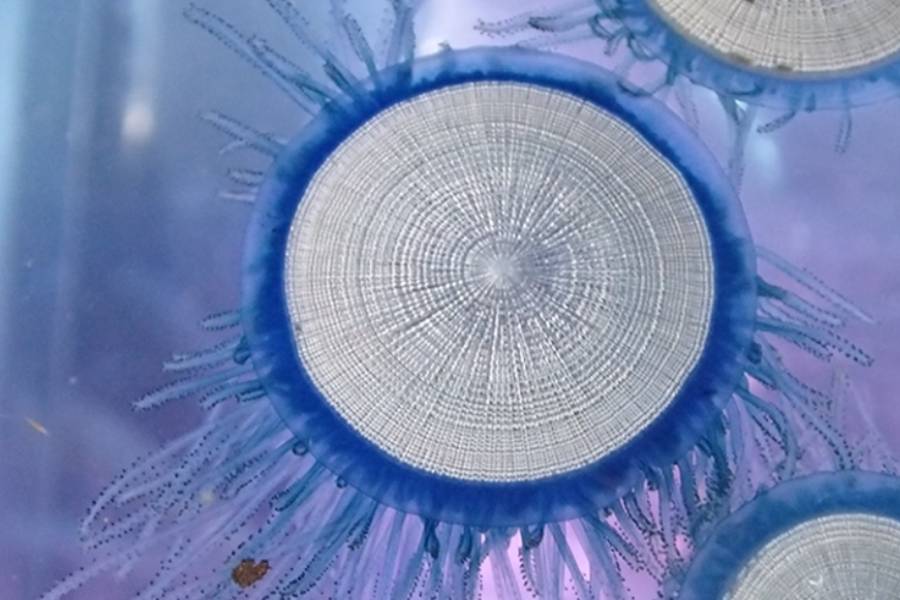
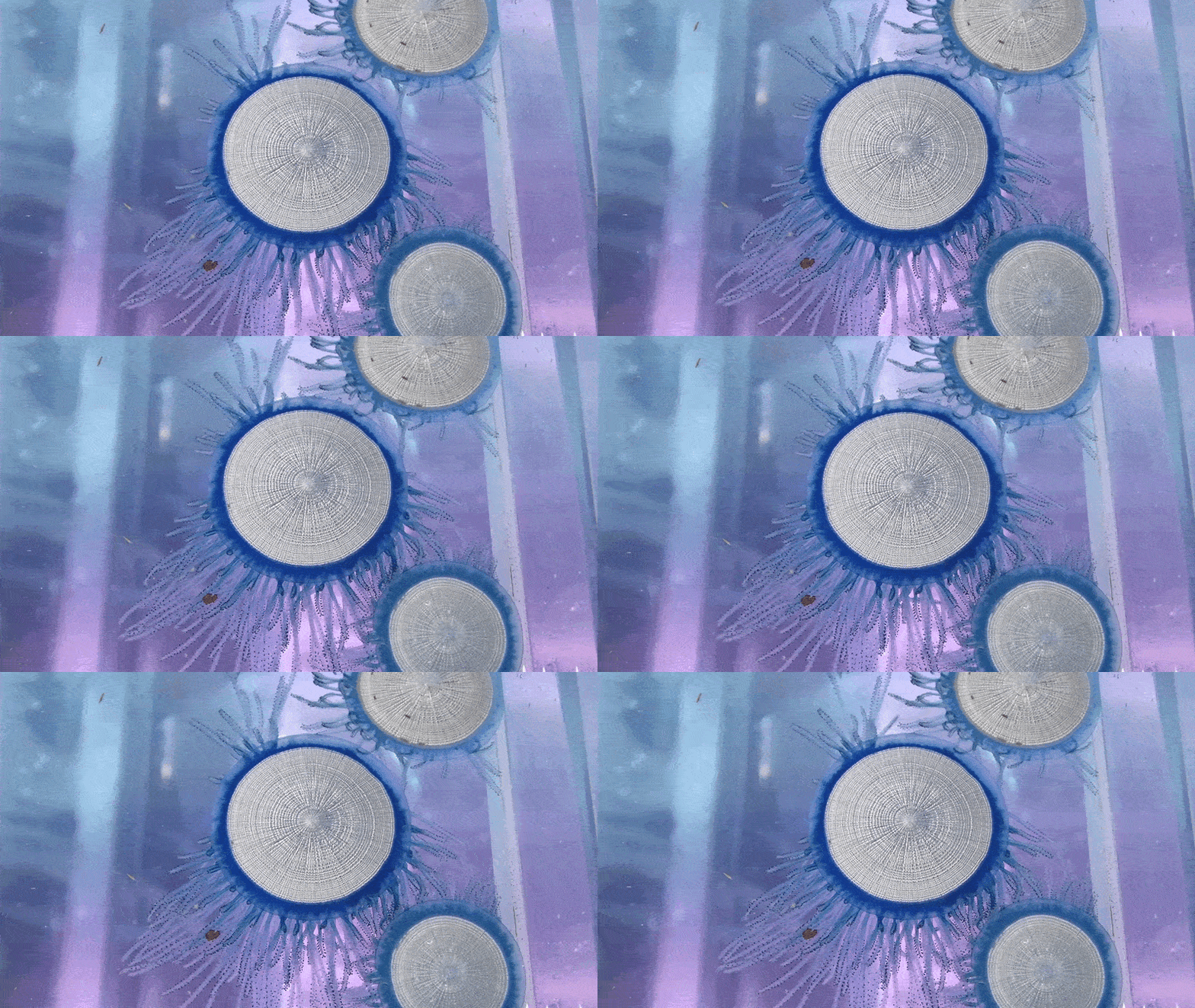
The tiny blue button looks at first glance like a delicate jewellike jellyfish. But, it is in fact a collection of tiny, soft marine invertebrates, called zooids (or polyps), which grow as one colony. The zooids are attached to a circular disc made of chitin, the same stuff as crab and shrimp shells, which contains chambers of air and acts as a float. Similar to a raft with its crew, the individual zooids work in specialized groups to perform different tasks to survive, from catching prey (dactylozooids) to reproduction (gonozooids).
Blue buttons only grow to about 4-5 centimeters in diameter and drift wherever the current takes them, making them difficult to spot, unless you are lucky enough to be in the right place on the open ocean or they unfortunately get stranded on a beach. Despite their hardiness out at sea – surviving wind, rain, waves and sun – it has proven challenging to keep them alive in captivity, making studying them very difficult.
However, researchers at the University of Tokyo, along with specialists at two Japanese aquariums, have recently achieved some success.
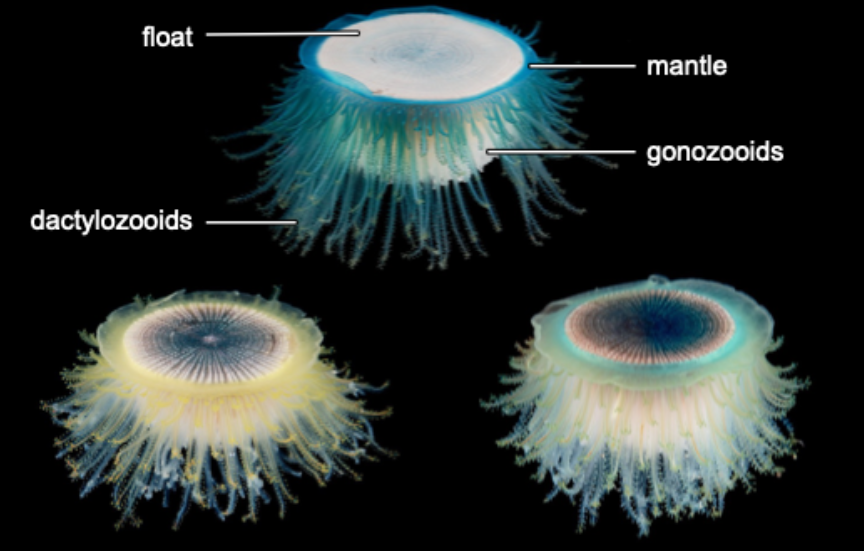
“We were able to keep 10 blue button colonies alive for up to 21 days,” reported Associate Professor Kohei Oguchi from the University of Tokyo. “From our observations of these colonies, we can now estimate that blue buttons may actually live for several years drifting on the ocean surface. This is much longer than previously thought, which was less than a year.”
Oguchi searched for blue buttons in rock pools on daily walks around the University of Tokyo’s Misaki Marine Biological Station, on the Miura Peninsula in Kanagawa Prefecture, just south of Tokyo. The team then undertook extensive testing of the conditions needed to keep them alive, trialing different-sized containers (30 cm to 1 meter in diameter), a range of temperatures (18-25 degrees Celsius), flowing or still water, varied levels of sunshine, and different types of food. In the end, they found success using the simplest method – a 30-cm plastic container of filtered seawater, changed daily and placed near a sunny spot, and a diet of small shrimp.
Photographs were taken of the blue buttons when they were collected and again at the end of their rearing period. From the change in the radius of the colony, Daiki Wakita, a postdoctoral researcher who specializes in mathematical analysis, could estimate the age of a colony using a mathematical tool called the von Bertalanffy growth model, often used to gauge the growth of fish and coral. A 4-millimeter-radius colony was about 3 months old, a 12-mm one about 1 year old, while a 23-mm colony was an unexpected average of 5 years old.
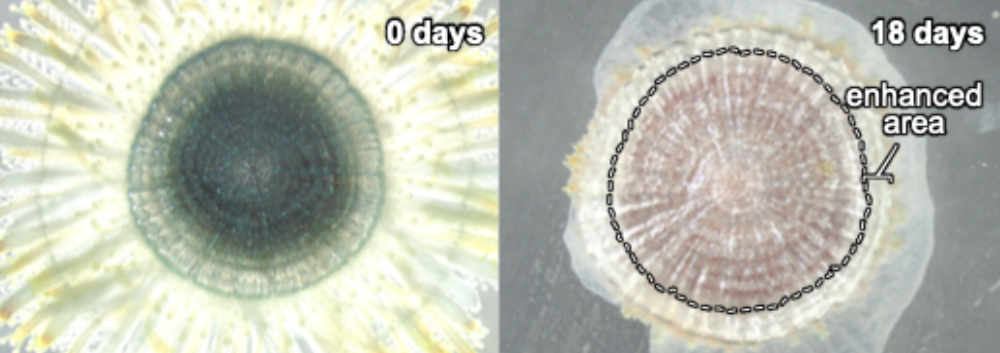
Aside from finding out more about the blue button’s longer lifespan, the team had the opportunity to observe how the float grew. “The chitinous float that supports the colony looks just like the cross section of a tree, with concentric rings. We found that new layers grow from the periphery of the outer ring,” said Oguchi. “This means that it doesn’t grow from the expansion of preexisting layers, which we didn’t know for sure before.”
Following on from this initial success, Oguchi’s ambition is to rear blue buttons from their first stage of life through their entire life cycle. “My research focuses on how the different specialized individuals that make up a blue button colony develop, and how they are integrated so that the colony behaves almost like a single organism,” said Oguchi. “Being able to keep colonies alive for as long as we have for this study is an encouraging step forward.”