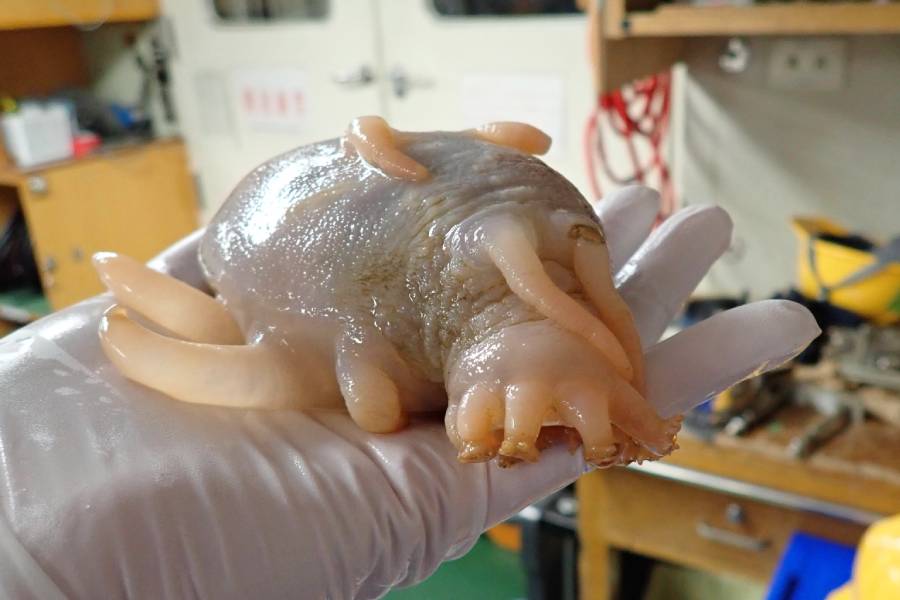
In the deep ocean, translucent sea pigs trundle across the seafloor. Researchers at the University of Tokyo have discovered an unusual bacterium beneath the sea pig’s “skin.” Through fluorescent imaging, they determined the location of the bacterium, which they named Candidatus Abyssoplasma scotoplanesicola. DNA analysis revealed a minimized genome of just 649,000 bases. Unexpectedly, more than a quarter of this was dedicated to building surface-associated protein groups, including “giant” proteins exceeding 5,000 amino acids in length, possibly for interactions with host tissues or bacterial aggregation (clustering into groups). This study offers clues to which functions remain in symbiotic bacteria living closely with their host.
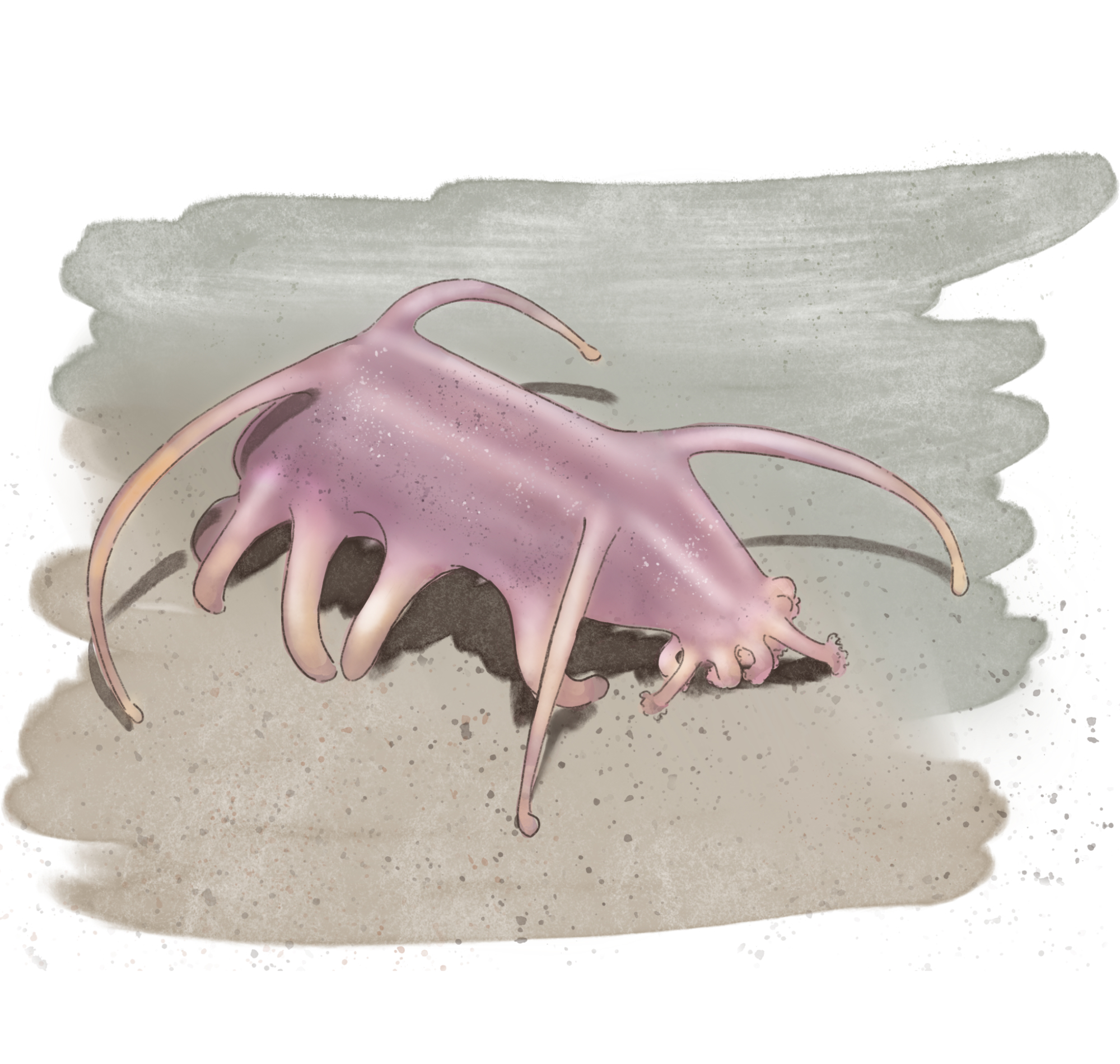
You may have heard of sea cows, sea lions and seahorses, but have you ever heard of the little sea pig? This small, jellylike creature lives in the deep ocean and is a type of sea cucumber. It slowly meanders across the ocean floor on its many tubelike feet, scooping up dead matter into its tentacled mouth. It may be small, but it is influential in the ocean ecosystem. Not only does it recycle organic matter and nutrients, but, despite its defenseless appearance, its squidgy body provides shelter from predators to young king crabs.
However, there is a lot we don’t know about these curious-looking creatures. How long do they live? Why do they have waving, antennalike protrusions on their head? And what is their relationship with the symbiotic bacteria which live underneath their skin? Like other echinoderms (marine invertebrates including sea cucumbers and sea stars), sea pigs have subcuticular bacteria growing in the layers which encase their body. Understanding this symbiosis is of great interest to researchers and marine biologists, both from an evolutionary perspective and because in some areas of the deep sea, sea cucumbers account for more than 90% of the biomass of large bottom-dwelling animals.
“Taxonomic and genomic information about these body-wall inhabiting bacteria is scarce, and very few studies of deep-sea species have linked this information to the bacteria's location within host tissues,” said Yu Yoshida, a Ph.D. student at the Graduate School of Frontier Sciences and a lead author of a new paper which investigates exactly that.
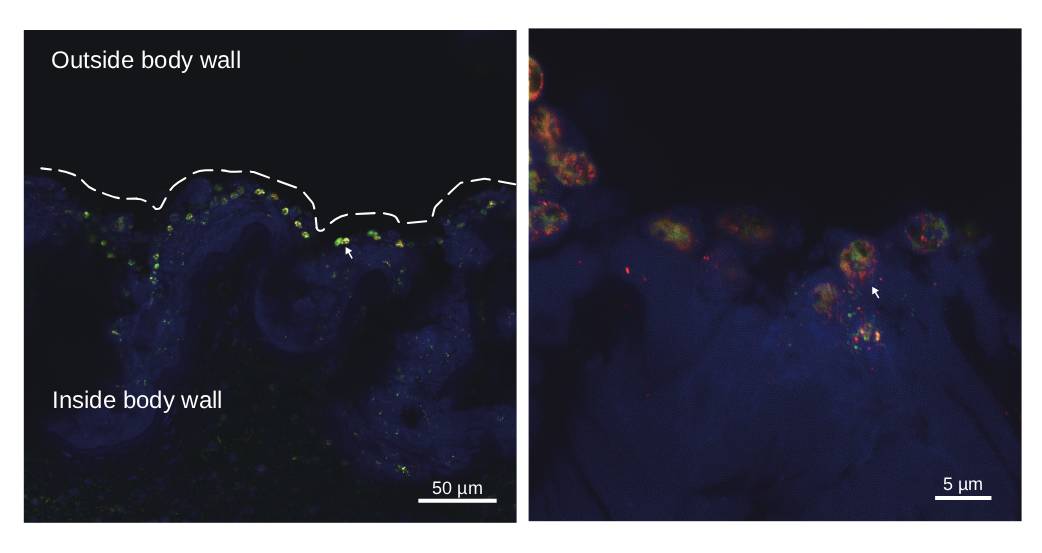
A multi-institutional team in Japan, including researchers from the University of Tokyo, extracted DNA from various tissues in eight sea pigs collected during deep-sea expeditions. Using this information, the team could determine what type of bacteria was abundant in different parts of the body and they reconstructed the genomes of the dominant types. They then used fluorescence imaging to pinpoint where in the host tissue those bacteria were located.
“What we found was that in body-wall samples from the three sea pig species, one bacterium accounted for more than 70% of bacterial 16S rRNA gene sequences (a genetic marker used in identifying bacteria), so it truly dominated the body wall,” explained Yoshida.
Although the bacterium, Candidatus Abyssoplasma scotoplanesicola, belongs to a lineage of symbiotic bacteria associated with marine invertebrates, it is substantially different from other known types. This has led the researchers to propose that it is a new genus and species, one with some unexpected characteristics.
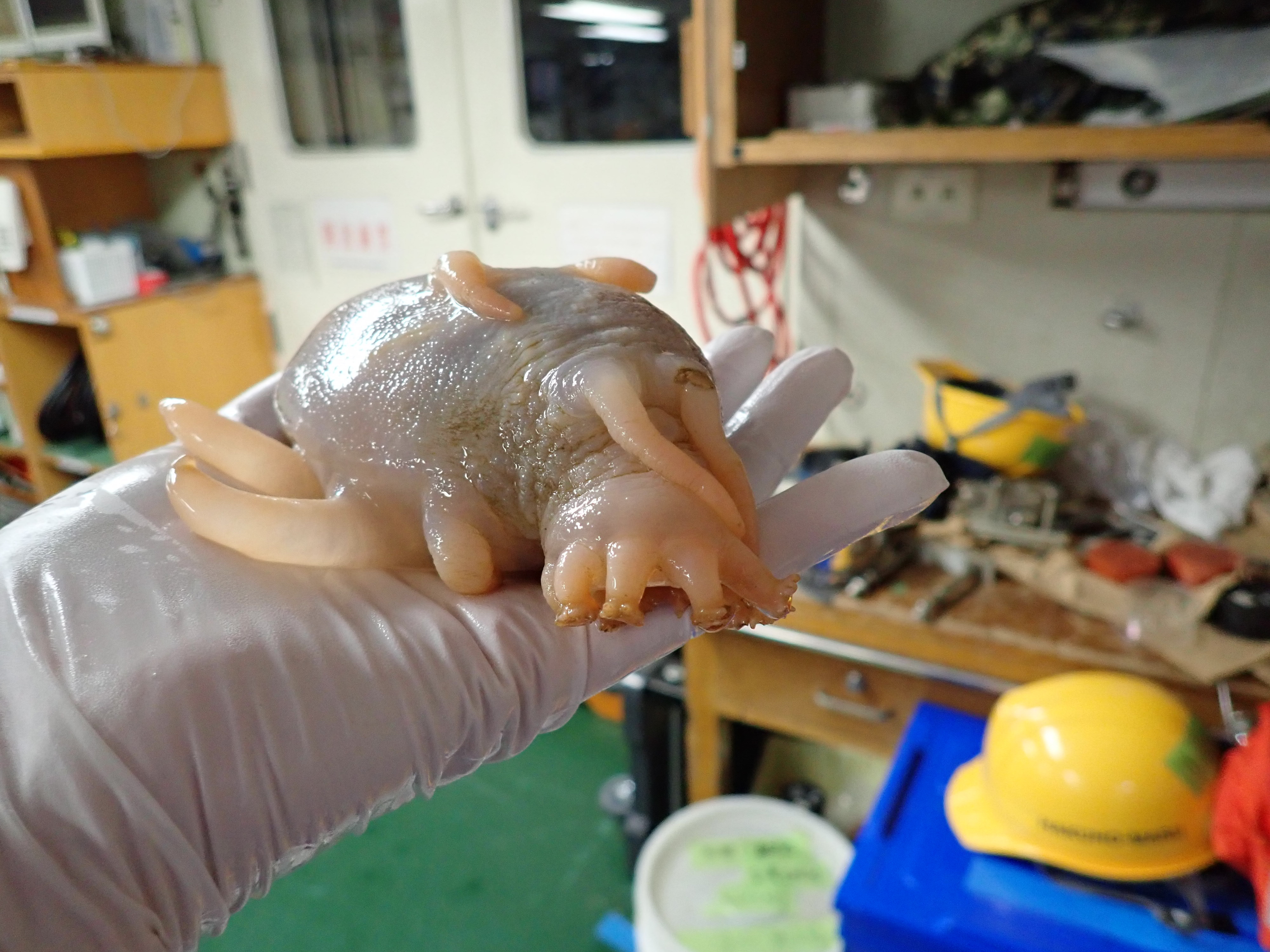
“The complete genome was very small, only 649,000 bases. By comparison, the E. coli genome is approximately seven times larger. However, we were more surprised by the composition. Genes for some of the energy-generating pathways (used for breaking down nutrients and generating energy) which are commonly found in bacteria were not detected,” explained Yoshida.
“Meanwhile, genes for encoding surface-associated protein groups (that is, DNA with the blueprints for building specific proteins on cell surfaces) accounted for 27.6% of the entire genome. This included genes for proteins exceeding 5,000 amino acids. As bacterial proteins average about 300 amino acids in length, 5,000 is exceptionally long. This offers us important clues as to which functions are retained in bacteria which live in close association with their host.”
Amino acids are essential nutrients for both the host and its symbiotic bacteria. Based on this study, Candidatus Abyssoplasma scotoplanesicola is thought to rely heavily on its host’s tissues to obtain amino acids, nucleic acid precursors, lipids and mineral nutrients – all the things it needs to survive which its own very reduced genome cannot provide. However, what the sea pigs gain from this relationship is currently unknown. The bacterium may play a role in protecting its host from pathogens, but that is still to be confirmed.
We would really like to understand how this bacterium could become so dominant in the body wall, the functions of the giant surface proteins, what competition it faces from other bacteria, and of course the effects on the host,” said Yoshida. “More broadly, further investigation could provide fundamental insights into how bacteria colonize hosts and adopt a host-dependent lifestyle.”