


Title
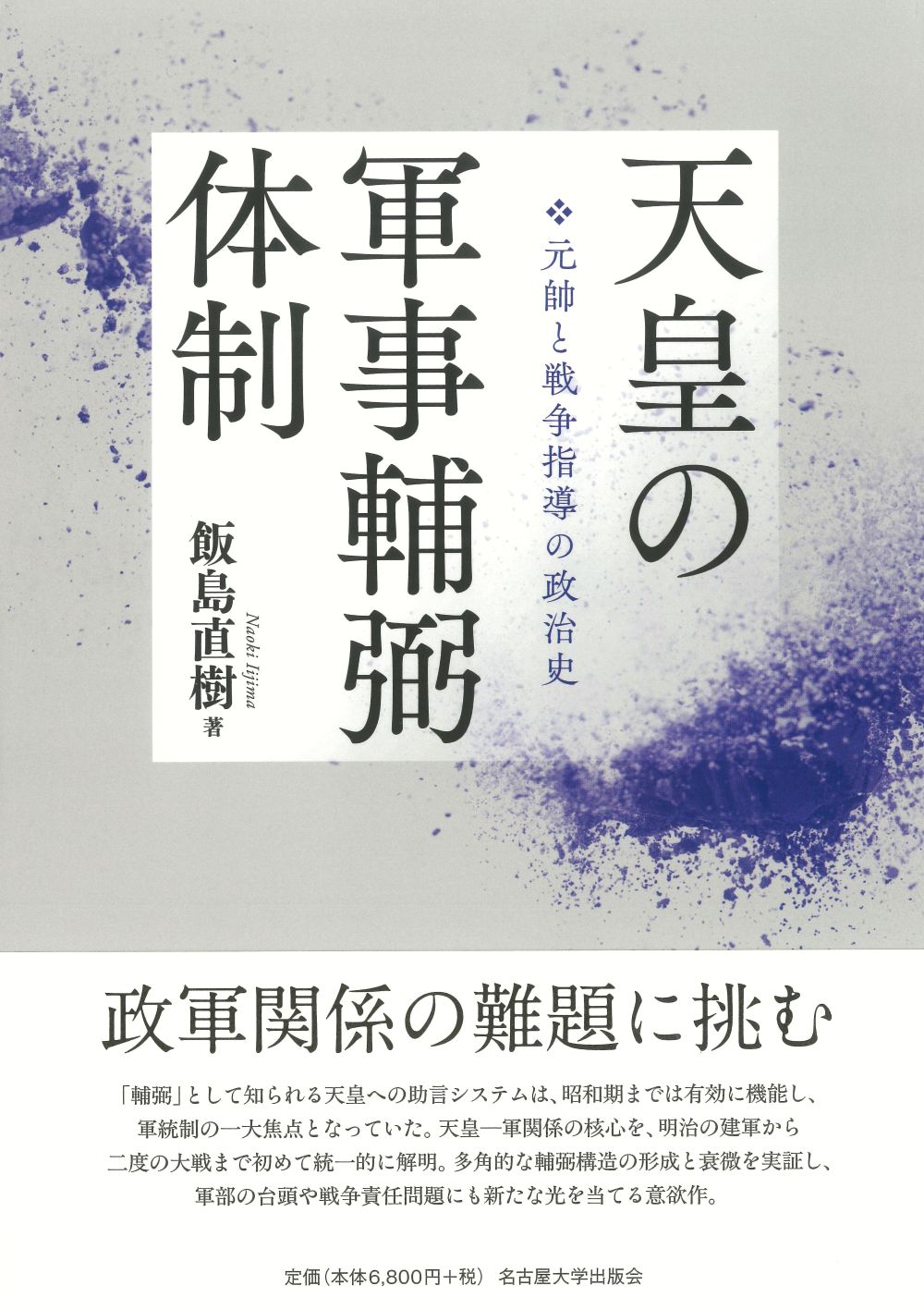
Tenno no gunzihohitsutaisei (The Emperor's Military Assistance System: A Political History of the Supreme Military Council and War guidance)
Size
368 pages, A5 format, hardcover
Language
Japanese
Released
March 31, 2025
ISBN
978-4-8158-1192-1
Published by
The University of Nagoya Press
Book Info
See Book Availability at Library
Tenno no gunzihohitsutaisei―gensui to sensousidou no seizisi
Japanese Page
The following essay will explore the methods employed by the Emperor of modern Japan in his attempts to exercise control over the military, and the ways in which the Army and Navy opposed this effort to achieve autonomy from the Emperor.
These questions are raised at the beginning of the book. However, those who have studied modern Japanese history in junior high and high school may find this question disconcerting. In contemporary Japan, the Emperor assumes the role of Grand Marshal, thereby wielding the authority to command the military. This leadership style was distinct from the functions of the cabinet and the Diet, which were considered separate and independent authorities. The military's pre-war system of "independence of generalship" and the ideology of the "emperor's army" functioned as a shield against the government (cabinet), political parties, and parliament. Young and middle-ranking officers in the military amplified their political voice by challenging the top brass in what is known as the "junta.” Upon initial observation, it may appear incongruous that the military apparatus prior to the war, which is often characterized as being in opposition to the government and political parties, would also be in opposition to the Emperor, the Supreme Commander.
However, within the military's right of command, the basis of its political legitimacy to oppose the government lies in the tension between the emperor's attempts to control the military and the military's desire to secure autonomy, not only from the government but also from the emperor. For instance, it is widely acknowledged that the Showa Emperor endeavored to regulate the military by advocating international collaboration and eschewing armed conflict. Furthermore, he played an active role in the direction of war efforts during the war years. However, even the Emperor, as a general, was unable to prevent the military's political rise or the "path to war.”
As stated in the "Afterword,” the book poses the following question: "Why was the Emperor, who was purportedly the Supreme Commander of the Armed Forces, incapable of halting the military from 'running amok'?" The military, as a large organization characterized by strict hierarchical structures and discipline, raises the question of why it could deviate so far from the control of its superiors. However, this remains a fundamental issue.
Conventional histories of political-military relations have sought to examine tensions over autonomy between the government, political parties, parliament, and the military. In contrast, the present volume is distinctive in its focus on the political-military relations of modern Japan, with particular reference to the emperor’s right of command and the internal workings of the " emperor’s army.
The book focuses on the Supreme Military Council(Gensuifu), which was regarded alongside the Privy Council as the Emperor's top military advisor, and on the members of Gensuifu, the Marshalls(Gensui). The most renowned gensui included Aritomo Yamagata, Iwao Oyama, and Heihachiro Togo. Gensuifu functioned as an advisory organ capable of providing counsel to the emperor without the need for direct oversight from the Ministry of War and the Ministry of the Navy (military government organs), the General Staff Office, and the Military Ordinance Department (military command organs). Consequently, when the emperor made decisions on significant military matters, he sought counsel not only from the War and Navy ministries but also from the Gensuifu and individual Gensui. He used this advice as a foundation for his decision-making process.
This book examines the manner in which the Emperor of modern Japan utilized the Gnensuifuto exercise control over the military and demonstrate initiatives in the field of military guidance. Furthermore, it explores the attempts made by the Ministry of the Army and Navy to remove the Gensuifu from the military assistance system and render it autonomous from the Emperor's military guidance. The book addresses this question by focusing on the tense battles between the emperor and the army and navy, as well as the military leadership styles of successive emperors. These battles were mediated by a military assistance system consisting of a group of military elders called theGensuifu. The book chronologically depicts these battles from the Meiji to the Showa periods.
It is hoped that those interested in the modern emperor system (or monarchy) and pre-war political-military relations will find this book a rewarding read.
(Written by: IIJIMA Naoki / March 31, 2026)
Related Info
The 5th UTokyo Jiritsu Award for Early Career Academics (The University of Tokyo 2024)
https://www.u-tokyo.ac.jp/ja/research/systems-data/n03_kankojosei.html