

 Find a book


Title
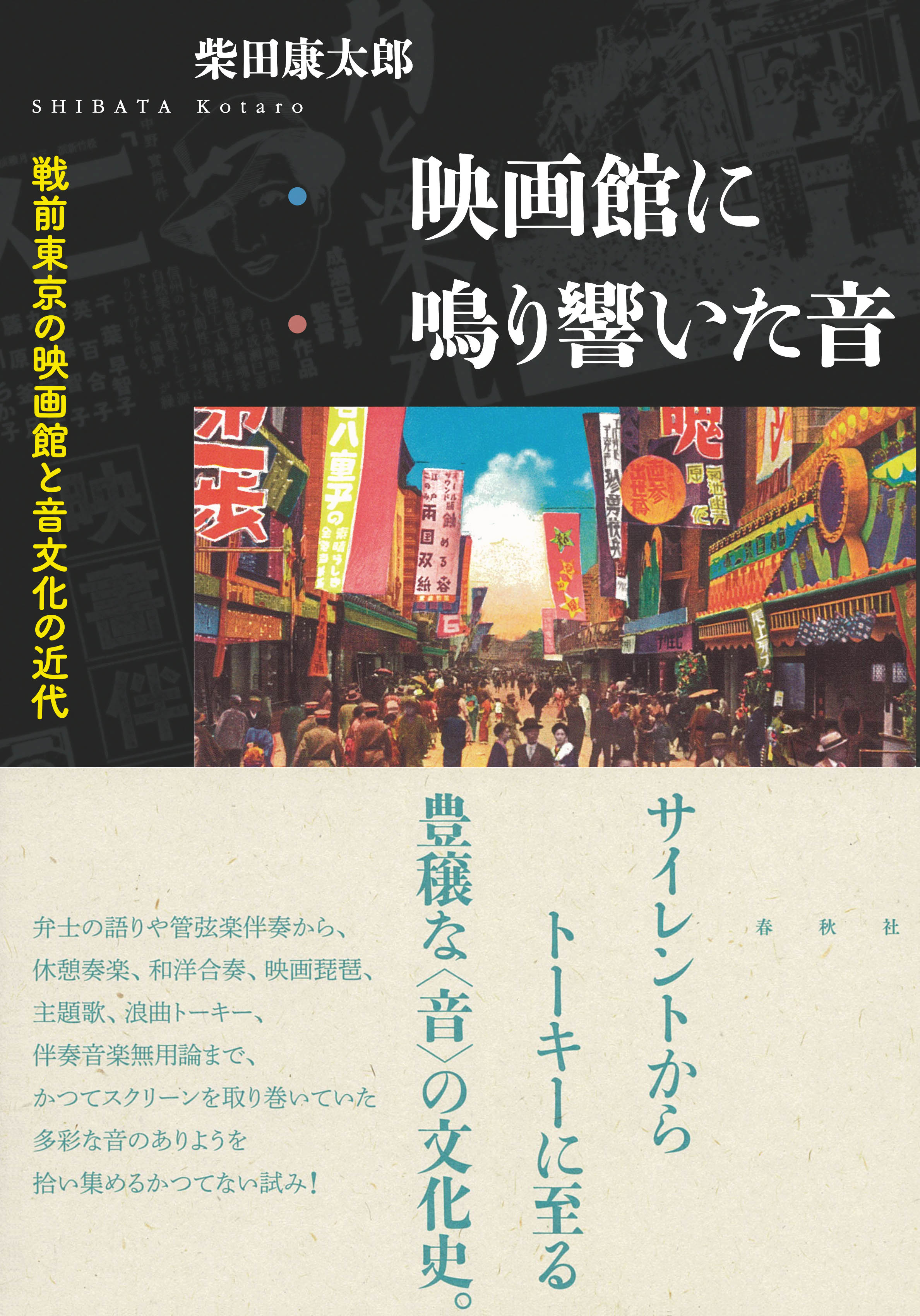
Eigakan ni narihibiita oto (Cinema Soundscapes - Cultures of Film and Sound in Prewar Tokyo)
Size
784 pages, A5 format
Language
Japanese
Released
July 10, 2026
ISBN
9784393930496
Published by
Shunjusha
Book Info
See Book Availability at Library
Japanese Page
 eBook
The sounds that resounded in the movie theaters. What kind of sounds do you visualize from this title? When you think of the sounds of a modern movie theater, you might imagine heavy bass effects, tear-inducing melodramatic strings, the gripping sounds of a car chase, the grand orchestra of an action movie, the futuristic sounds of a sci-fi movie, or the theme song by your favorite artist.
However, this volume discusses movie theaters in prewar Japan. The sounds were very different from what you would imagine from a modern movie theater. They were so different from modern sensibilities that I was frequently surprised while conducting this research. This volume sheds light on the soundscape of that era.
In the days of silent films, when films lacked recorded sound, various sounds were added with live music during the movie screenings, and these were different for each movie theater. A narrator called benshi narrated the dialog and plot, and for foreign films, musicians employed by movie theaters performed Western music, ranging from piano to orchestra. Still, attempts were also made to match the biwa with foreign films, revealing just how different the musical sense of Japanese people was. Some audience members were curious about the titles of the Western music used for the accompaniment, walking up toward the screen to take a peep at the performers’ scores during the screening. People’s behavior in movie theaters was also different in those days.
The soundscape of Japanese film screening was also very different from today. Traditional Japanese music is rarely heard on TV and in movies today. Orchestral sounds can be heard even in taiga dramas and other period plays. However, this was the case in the era of silent films. In earlier times, a narrator called kowairo benshi imitated the narration of stage actors, music accompaniments reminiscent of kabuki were played, and films were enjoyed as if they were jōruri, with gidayū, shinnai, biwa songs, and naniwabushi (rōkyoku narrative singing). However, with changing times, the number of orchestral ensembles gradually increased, but here too, Western music and the sounds of the shamisen and biwa songs coexisted. Through trial and error by movie theaters, Western and Japanese music were eclectically combined.
A variety of sounds would resonate even in the era of talkies, but those reverberating in movie theaters changed from live performances to recordings, with Japanese music declining and Western music becoming more common. It is relatively well known that benshi and musicians at the silent movie theaters were dismissed. However, there was also a movement to eliminate the accompaniment of music common in modern film and television, while seemingly narrative voices appeared during processes of trial and error. It is no exaggeration to say that, before World War II, when the history of cinema witnessed the major transition from “silent films” to “talkies,” movie theaters served as hubs for varied sound cultures.
In this volume, I try to clarify what kind of sounds resonated with the screen in Japanese movie theaters as well as what kinds of dynamics and relationships were formed between images and sounds. To trace this as concretely as possible, this volume focuses on cinemas in Tokyo and analyzes not only newspapers, magazines, books, and videos but also other material, such as movie theater programs, sheet music, records, and biwa scripts. To consider the characteristics of this sound culture, I tried to broaden my perspective by including cases from abroad and discussing them from the perspective of global history.
The current environment for watching movies has changed dramatically, with increasing numbers of people watching short videos on smartphones and tablets. This is reflected in the increasing number of people who enjoy movie-watching events, such as live music screenings and cheering screenings (ouen jōei). We can see an inverse aspect of the transition from the silent era to the talkie era here. Now is the time when the nature of films is changing drastically. I would like you to consider the sound culture of films and movie theaters by gathering clues from the history of sounds in the movie theaters of the past.
(Written by SHIBATA Kotaro, Assistant Professor, Graduate School of Humanities and Sociology / 2026)
Table of Contents
- The Movie Theater as a Space for Experiencing Western Music: Cultural Apparatuses of Western Music Reception
- A Global History of Sonic Practices in Film Exhibition
- The Sound Culture of Movie Theaters in Prewar Tokyo
- Structure of this Book
Part I: The Silent Era 1 – The Development of Western Film Exhibition and Western Music Accompaniment
Chapter 1: The Sounds that Resounded in Early Movie Theaters: The Development of Film Exhibition and the Diversification of Sonic Practices
- The Dawn of Film Exhibition: Early Film Screenings and Two Approaches to Sonic Practice
- The Birth of the Movie Theater and Sonic Practices in Narrative Cinema
- The Proliferation of Movie Theaters and the Diversification of Sonic Practices
Chapter 2: How Japanese Audiences Heard Western Music: Intermission Music and Film Accompaniment in Foreign-Film Theaters
- Foreign-Film Theaters and the Expansion of Orchestral Ensembles
- Foreign-Film Fans’ Enthusiasm for "Western Music" and the Modernization of Cinema Culture
- How Foreign-Film Fans Listened to Accompaniment Music
Chapter 3: Benshi and Musicians in the Dark: The Intersection of Global Accompaniment Music and Local Film Narration
- Film Narration and Film Accompaniment in "Photoplay" Discourse: The Formation of a "Domestic Standard" for Foreign-Film Exhibition
- The Clash Between Global Musical Practices and Local Film Narration
- The "Modernization" of Film Narration and Film Accompaniment
- Increasing Complexity in Cue Sheet Design for Film Accompaniment: The Further Influx of Music Cue Sheets
Part II: The Silent Era 2 – The Exhibition of Japanese Films and the Transformation of Sonic Practices
Chapter 4: How Japanese Films Came to Be Accompanied by Western Music: The Pure Film Movement and the Practices of Shochiku Kinema
- Sonic Practices Modeled on Theatrical Performance: Voice-Imitating Benshi and Hayashi Percussion/Instruments
- The Reform of Japanese Cinema and Western Music Accompaniment
- Shochiku-Managed Theaters and Western Music: The Foreign-Film Exhibition Model and Theater Reform
Chapter 5: Nobuhiro Matsudaira’s Film Music Composition: The Popularity of Kouta Films and the Nikkatsu Composition Department
- The Birth of the Nikkatsu Composition Department and Nobuhiro Matsudaira
- The Nikkatsu Composition Department and the Kouta (Short Song) Film Craze
- Nobuhiro Matsudaira’s Theory of Film Accompaniment: The Anti-Attraction Orientation of the Pure Film Movement
- Nobuhiro Matsudaira’s Photoplay Accompaniment at the Asakusa Sanyukan Theater
Chapter 6: The Development of Eiga Biwa (Film Biwa) in Japanese Cinema: The Japan Film Biwa Association and Its Context
- The Pure Film Movement and the Development of Eiga Biwa in Tokyo
- Kōryō Kimizuka and the Japan Film Biwa Association
- The Practice of Eiga Biwa as Seen in Film Biwa Scripts
Chapter 7: The Eclecticism of Period Film (Jidaigeki) Accompaniment: Japanese-Western Ensembles, Music Selection, and Newly Composed Scores
- Exhibition Practices of Nikkatsu Period Films and the Introduction of Eclectic Japanese-Western Ensembles: Practices at the Asakusa Fujikan Theater
- Eclectic Music Selection in Nikkatsu Period Films: Music Selection Practices at the Kanda Nikkatsukan Theater
- Nobuhiro Matsudaira’s Accompaniment Scores for Period Films: The Reality of Eclectic Accompaniment Scores
- Intermission Performances in Japanese Film Theaters during the 1920s
Part III: The Talkie Era – Talkie Films and the Reorganization of Sonic Practices
Chapter 8: Movie Theaters and Recorded Sound During the Transition to Talkies: The Exhibition of Talkies as a Music Medium
- Early Talkies and Sonic Practices of the Silent Era
- Music Culture in Japanese Film Theaters During the Transition to Talkies
- The Standardization of Foreign Talkie Screenings and the "Rejection of Accompaniment Music" Discourse
- The Movie Theater as a Space for Auditioning Phonograph Records
Chapter 9: Japanese Talkies and the Re-Standardization of Nondigetic Music: Directors, Composers, and Audiences
- The Transition to Talkies as Seen in Shochiku "Sound Version" Films
- The Re-Standardization of Nondiegetic Music in Talkie Production: Film Directors and Sound Direction
- Music Departments in Talkie Studios and the Re-Standardization of Film Accompaniment
- Developments and Challenges in the Westernization of Film Accompaniment
Chapter 10: The Reorganization of Narrative in the Transition to Talkies: Reconsidering "Kaisetsu-ban (Benshi narration version) Talkies" and "Rōkyoku Talkies"
- Narrated Talkies (Kaisetsu-ban Toki) and the Regionality of Sonic Practices
- The Audiovisual Style of Rōkyoku (Narrative Chanting) Talkies and Their Reception
- Preston Sturges’s "Narratage" and the Diversity of Its Reception
- "New-Style Narratage" and Rōkyoku Performers within the Diegetic World
Chapter 11: Realism in Japanese Cinema and the "Rejection of Nondiegetic Music" Discourse: Shirō Fukai and his Contemporaries
- The Discourse on "Realism" in the Japanese Film Industry
- Film Realism Theory and the Arguments Against Accompaniment Music (Nondiegetic Music)
- Shirō Fukai’s Arguments Against Accompaniment Music in Realist Film
- Theater Speakers as Propaganda Apparatuses
Conclusion
- The Global History of Film Sound and Tokyo Movie Theaters
- A Genealogy of Issues Surrounding the Standardization of Film Sound
Notes
Afterword
Bibliography
Index
Related Info
The 4th UTokyo Jiritsu Award for Early Career Academics (The University of Tokyo 2023)
https://www.u-tokyo.ac.jp/ja/research/systems-data/n03_kankojosei.html
The 46th Suntory Prize for Social Sciences and Humanities, Life and Society (Suntory Foundation Nov 12, 2024)
https://www.suntory.co.jp/news/article/14700-1.html
Author’s Interview:
DC MINI, LA CHRONIQUE DE STEPHEN SARRAZIN – CHAPITRE 46 : Kotaro Shibata (eastasia.fr Feb. 22, 2025)
https://eastasia.fr/2025/02/22/dc-mini-la-chronique-de-stephen-sarrazin-chapitre-46-kotaro-shibata/
Events:
【Yanai Initiative】Open Talk “What Novelists Heard in Silent Cinemas: Sound Culture in Japan” (Yanai Initiative for Globalizing Japanese Humanities, with support from the Waseda International House of Literature July 11, 2025)
https://www.waseda.jp/culture/news-en/2025/06/16/32059/
Silent Cinema Soundscapes: Culture of Film and Voice in Prewar Tokyo (MacMillan Center for International and Area Studies at Yale Nov. 14, 2024)
https://macmillan.yale.edu/eastasia/events/2024-11/sounds-silent-cinema-japan-global-history-film-sound-and-tokyos-movie