

 Find a book


Title
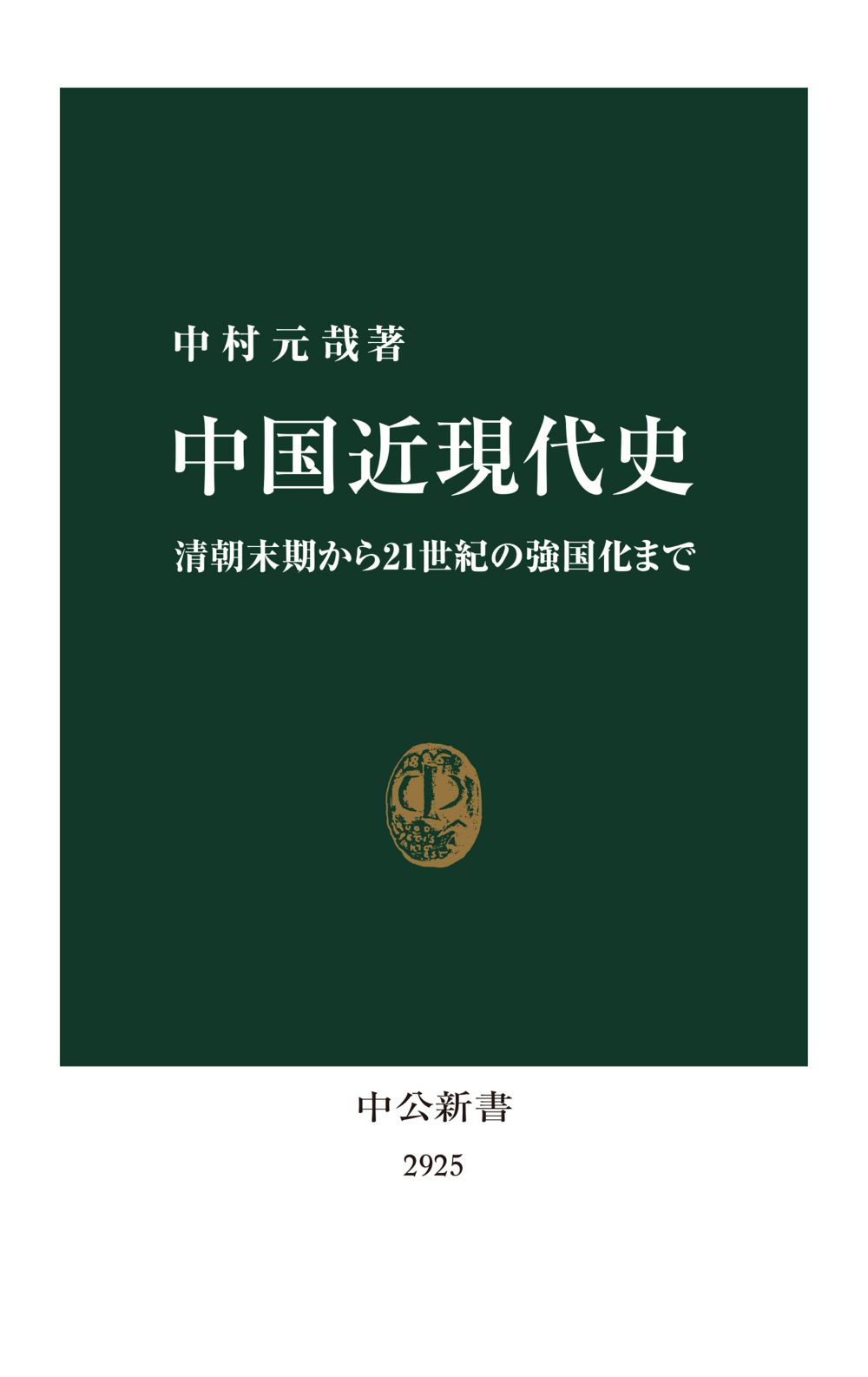
Chuko Shinsho 2925 Chugoku Kin Gendaishi (Modern Chinese History - From the Late Qing Dynasty to China's Rise as a Major Power in the Twenty-First Century)
Size
312 pages, paperback pocket edition
Language
Japanese
Released
September 18, 2026
ISBN
978-4-12-102925-6
Published by
CHUOKORON-SHINSHA. INC.
Book Info
See Book Availability at Library
Japanese Page
This book examines how China has been connected to world history by showing how it sometimes agreed with, and sometimes resisted, each period’s common challenges.
It is well known that Asia and Europe had many connections until the 18th century. At that time, the Qing Dynasty was among the most important powers in Asia. It had changed from a Eurasian empire into a Chinese dynasty. At its peak in the 18th century, the Qing Dynasty was among the strongest in the world.
However, this situation changed. After the Qing Dynasty lost the First Opium War (1840–1842) to Britain and the First Sino-Japanese War (1894–1895) to Japan, China’s modern history came to be treated as separate from world history. This period includes the late Qing Dynasty, the founding of the Republic of China in 1912, the founding of the People’s Republic of China in 1949, and Chinese history to the present day. Why did this happen?
The reason is actually simple. After China was divided in 1949, the Chinese Nationalist Party (the Republic of China) and Chinese Communist Party (the People’s Republic of China) both claimed to be the legitimate government of China. Because of this conflict, modern Chinese history became closely connected to political ideas and ideologies. Each side wrote history from its own national viewpoint and explained it in ways that supported their respective political positions.
Indeed, modern Chinese history cannot be explained by only one political idea. It is not only the history of the Nationalist Party or that of the Communist Party. It is not only the history of Sun Yat-sen, Yuan Shikai, Chiang Kai-shek, or Mao Zedong. These people and political groups were important in different periods; however, if we focus excessively on only one of them, we miss many important facts.
Since the late 1970s, many researchers in Japan and around the world have spent nearly fifty years studying modern Chinese history. They have connected China’s history with global changes and have produced many valuable studies. Based on these studies, this book examine modern Chinese history as part of world history and attempts to make these ideas accessible to a general readership.
This is especially important because, in 2022, Japan introduced a new compulsory high-school subject called “History and the Modern World” (Rekishi Sogo). This subject examines Japanese history in the context of world history from the 18th century onward. As history education and historical understanding in Japan continue to evolve, such a book is both useful and necessary.
I hope more people will learn about the historical facts that can only be understood by viewing China as part of the wider world.
(Written by NAKAMURA Motoya, Professor, Graduate School of Arts and Sciences / 2026)