



Starch residue on teeth, historical documents reveal Japan’s past
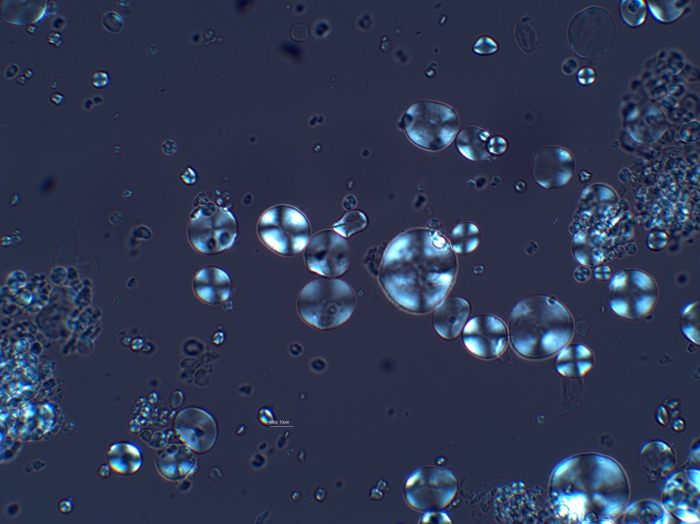
Ayako Shibutani, a project assistant professor at the University of Tokyo’s Historiographical Institute, studies starch granules preserved on archaeological relics and skeletal remains, and embedded in historical documents. Using a technique called starch residue analysis, she has been reconstructing the diet and daily activities of prehistoric people in Japan. In 2022, she discovered rice starch granules in the calcified dental plaque of human bone remains found in Japan’s northernmost main island of Hokkaido, dating to the Epi-Jomon Period about 2,400-1,400 years ago when people subsisted on hunting, fishing and gathering. The study drew attention as a pioneering example of dietary research in Japan employing the analysis of dental tartar.
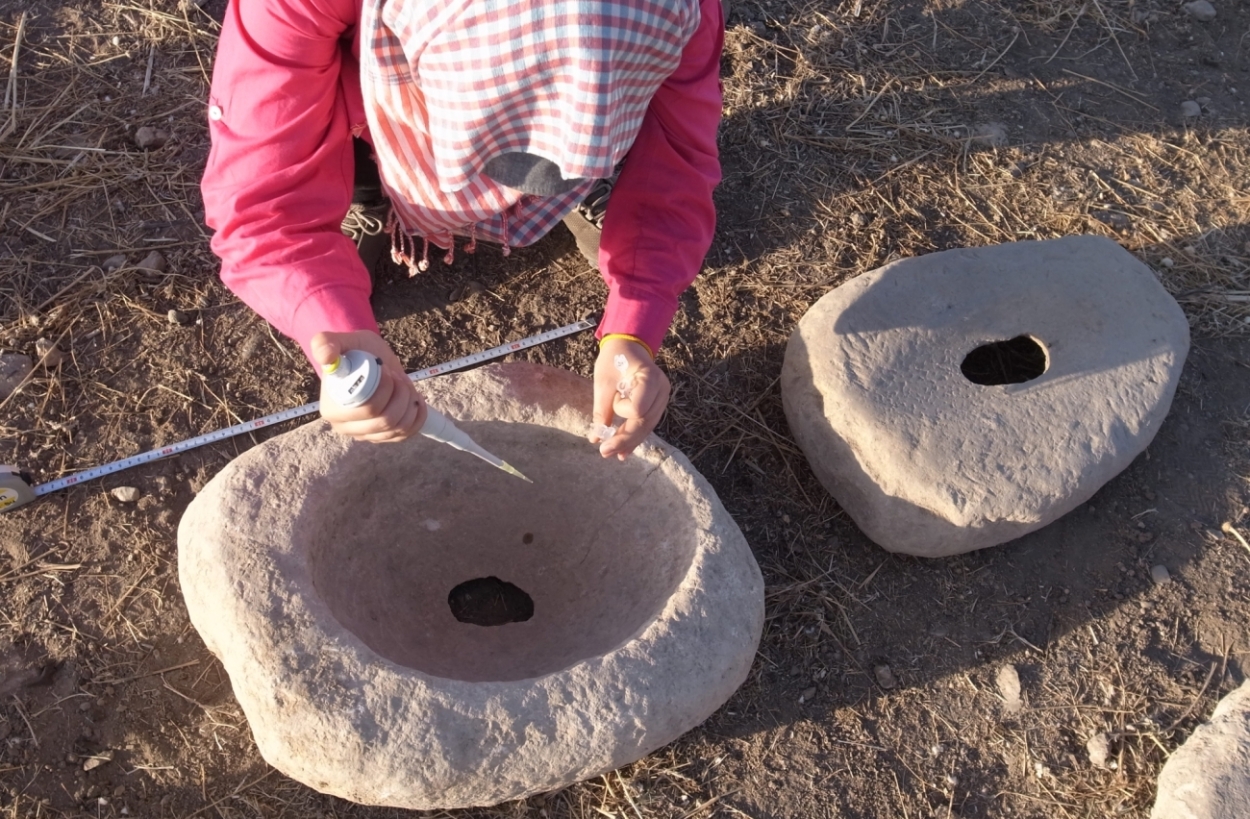
Locked within the calcified plaque of human teeth buried for thousands of years, Shibutani can find traces of what prehistoric people ate. The evidence she hunts for is not animal bone or plant seed, but microscopic starch granules, which can survive in soil for millennia.
Shibutani, the sole resident scientist at the Historiographical Institute, has been at the forefront of starch granule research in Japan for around two decades. By studying starch residues on pottery, stone tools and human bones unearthed from archaeological sites across the Japanese archipelago, she has uncovered evidence of ancient plant use and diet, shedding light on how prehistoric people lived within their settlement communities. Among the findings are starch granules from acorns and bulb plants recovered from stone tools excavated at Paleolithic archaeological sites and such artifacts dating to the Jomon Period (circa 14,000 B.C.-circa 300 B.C.), as well as rice starch granules in dental tartar from skeletal remains in Hokkaido, dating back to periods before rice cultivation began in the region.
“When I find starch granules in unexpected places, I become genuinely excited,” Shibutani said. “It gives us clues about the plants people were using, what they were eating, and how they were going about their daily lives.”
Plant starch granules, some as small as one-thousandth of a millimeter, retain their chemical structures, which are extremely stable. Unless exposed to high heat, the granules can in theory survive in the ground for thousands of years. Such special properties led archaeologists to develop starch residue analysis as a formal methodology in the 1990s. As word spread that past plant use could be reconstructed from starch granules left on artifacts and other remains, the technique was adopted at archaeological sites around the world. It was introduced to Japan in 2004, and Shibutani has been at the forefront of applying the method since its earliest days.
Study abroad to satisfy yearning for scientific analysis
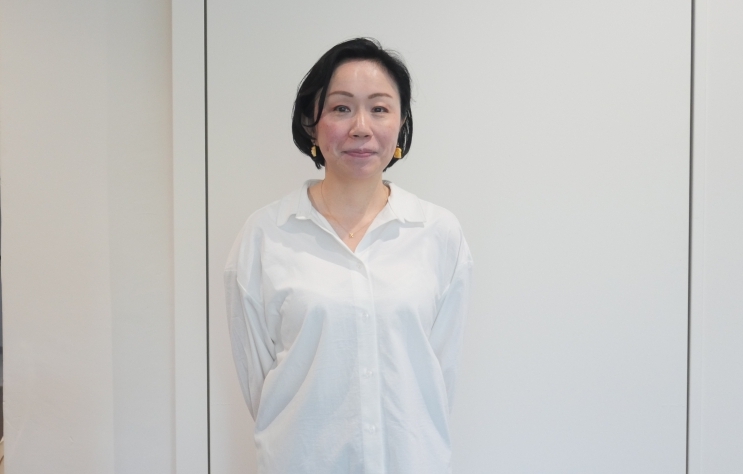
Shibutani grew up in the city of Yao, Osaka Prefecture, in central Japan, an area rich in archaeological sites spanning from the Yayoi Period (circa 300 B.C.-circa A.D. 300) to the Heian Period (794-1185). Growing up in an area where excavations and ruins were a familiar part of daily life likely sparked her interest in archaeology, she speculated.
Following high school, Shibutani enrolled in the Faculty of Letters at Kansai University, where the renowned archaeologist Yoshinori Aboshi (1927-2006), known for discovering painted murals during the 1972 excavation of the Takamatsuzuka Tumulus in his native village of Asuka, Nara Prefecture, was teaching. There, she joined an archaeology laboratory and was captivated by the scientific analyses, rather than the archaeological digs, which many might assume is more appealing.
“I was fascinated by vermilion and lacquer and other materials applied to stone chambers and coffins in tombs. Whenever I read archaeological reports, I found myself drawn to the scientific methods and analysis sections,” she said. “I developed a desire to do scientific analysis myself. But at the time, it was difficult to pursue those methods seriously within a humanities faculty (where archaeology is typically placed at Japanese universities).”
While working on her doctorate in Japan, Shibutani enrolled at the University of Bradford in the U.K. to build her foundation in the application of modern scientific methods to archaeology. At Bradford, she was trained in a range of then-cutting edge analytical techniques, including mass spectrometry, various compositional analyses and pollen analysis, and received a master of science degree in archaeological sciences.
After returning to Japan, she was introduced to starch residue analysis when working on a Grants-in-Aid for Scientific Research (KAKENHI) project with then-Professor Peter Matthews at the National Museum of Ethnology. At the time, no researcher in East Asia had yet adopted the method, and she recognized its enormous potential.
In 2005, she transferred from Kansai University to the Graduate University for Advanced Studies in Kanagawa Prefecture, just south of Tokyo, where she focused on establishing the theoretical and methodological foundations for the technique.
A single starch granule reconstructs prehistoric menu
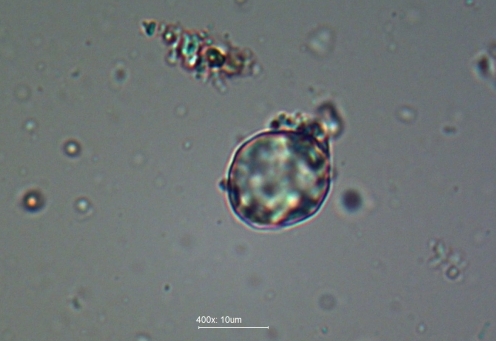
Starch residue analysis is a technique for identifying plant species by examining the size, shape and other morphological features of starch granules, which vary from species to species, allowing a plant species to be traced from a single granule.
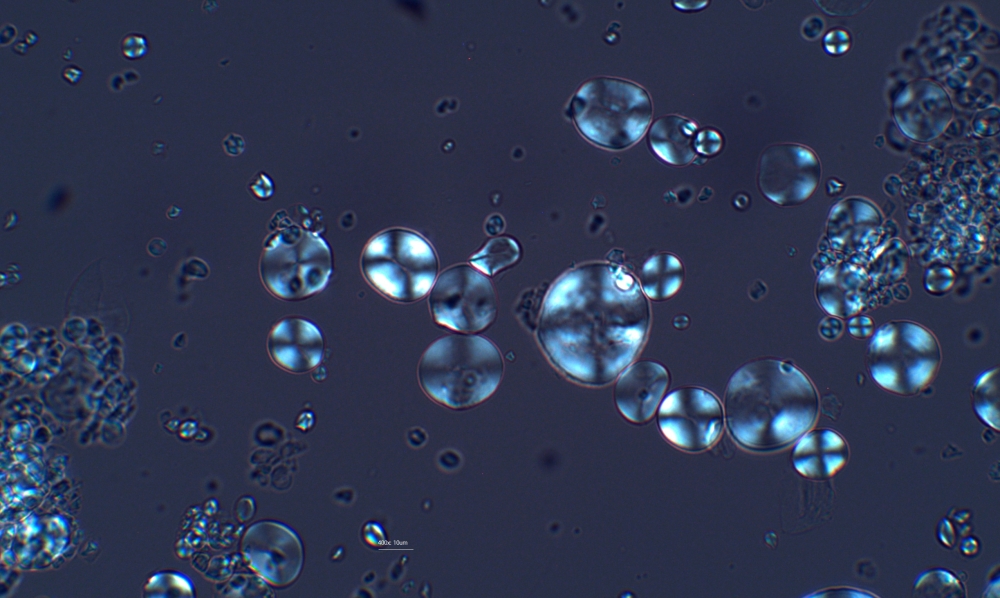
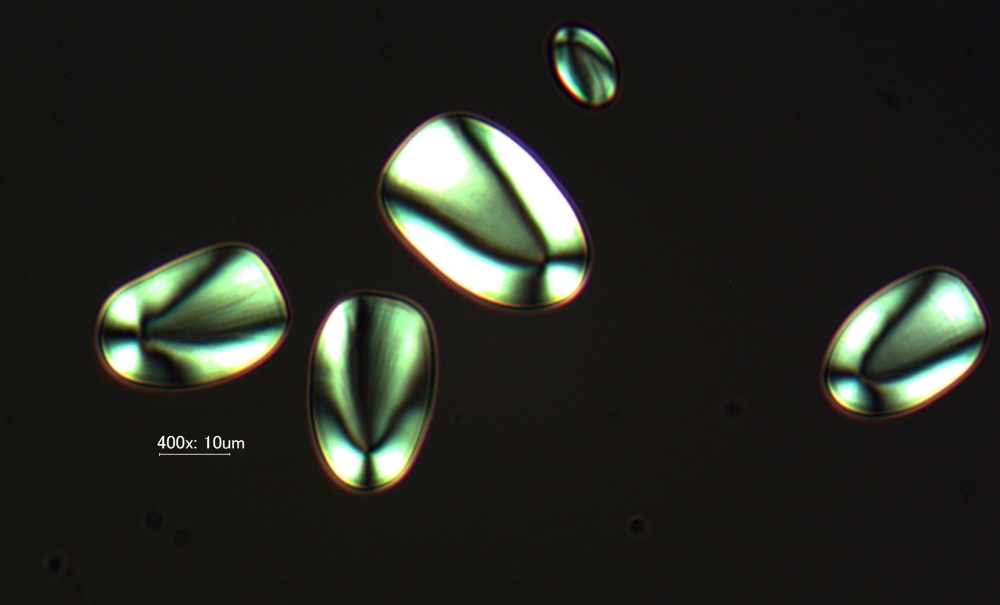
When collecting a specimen from stone tools, for example, purified water is dripped onto the surface and residue is collected with a pipette, then centrifuged and mounted on a slide for observation under a polarized light microscope. Because the morphology of modern starch granules and those of ancient plants are nearly identical, species can be identified by comparing granule morphology against reference specimens of modern plants.
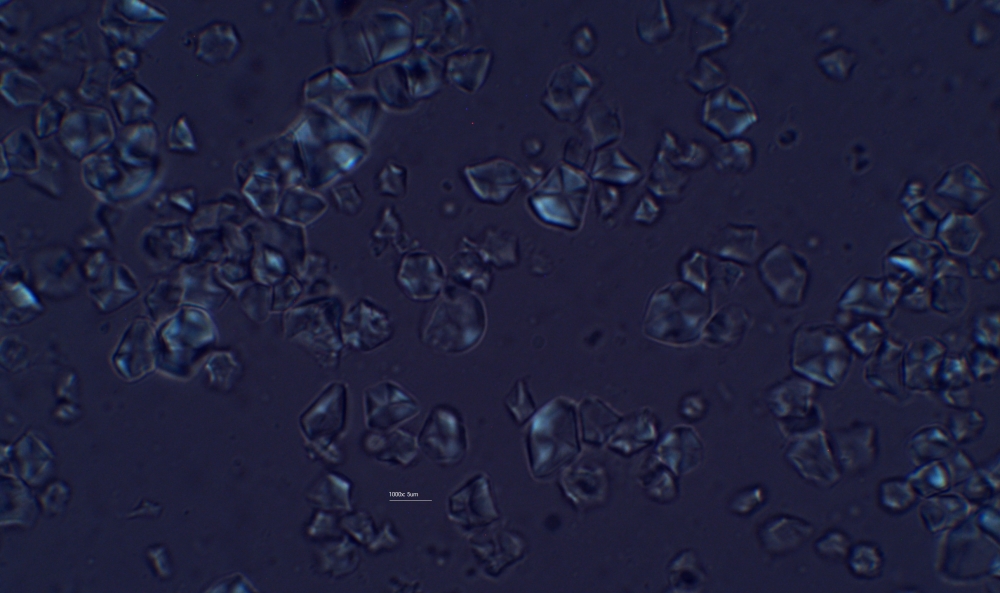
“There are distinguishing features not only in size and shape but also in the ‘extinction cross,” Shibutani explained. “When observed under a microscope with cross-polarized light (a method in which two polarizing filters are arranged at right angles, so that light transmitted by one is blocked by the other), you can see a dark cross pattern. This is the extinction cross, and its pattern differs from one plant species to another. Some, like rice, have a vertical cross, while others, such as lotus roots, have a swastika-shaped cross pattern.”
At the Ideuenohara archaeological site in Fukushima Prefecture, a couple hundred kilometers northeast of Tokyo, dating to the prehistoric Middle Jomon Period (circa 2,500 B.C.-circa 1,500 B.C.), starch presumed to be of the genus Lilium (bulbs) and the genus Quercus (acorns) were found in the same spot on the surface of a grinding stone. This raises the possibility that the same stone tool was used to process both bulbs and nuts.
Also, at the Kamuitapukopu-shita (archaeological) site of Japan’s Indigenous Ainu people in southwestern Hokkaido, starch granules thought to be turnip were detected from crop traces in field plots sealed by the 1663 eruption of Mount Usu. The discovery provided material evidence of the farming practices of the Ainu people, which had been difficult to ascertain from documents alone.
“In archaeological science, combining different methods, such as the study of bone and teeth with nitrogen and carbon stable isotope analysis, is important,” Shibutani said. “There are things that can only be understood by combining multiple perspectives.”
Traces of rice flour embedded in historical documents
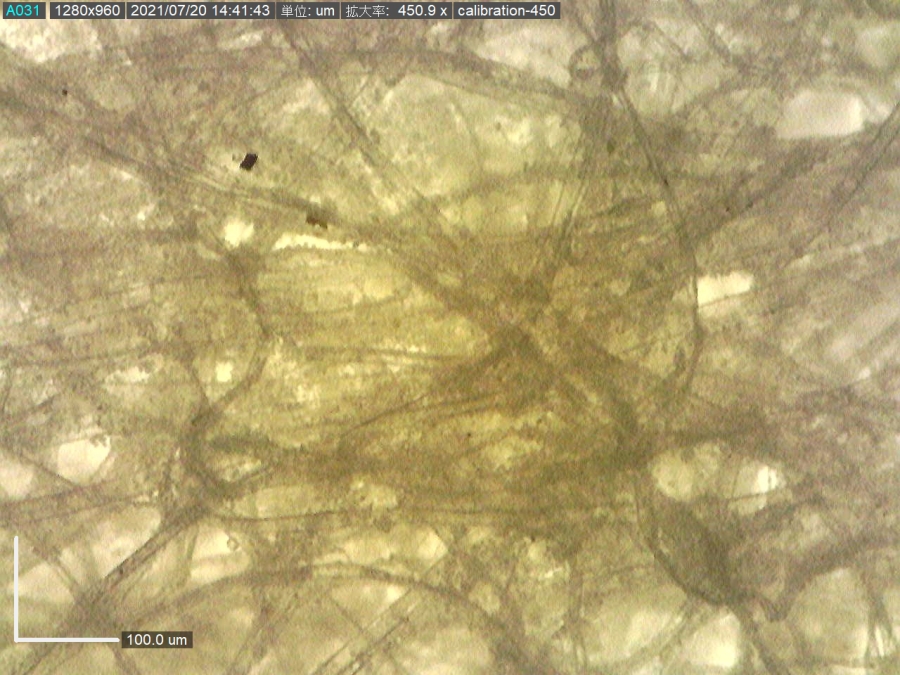
Shibutani’s research reaches beyond excavated relics to encompass the history of Japanese papermaking. In the production of traditional Japanese washi paper, rice flour was commonly used as an additive to the primary raw materials. Under a microscope, numerous small hexagonal rice starch granules can be seen adhered to the fibers of the primary materials, such as the kozo paper mulberry or gampi shrub belonging to the daphne family.
In an analysis of licenses issued by the Tokugawa shogunate — which ruled Japan for more than 250 years from 1603 to1867 — held by Matsunoo Taisha Shrine in Kyoto, Shibutani traced changes in the paper composition of the documents over time, from the first Tokugawa shogun, Ieyasu (1543-1616), through the 14th, Iemochi (1846-1866). Documents from the early period contained various extraneous materials mixed in among the paper fibers. But from the fifth shogun, Tsunayoshi (1646-1709), onward, the amount of extraneous material decreased, the gaps between fibers lessened, and the paper became denser and thicker, evidence of a gradual standardization and refinement of production methods. Another study also revealed a link between document type and paper composition. Imperial orders, for instance, were written on paper that did not contain any rice flour.
One of the current challenges, Shibutani noted, is nurturing the next generation of starch residue specialists. The number of such researchers remains small, not only in Japan but across East Asia. As a result, Europe and North America, with their larger pools of researchers, currently dominate the field.
“I want to expand the network of starch scientists in East Asia,” she said. “By learning about the past through starch granules, I believe we can better comprehend the present as well as contemplate the future. Going forward, I hope to advance data sharing, as well as apply our findings to the preservation and restoration of historical documents damaged in disasters.”