




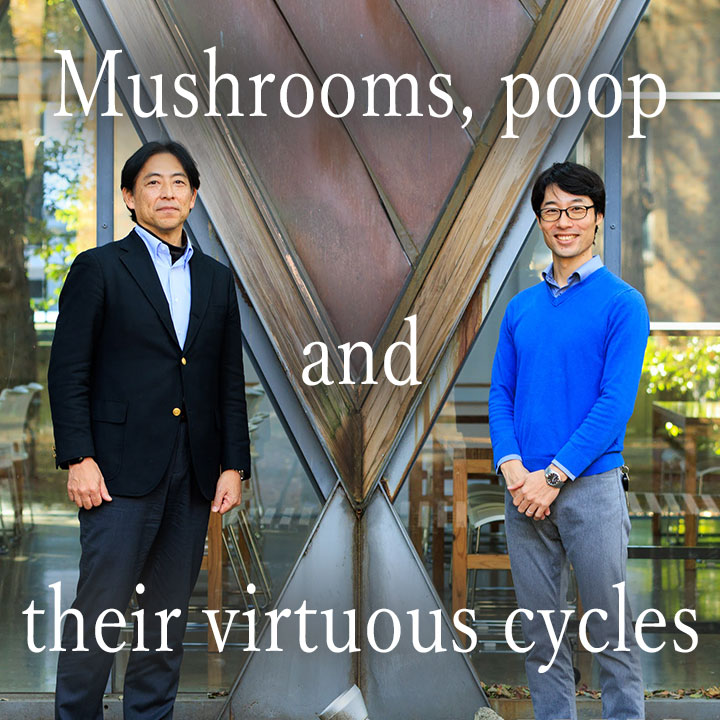
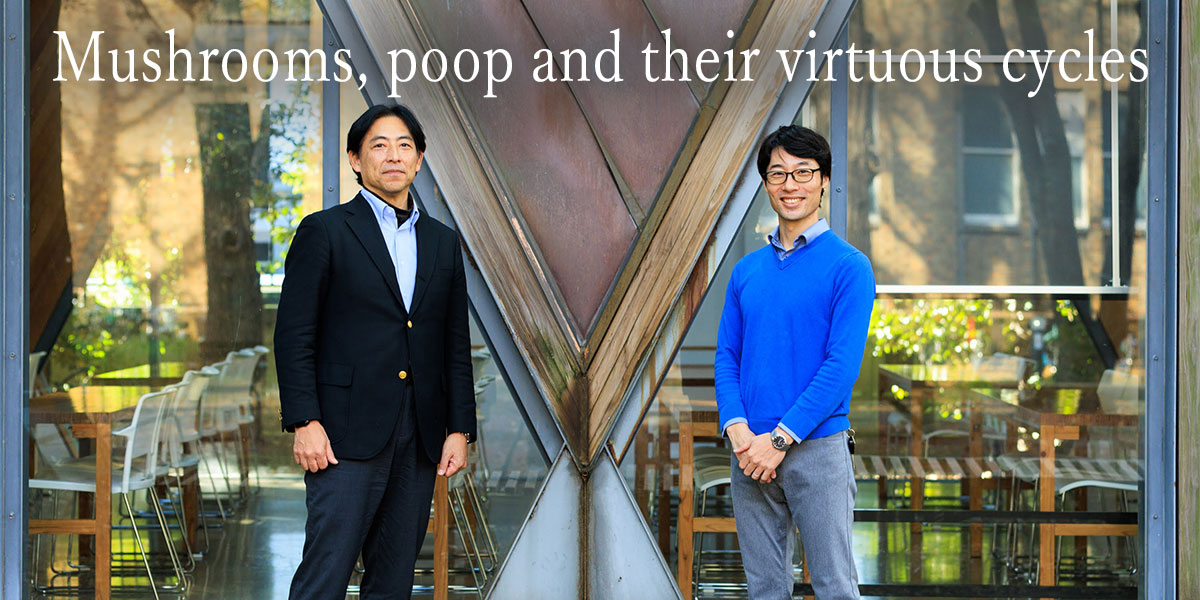
IGARASHI Kiyohiko Professor, Graduate School of Agricultural and Life Sciences
IZUMI Kentaro Associate Professor, Faculty of Education, Chiba University
Cross-disciplinary dialogue
Research on fungi and trace fossils shed light on 4-billion-year-old history of life on Earth
As 2023 drew to a close, two researchers met at a woody auditorium for a conversation themed around poop, each sharing perspectives from the vantage of their specialized field of study. While one is an expert on fungi, and supervised a film depicting life during the Edo era in Japanese history (1603-1867), when the bioeconomy revolved around feces and urine, the other — a onetime leader of UTokyo’s cheering squad — studies coprolites, the fossilized feces of ancient creatures.
The dialogue that ensued, covering subject matter ranging from the peculiar to intriguing and thought-provoking — Which fungus triggered the demise of the Carboniferous period? What mechanism works to preserve poop? Do mushrooms and fossilized feces hold the key to reducing carbon emissions? — offers a glimpse of the 4-billion-year history of life perpetuated through the cycling of organic matter.
The researchers stand in front of the Seihoku Gallery of the Yayoi Auditorium Annex on UTokyo’s Yayoi Campus, where they held their dialogue. Signs of patina seeping from the copper-clad roofing are starting to show on the building, completed in 2008.
Only mushrooms can stomach wood
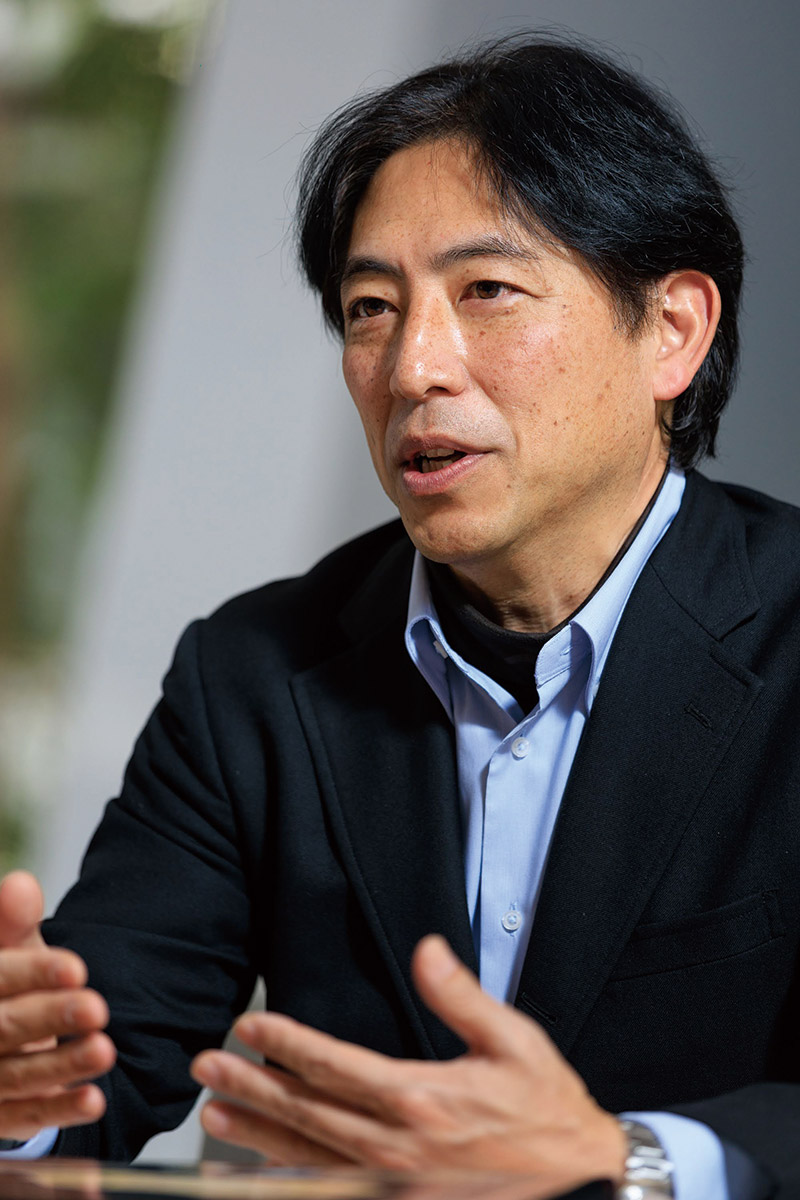
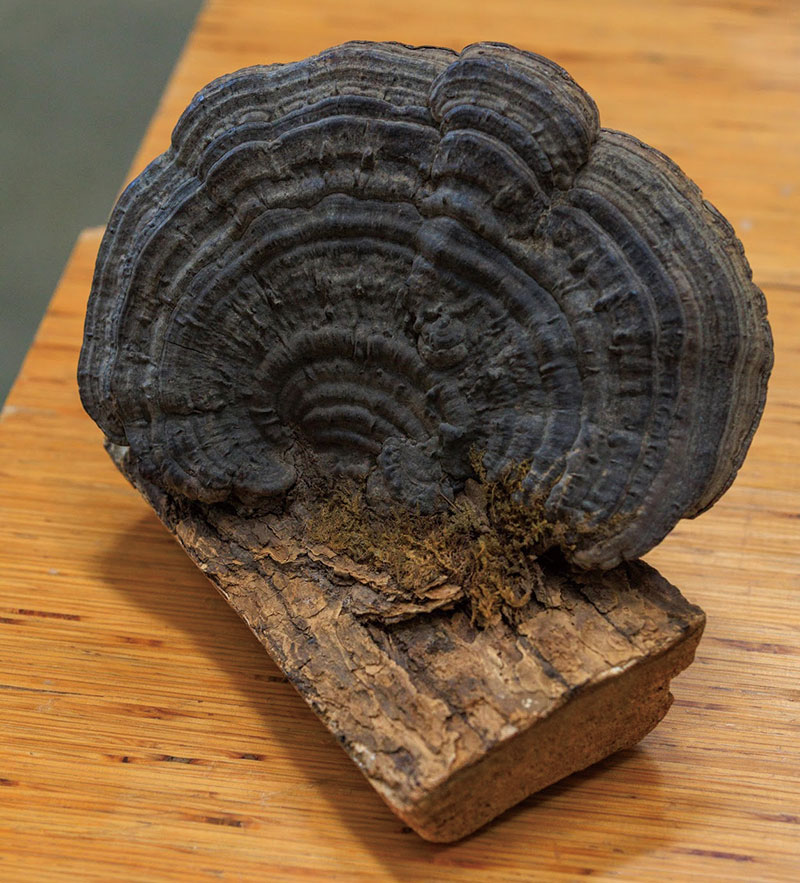
IgarashiI have been mainly studying wood-rotting fungi, so-called mushrooms, the only living things on Earth capable of breaking down wood components. As soil in the forest is a by-product of the process by which mushrooms eat and digest wood, soil could indeed be considered the poop of the forest. Wood consumed by mushrooms becomes soft organic matter that is utilized by other living things. So, in a sense, mushrooms are driving the circulation of organic matter in the forest.
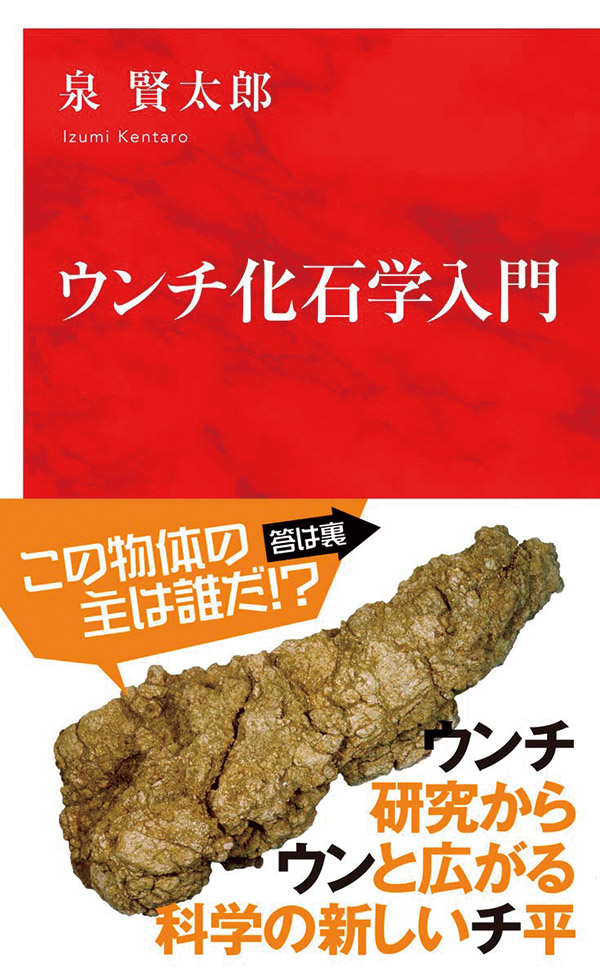
IzumiWhen one mentions fossils, what likely comes to mind for many people are body fossils, the preserved remains of ancient organisms. But I have been mainly studying trace fossils, namely digestive traces consisting of fossilized feces, scientifically known as coprolites. Although the information we can glean from such fossils is of low resolution and lack fine details, coprolites provide valuable evidence of the activities of ancient organisms, something which fascinates me. From the time I was a child, I was curious about ancient events and history. At university, I studied features that were directly observable in fossils, but came to realize there are more things that could not be observed than those that could. So, in recent years, I have turned to conducting breeding experiments and employing DNA analysis. I also draw on mathematical models to replicate and help explain conditions underpinning the fossilization of feces by setting various conditions and calculating the amount of energy gained through food.
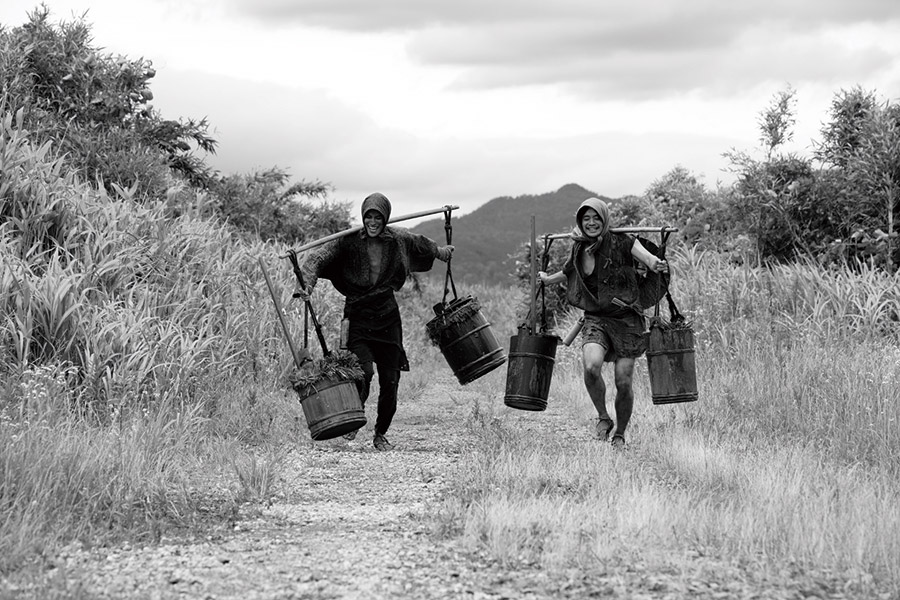
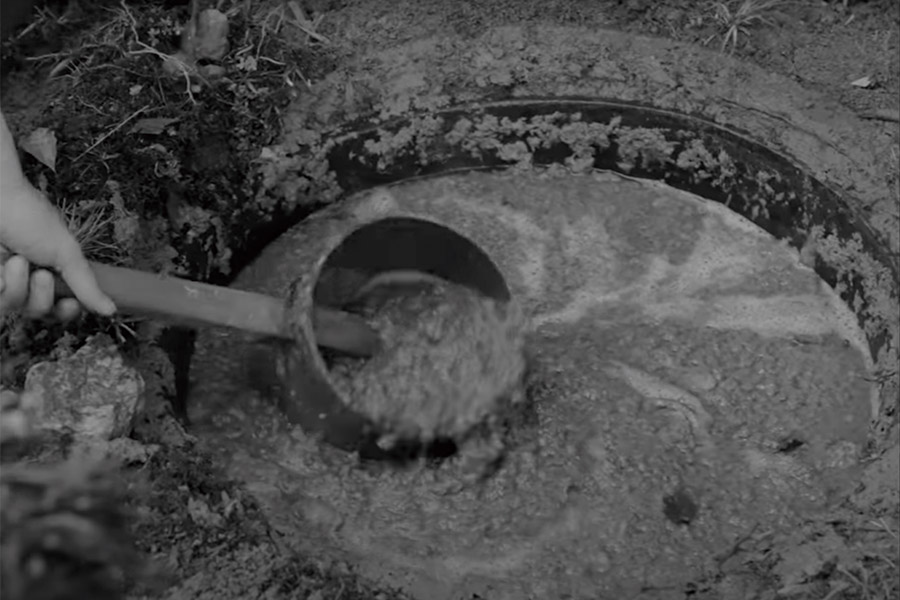
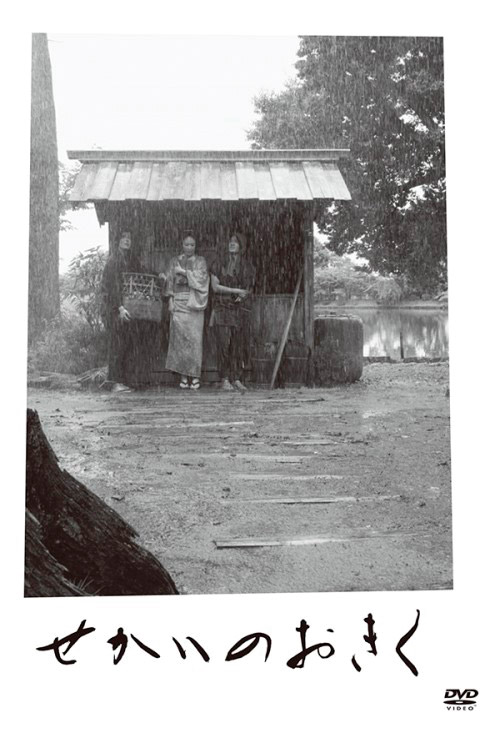
IgarashiLast year, as an extension of my fungal research, I got the opportunity to supervise a film titled Sekai no Okiku (Okiku and the World), produced by art director Mitsuo Harada. When I met Mr. Harada, he asked me about my field of study, and I told him that simply put, I study bioeconomy, to which he retorted that it was not so simple and easy to grasp. So, I explained bioeconomy as being a narrative on how to live without putting a strain on the biosphere, and he urged that we make a film to convey that to people. The outcome turned out to be a coming-of-age drama depicting youth in the Edo era who made a living collecting and transporting night soil, human feces used as fertilizer, to rural areas. Night soil appears on the screen throughout the film. Living without putting a strain on the environment through repeated carbon fixation and decomposition, whereby living organisms capture carbon from the environment, converting it into food, energy and other organic matter, and creating a sustainable loop — that is the basic concept of bioeconomy. The film depicts scenes of people reusing paper and replacing the covering on umbrellas, portraying a time when the culture of not being wasteful was the norm. There is also a scene where the camera suddenly zooms in on mushrooms in the forest, which is intended to convey that they decompose the wood of the trees in the forest and that organic matter circulates in a perpetual cycle.
IzumiThe cyclic process is extremely important. I have been thinking for some time now about poop, organic matter and their cycles.
Sekai no Okiku
Professor Igarashi served as the bioeconomy supervisor for this film produced by Mitsuo Harada and directed by Junji Sakamoto. Set in late-Edo era Japan, the film depicts the life of Okiku (played by Haru Kuroki), who lives in a shabby nagaya row house in the capital Edo (now Tokyo), despite her samurai upbringing. The coming-of-age story revolves around Okiku, night-soil buyer Yasuke (Sosuke Ikematsu) and Chuji (Kanichiro), a wastepaper collector who subsequently becomes Yasuke’s colleague, and how their lives converge. The film is the first production of the YOIHI PROJECT, aiming to convey stories of “good days” lived by people in different periods, and created for posterity 100 years from now. It won best film at the 78th Mainichi Film Awards and also ranked No. 1 among Kinema Junpo’s Best Ten films of 2023.
The fungus that changed the course of prehistory
IgarashiHow old are the coprolites you have been studying?
IzumiThey date back to more than 300 million years ago. I have been mainly examining the fossilized feces of a family of lugworms on the seafloor. Feces are mostly composed of sand and contain a little bit of organic matter. Evidence shows that living organisms had been ingesting feces of other living things, on land and under the sea, since the Mesozoic era (252 million-66 million years ago).
IgarashiIn my field of study, the turning point came 290 million years ago. Mushrooms were actually involved in bringing about the end of the Carboniferous period. Around that time, ferns had evolved to produce a compound called lignin, which was difficult to decompose and which fungi in those days could not break down. So, when plants fell, they did not decompose and the layers of plant matter that accumulated over time became coal. Genome sequencing has revealed that by the end of the Carboniferous period, a certain fungus had acquired an enzyme that breaks down lignin. This fungus turns out to be the ancestor of kikurage, or wood ear mushroom (an edible fungus commonly used in Chinese and Japanese cooking). After then, the wood of the trees decomposed, bringing an end to the Carboniferous period.
IzumiThat is very interesting. Coprolites provide only a snapshot of a small piece of the larger picture. As a thought experiment, I pondered what percentage of all the living organisms that had ever been on Earth remain as fossils. If we assume life first emerged 4 billion years ago and biomass increased on an upward trend from that point on, and take into account the number of fossils that currently exist, we arrive at a ratio of about 0.00001%. If that’s all we can see, despite our best efforts, paleontologists may be justified in feeling somewhat disheartened.
IgarashiIn recent years, the movement to reduce carbon dioxide emissions has gained momentum. The story of poop is the story about the cycle of organic matter, and as CO2 is oxidized carbon, I'm sure many people would be intrigued by coprolites.
IzumiUnderstanding the mechanism by which organic matter, which is thermodynamically very unstable, turned into the fossils we find today may provide clues for CO2 reduction in our atmosphere.
IgarashiNormally, feces decompose very quickly. How do you determine that something is fossilized poop?
Building a case for fossilized poop
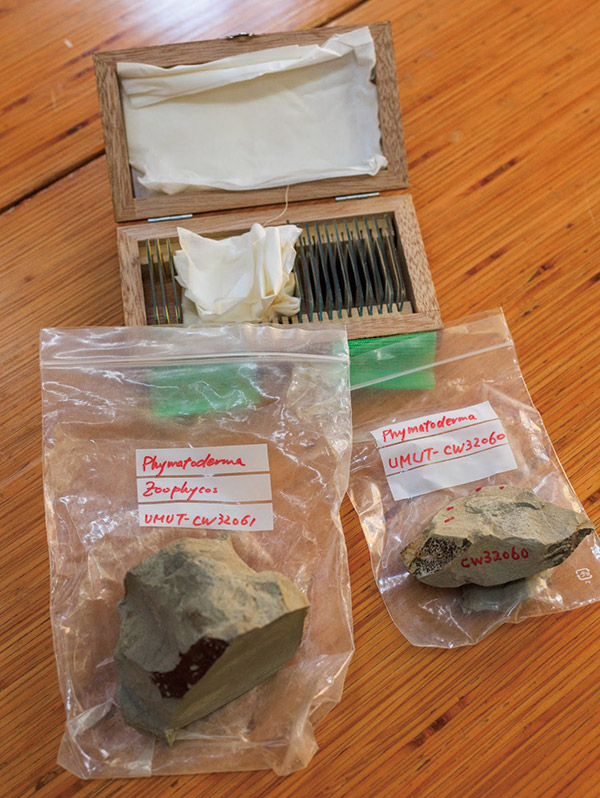
IzumiSince we cannot witness the actual fossilization process of feces, we can only infer based on observations of the feces of existing organisms. For instance, let's say there is a black area in the center of a section of a vertebrate coprolite, surrounded by mudstone deposited on the ocean floor during the Jurassic Period. If fish scales are visible inside it, it is likely the animal ate fish. If Mesozoic plesiosaurs were found in the same stratum, we can assume the fossilized feces are that of the carnivorous marine reptile.
IgarashiIt's about building up circumstantial evidence, then.
IzumiThat’s all we can do, and you could say it’s both challenging and fun at the same time.
IgarashiIn retrospect, the history of terrestrial life can be summed up as an ongoing struggle between wood and fungi: Wood acquires components that prevent it from being consumed by fungi, while fungi evolve and gain the capability to digest those components. So it goes that a member of the kikurage wood ear family emerged and caused the extinction of tree ferns. That led to the spread of gymnosperms, which in turn gave rise to fungi that could feed on them. Then, when angiosperms became dominant, fungi evolved again, gaining the ability to digest those as well. This evolutionary interplay has continued for hundreds of millions of years.
IzumiThe sea likely has a similar history: For instance, a creature faces the threat of being preyed upon, so it defends itself by strengthening its shell or escaping to the depths of the ocean; in response, its predators develop stronger teeth or better vision. We can trace such history to some extent from fossils, but we don't know the actual mechanisms.
IgarashiIn general, it may be easier to trace plants than animals because plants live and die in the same place.
IzumiThe primary component of vertebrate feces is water, followed by organic matter. Some of the organic matter is undigested or partially digested. When undigested food decomposes and undergoes a chemical reaction, minerals are produced. For example, apatite, which forms our teeth and bones, is a type of mineral. Things that normally start to decompose when a creature dies, such as the digestive tract of a trilobite or the stomach of a frog, sometimes become fossilized. In such cases, apatite is formed through the chemical reaction of phosphorus and calcium. While the seafloor contains a lot of calcium, little phosphorus can be found there, suggesting organic matter as the likely source of the phosphorus. Incidentally, a lot of coprolites tend to be fossils of carnivore excrement, which contains more phosphorus.
IgarashiI see. So, a creature consumes food, then deposits phosphoric acid in its excrement. And through the binding of phosphorus and calcium, a fossil is formed.
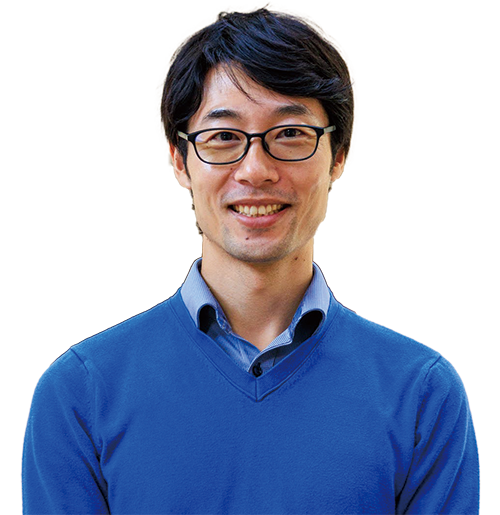
IzumiAlthough I joined the basketball club at my junior high school, I quit after a while because the practices were really hard. I then decided to devote my time to studying for university entrance exams. Despite that, I had to spend an extra year to get into the University of Tokyo. I felt ashamed because some of my classmates got in on the first try, while also fulfilling their commitment to club activities. To overcome my feeling of being inferior, I joined the UTokyo cheering squad and eventually became its leader. I yearned for a sense of accomplishment and dedicating myself to something that I could only do at that moment in time. Whenever the baseball team lost a Tokyo Big6 Baseball League contest, at the Jingu Baseball Stadium where the games were played, we blamed ourselves for not cheering hard enough. To repent, we all did knuckle push-ups on the concrete pavement of the Meiji Memorial Picture Gallery nearby. The pain was excruciating.
IgarashiIn the year I entered the University of Tokyo, the baseball team hit the 200-win milestone. I remember being blown away by the sight of the cheering squad members celebrating and draining an entire 1.8-liter bottle of sake.
IzumiIt may seem insanely childish, but we were serious and gave it our all to cheering. In my four years on the squad, I experienced victory twice.
Dental plaque transitions into fossil?
IzumiOrganic matter decomposes according to the laws of thermodynamics, and apatite is formed when the right conditions are in place. However, we do not know what those conditions are nor what microorganisms play an important role. The key here is anaerobic decomposition. The surface of feces is rich in oxygen, while the interior environment is anaerobic, devoid of free oxygen. Feces are thought to fossilize when apatite begins forming on the inside. Presumably, microorganisms that anaerobically decompose organic matter gradually work their way from the inside, producing tiny minerals bit by bit, eventually replacing the fecal matter entirely and mineralizing the feces. By the way, I was recently struck and moved by the realization that dental tartar has much in common with a coprolite. In the anaerobic environment of the mouth, the reaction of food debris, bacteria and saliva transforms organic matter into a mineral called calcium phosphate.
IgarashiSo, if tartar is not eliminated and left in the mouth long enough, it might turn into a fossil! A membrane formed by microorganisms or the substances they secrete is called a biofilm. Mushroom surfaces also secrete a sticky, membranelike layer and digest wood components by capturing them in the layer. Some toothpastes contain an enzyme called dextranase, which dissolves the biofilm and breaks down dental plaque.
IzumiSome coprolites contain only the biofilm of a microorganism and are hollow inside. When I examined undigested food in a certain coprolite, using a scanning electron microscope, I was thrilled to see it had layers the same size and pattern as bacteria, lined up tightly.
IgarashiPeople regard poop as something filthy, but for microorganisms, it is a treasure trove of organic matter. Humans must not forget that the cycling of organic matter keeps the world turning. This will likely become even more important in the future. I think that society has forgotten the importance of such cycles, which has led to an undesirable situation. Living things eat organic matter, excrete undigested residues and use them. It is important to remember that we humans occupy just one step in that cycle, and I will continue to approach my research with that thought in mind.
IzumiIn recent years, I have shifted to studying raw poop of living things to understand modern organisms through the lens of paleontology. I’ve been doing so by raising animals and visiting the zoo. A lot of people in the paleontology community have a fondness for fossils, but I am not that into them. I approach coprolites from the perspective of poop. It is not so much that I want to understand fossils per se, but rather for them to serve as a means to learn about past conditions. Coprolites allow us to travel back in time and get closer to the lives of ancient organisms. Despite the odds of being disheartened due to limitations, I will stay the course and remain hopeful about my research.
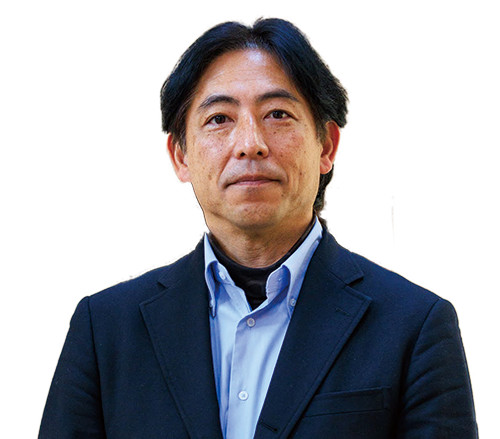
IgarashiIt also took me an extra year to get into the University of Tokyo. I thought about joining the aikido club because I had been practicing the martial art since I was very young. But I eventually decided against it because the club had many beginners, and I was reluctant to end up in a position of having to teach them because I had experience. By chance, I was asked if I wanted to join a tennis circle, and I interviewed with a 20-to-1 odds of being accepted, but quite unexpectedly, made the cut. I was new to the sport but I lived and breathed it, practicing eight times a week and hardly attending classes. I went on to the Faculty of Agriculture because it was the only place that would take me. That is when I came to my senses and realized I was not going to be a professional tennis player.
IzumiI chose the Department of Earth and Planetary Environmental Science in the Faculty of Science because the department I wanted to study in when I first enrolled at the university no longer existed due to a merger.
IgarashiIn the department I joined at the Faculty of Agriculture, we ran very interesting experiments. For instance, we measured the amount of force needed to pull apart wood pieces that had been glued together, or the amount of force applied to break wood. Those experiments were so much fun that I started attending classes in earnest and ended up choosing a career as a researcher.
Dialogue date: Dec.19, 2023