



From daimyo garden to modern urban oasis Sanshiro Pond (Part 2)
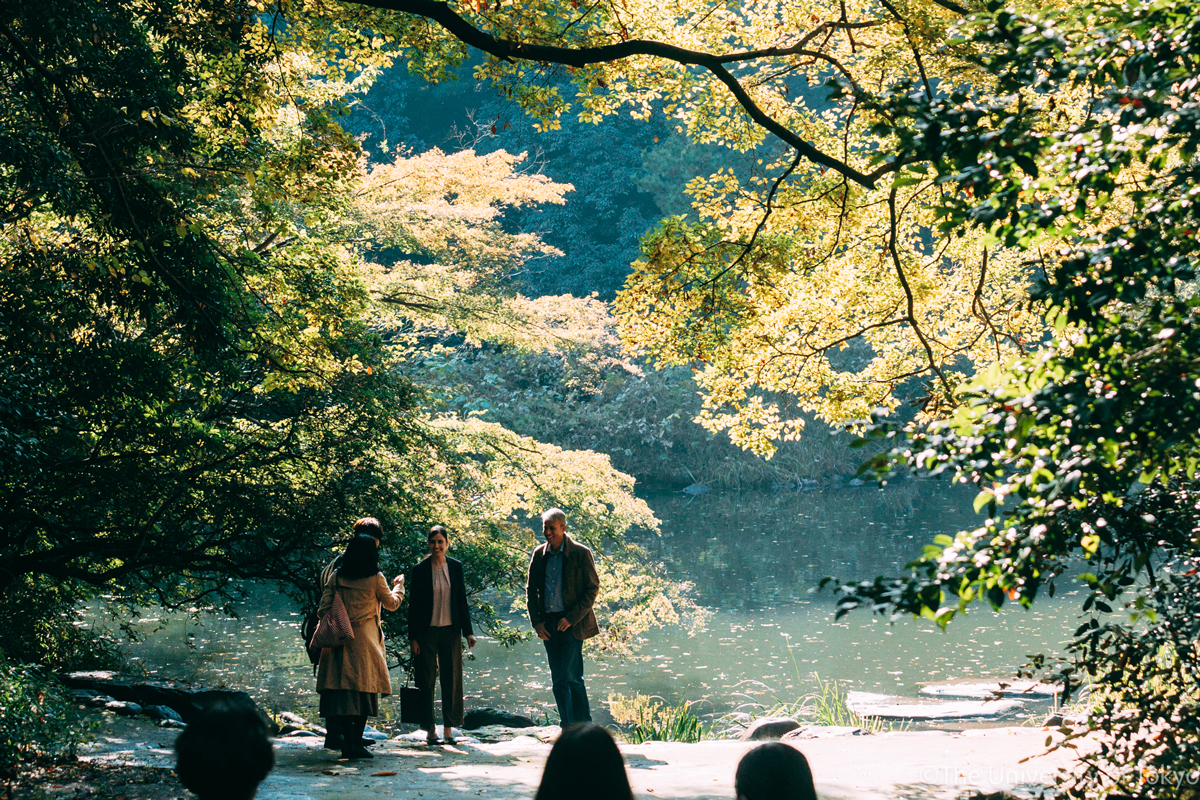
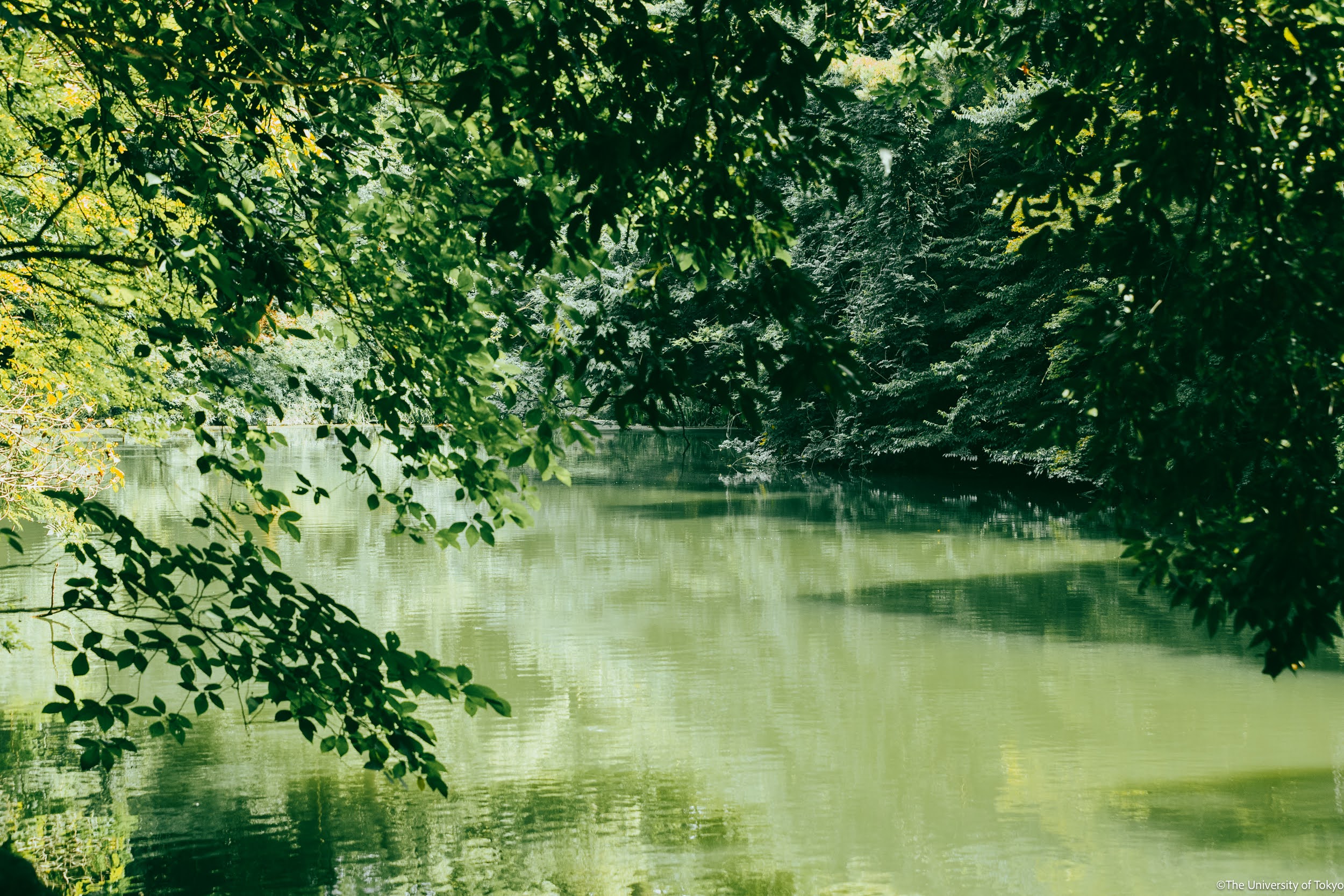
Sanshiro Pond, a University of Tokyo landmark and treasure, is in a garden created in 1638, during the early Edo period, by the Maeda clan of the Kaga Domain, which occupied north central Japan. An elegant pond is essential in a daimyo (feudal lord) garden. The Japanese garden, built within the clan’s residence in the city of Edo (now Tokyo), was named Ikutokuen, and the pond was called Shinji-ike (心字池), because its shape resembled the kanji character 心. The pond became part of the university when the grounds of the residence became the site of UTokyo’s Hongo Campus. At the turn of the 20th century, during the Meiji period, literary giant Natsume Soseki wrote a novel called Sanshiro. The protagonist, Sanshiro, and the heroine of the story first meet at the pond. The novel was a hit, as was the nickname Sanshiro Pond, after the story’s title, which stuck with the pond. Today, the storied pond has become a place of relaxation amidst the bustle of the metropolis, where students, faculty and staff, and local residents and visitors alike are seen taking leisurely strolls. What do environmental scientists and landscape planners see, though, from the perspective of their fields?
Campus on the edge
First, we met with Project Professor Makoto Yokohari of the Organization for Interdisciplinary Research Projects, who specializes in landscape planning. Yokohari compiled the report Ikutokuen no rireki to arikata (“History and role of Ikutokuen”) in 2016, with researchers from various disciplines, including science, engineering, agriculture and the humanities. A graduate of the Faculty of Agriculture and Graduate School of Agricultural and Life Sciences, and having served as a professor at the Graduate School of Engineering, Yokohari is a leading expert in a broad range of environmental fields.
According to the report, the pond covers nearly 3,600 square meters. It is quite large. The area around it is densely wooded, and although the pond is seemingly quite deep, its standard water depth is only 86 centimeters, making it surprisingly shallow. Unfortunately, this means there is little chance that any mysterious creatures are lurking beneath the surface.
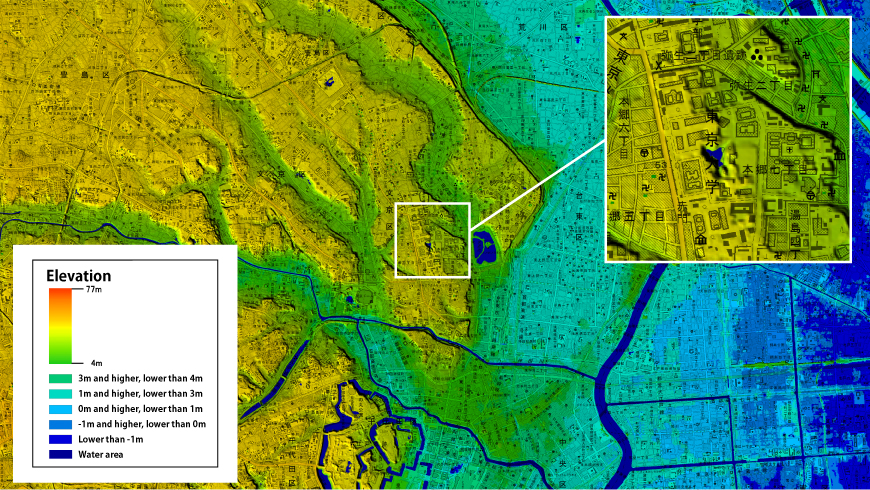
Image created based on digital elevation topographic map of Tokyo’s 23 wards available through Geospatial Information Authority of Japan
The Hongo Campus, home to Sanshiro Pond, is located at the eastern edge of the Musashino plateau extending from northwestern Tokyo. This area is referred to as the Hongo plateau or the Hongo upland.
Yokohari noted that irrigation ponds were traditionally built at the head of valleys where plateaus meet plains. While no definitive historical record exists, it is plausible a pond once existed here and was later incorporated into the Maeda residence garden.
Prime spot offering sweeping view
Plateau edges, with their commanding views, have long been considered prime real estate. They have often been chosen as sites to build castles and temples. Having been granted land on the Hongo upland by the Tokugawa shogunate, the Maeda clan built its daimyo residence here. According to a book tracing the history of the Hongo Campus, the lord is said to have invited the literati and admired the scenery, including the hills of Ueno, from a small knoll in his garden.
According to Yokohari, at the edge of the Musashino plateau, there are many valleys formed by flowing water. To the east of the Hongo plateau lies the Nezu lowland and Shinobazu Pond, beyond which rises the Ueno plateau. To the west are the Koishikawa plateau and adjacent lowlands. Although the area is now built up and the view is blocked by buildings, it was possible in the Edo period to see Ueno from Hongo.
Being a plateau, there are many slopes. In the novel Sanshiro, the protagonist, Sanshiro, and the story’s heroine, Mineko, behold the famous chrysanthemum dolls along Dangozaka slope and appear to reach Shinobazu-dori Avenue via another slope.
Pond rich in life, also serves as natural air-conditioning
According to the report, 808 trees have been counted and 71 arboreal species identified in the area around Ikutokuen Garden, which includes Sanshiro Pond. The area is also home to a rich variety of creatures, including 20 species of dragonflies and 25 species of snails that have been confirmed. This makes it a valuable green space in central Tokyo.
Sanshiro Pond and the surrounding topography also have a natural cooling effect.
Chika Takatori, an associate professor at the Graduate School of Engineering specializing in environmental design, used supercomputers to simulate the movement of wind and heat in the Meiji period and the present day.
Simulations show that in present-day central Tokyo, when southeasterly winds blow in from the sea in August, cooler air descends over the area surrounding Sanshiro Pond. As a result, temperatures near the ground surface could be reduced by up to about 1.7 degrees Celsius. This is because, despite the three-dimensional development of the surrounding urban area, the terrain around the pond has remained an open space.
Garden as microcosm, case study of global warming
Paintings from the Edo period suggest that palm trees native to southern regions of Japan were planted in Ikutokuen at the time. These palms grew only in the southern part of Kyushu in those days. According to Yokohari, they may have been presented to the Kaga Domain by the Satsuma Domain in southern Kyushu, through exchanges between powerful feudal lords.
Edo in those days was colder than present-day Tokyo. Although the palm trees planted then managed to survive, they are thought to have been unable to reproduce. However, as climate change and the urban heat island effect raised Tokyo’s average winter temperatures, palm trees began to reproduce even in Tokyo from around the 1960s.
At Ikutokuen, the palms eventually grew to be so dense that they became a nuisance. It is said that birds may have brought in the seeds. Because they were considered a nonnative species to a garden dating back to the Edo period, the trees were cut down. As Yokohari noted, Sanshiro Pond can also be described as a living witness to the warming of Tokyo.
Garden’s circuit design, water quality, overgrowth, accessibility raise issues
In 2025, there was a roundtable discussion among a voluntary group of students and faculty on the topic of Sanshiro Pond.
Comments from students mentioned the pond as “smelly and dirty” and having a “poor ecosystem.” Even in Soseki’s novel Sanshiro, the water is already described during that period as being filthy. Why is that?
Yokohari explained that the Hongo Campus sits on higher ground around the Akamon Gate, while Sanshiro Pond lies at a lower elevation. In the past, rainwater that fell on higher ground would seep into the soil and emerge below as springs feeding the pond. Since the Meiji period, however, the ground was paved over, reducing the amount of groundwater flowing underground into the pond. Today, groundwater is pumped in from elsewhere to maintain the water level of Sanshiro Pond. Because very little water flows out of the pond, the water tends to be cloudy.

The garden is known as a circuit-style or stroll garden, as visitors enjoy the changing scenery while they stroll the garden. Takatori explained what is fascinating about the garden: “As visitors walk along the gently undulating paths that circle the pond, a succession of different scenes unfolds. Views alternately open up and close off, offering broad vistas from azumaya, a small open-sided garden pavilion, bridges and slightly elevated spots.” At present, there are areas where views are obstructed by overgrown trees.
Takatori has tried moving around the Hongo Campus with students and others who use wheelchairs. She found that many areas on campus present obstacles for people in wheelchairs. In particular, the slope going down from Yasuda Auditorium to Sanshiro Pond is quite steep and dangerous, even with an assistant providing support from behind. The paths leading down to the water are also steep, making it impossible for wheelchairs to access the garden paths that circle the pond. For future upgrades that would make the pond more accessible, Takatori suggested a route from the University Hospital side, where the ground is relatively level, which would be more suitable.
A pond for modern times and values
The plants and animals found around Sanshiro Pond, together with their environment, are a rare and valuable asset in an urban setting. However, opinions differ on how the area should be managed in the future, whether to preserve it as it is, restore it to its daimyo garden origins, or adapt it into a space better suited for enjoyable walks by today’s visitors. Due to different values among people, no clear direction has yet been set. Funding is also required, and concrete discussions about future improvements are yet to be had.
Yokohari proposed that with the University Hospital nearby, the area could be made wheelchair-accessible to patients and also serve as a place where faculty, staff and nearby residents can stop to rest when feeling tired. He referred to the idea of retrofitting, upgrading and adapting old machines to perform modern functions. He also suggested that we think carefully about the role the area should play. “We can experiment, and it’s OK even if we fail,” he said. “After all, we’re a university.”
“Sanshiro Pond has great potential to become a much better place,” said Takatori. She emphasized that in contemporary urban planning, it is essential to adopt a universal design approach that allows everyone access to places where they can enjoy the scenery. Takatori suggested some approaches, such as installing signs to clearly mark areas accessible to wheelchair users, providing temporary ramps when needed and deciding which routes should be prioritized for improvement.
Great garden’s presence preserved on university campus
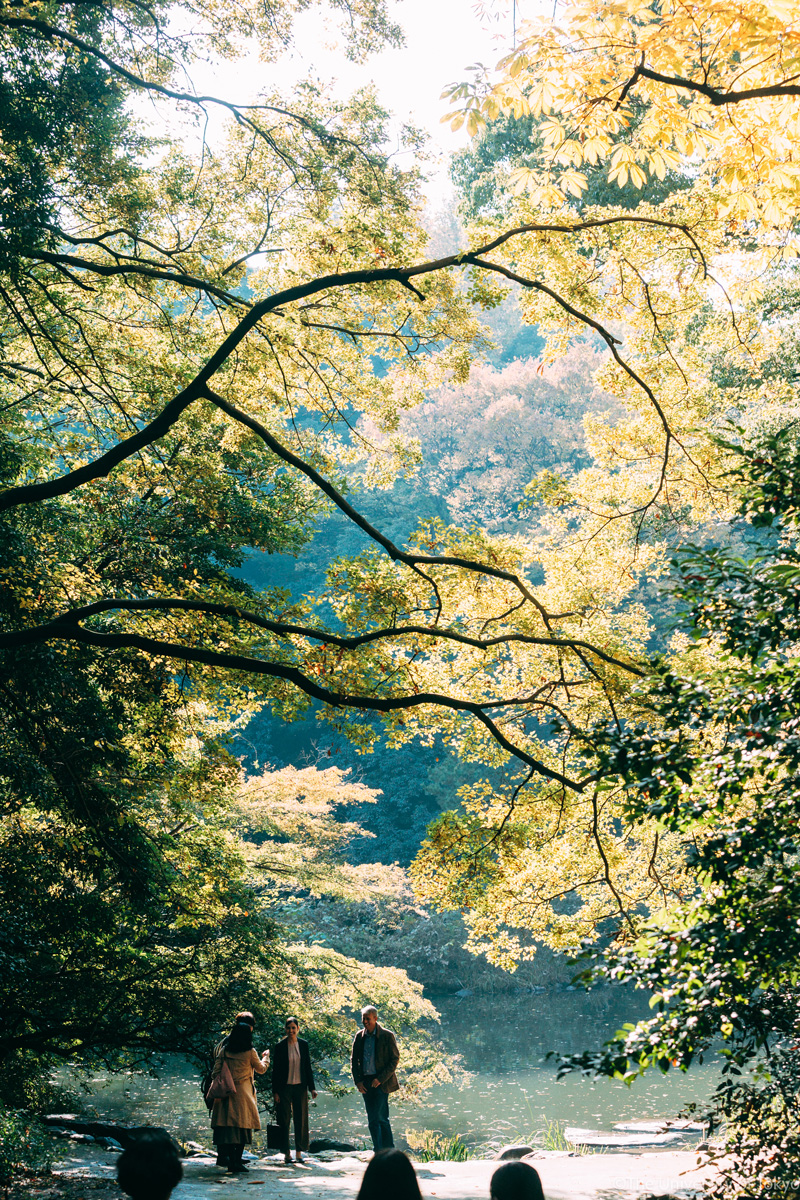
Ikutokuen was originally a garden created for the lord of the Kaga Domain’s Edo residence, and access was strictly limited to those who were permitted to enter, according to Yokohari’s report. When the domain lord returned to Kaga after spending time in Edo under the system of sankin-kotai, which required feudal lords to alternate their residence between Edo and their home domain, he enjoyed visiting Kenrokuen, a magnificent garden counted among Japan’s three great gardens, in the city of Kanazawa, the seat of the domain government. Ikutokuen, too, was likely created with the same level of passion and aesthetic ambition, and is said to have been praised at the time as the premier garden among the Edo residences of the feudal lords.
Such a remarkable garden still remains on the University of Tokyo campus. It also serves as a valuable site for students’ surveying exercises and field observation. Indeed, Ikutokuen stands out as one of the university’s treasures alongside Akamon.
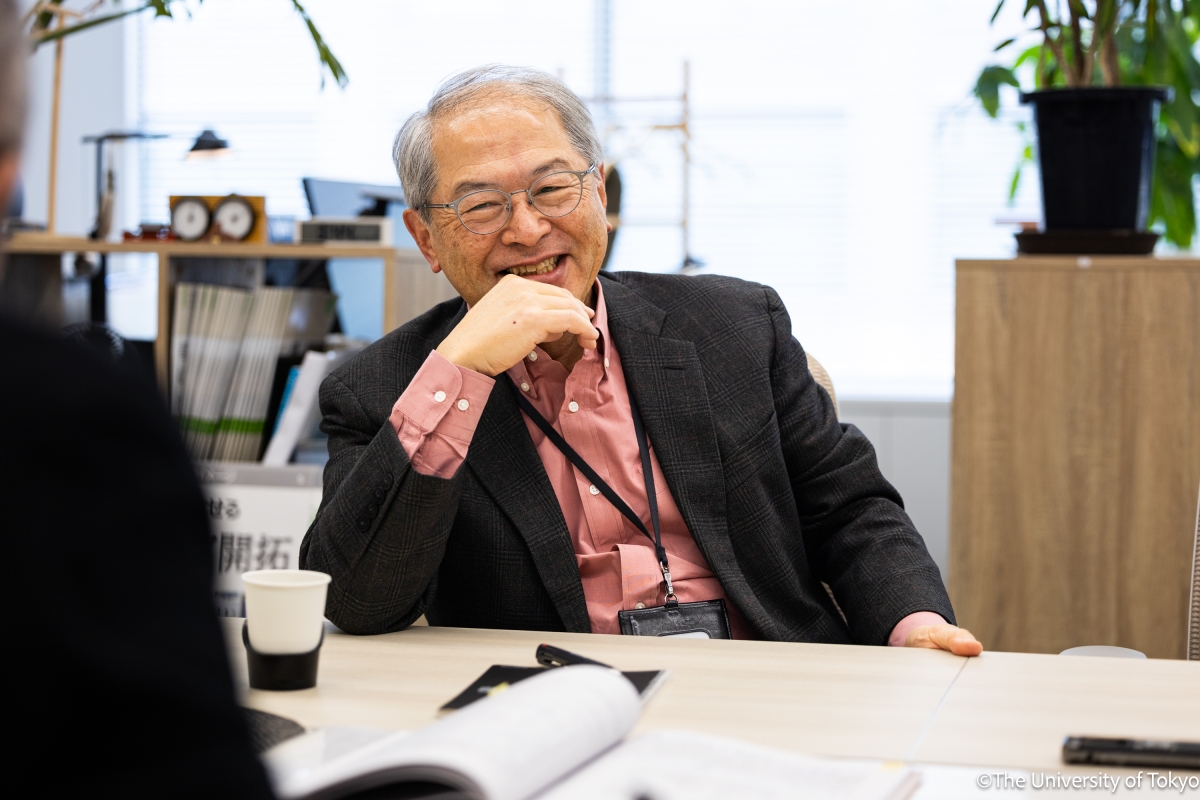
Makoto Yokohari
Project Professor, Organization for Interdisciplinary Research Projects
Graduated from Faculty of Agriculture, the University of Tokyo. Received master’s degree and Ph.D. from the Graduate School of Agricultural and Life Sciences, the University of Tokyo. Prior to assuming current post in 2024, held positions as professor at Graduate School of Systems and Information Engineering, University of Tsukuba; professor at Graduate School of Frontier Sciences, the University of Tokyo; and professor at Graduate School of Engineering, the University of Tokyo. Published works include Kogai no ryokuchi kankyogaku (“Environmental science of suburban green spaces”) (Asakura Publishing Co., Ltd., 2012) and Sustainable Landscape Planning in Selected Urban Regions (Springer, 2017) as co-editor, and Green Asia: Ecocultures, sustainable lifestyles, and ethical consumption (Routledge, 2017) as contributor.

Chika Takatori
Associate Professor, Graduate School of Engineering
Graduated from the Faculty of Engineering, the University of Tokyo. Received master’s degree and Ph.D. from Graduate School of Engineering, the University of Tokyo. Prior to taking up current appointment in 2025, held positions as assistant professor at Graduate School of Environmental Studies, Nagoya University, and associate professor at Department of Design, Graduate School of Design, Kyushu University. Member of City Planning Council of Tokyo’s Bunkyo ward. Journal articles include Toshi koen kanri ni kansuru goi soten no chushutsu to shimin no kachikan ni motozuku senzaiteki tairitsu kozo no kashika (“Extraction of consensus issues in urban park management and visualization of value-based latent conflict structures based on citizens’ values”) (Journal of the Japanese Institute of Landscape Architecture, 2026).
Interview: Yasushi Nakashima