


Red gate evokes, conveys Japan’s wooden heritage Akamon Gate (Part 3)
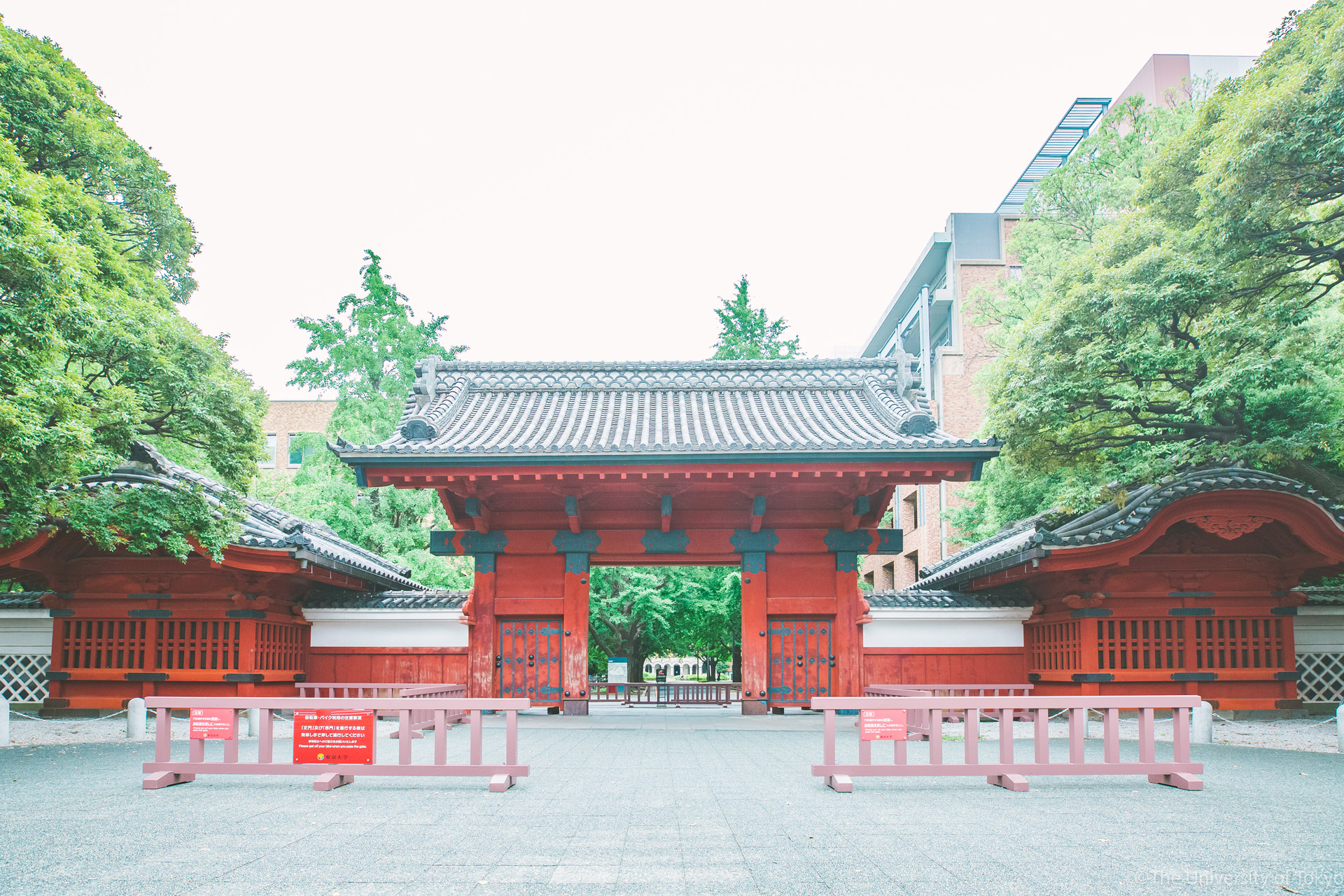
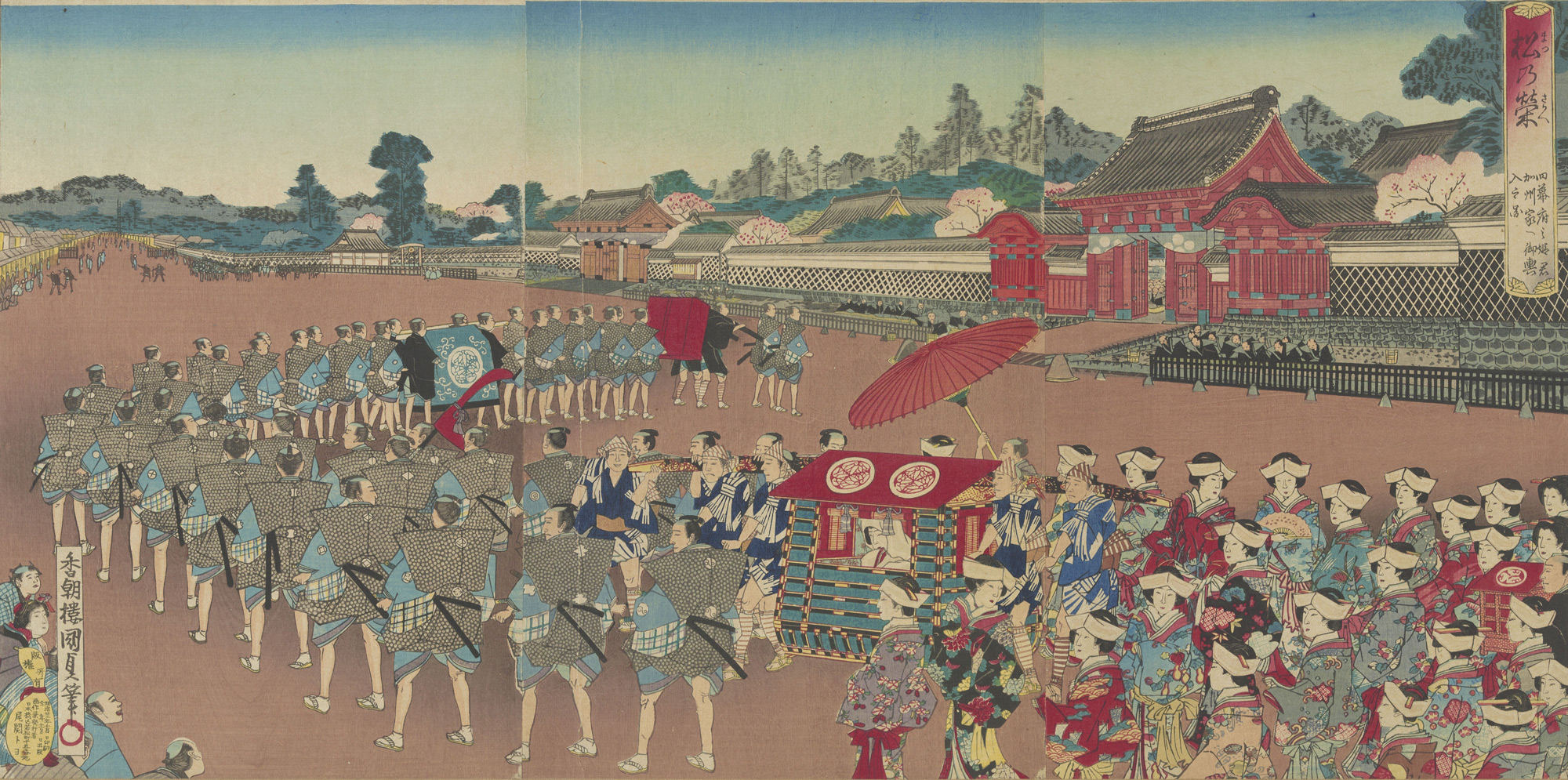
Built in 1827, during the late Edo period, the University of Tokyo’s Akamon Gate is now a nationally designated Important Cultural Property that is undergoing seismic reinforcement work. Even during that earlier time in Japanese history, with a rich culture of wooden buildings, procuring the large pieces of timber needed for the gate’s construction must have been a major challenge. For the third and final installment of our series on the university’s iconic red gate, we spoke with Associate Professor Satoshi Unno, an architectural historian from the Department of Architecture, on Akamon and Japan’s wood and forest culture.
Precious wood underlying red facade
To begin with, what kind of wood species was used for Akamon’s pillars? Over the years, they have often been described as sturdy zelkova or beautifully grained Japanese hinoki cypress. However, as Unno explained, “Identifying a tree species with certainty would require taking a section of the wood, preparing a slide and examining it under a microscope. Visual inspection alone is far less accurate. In the case of Akamon, the pillars have been painted over, which makes identification even more difficult.” As a result, it is not possible to say with absolute certainty what type of wood was used to build the famous gate.
“That said, I think it’s highly likely that the pillars are made primarily of hinoki,” Unno added. “Traditionally, hinoki has been the wood of choice for high-quality architecture in Japan. Zelkova tends to be used more selectively, for example, in temples where specific elements are intentionally made from zelkova.”
In his book examining the history of Japan through the country’s enduring wood culture , from the perspective of architecture and the supply chain of materials, among other aspects, Unno describes how difficult it was to procure large timbers during the reconstructions of the Great Buddha Hall (Daibutsu-den) at Todai-ji Temple in Nara during the Kamakura period (1185-1333) and Edo period (1603-1867), after the temple had been destroyed by fire in 1180 and again in 1567. Horyuji Temple, also in Nara, dating back to the 7th century and recognized as housing the world’s oldest surviving wooden building, is also known for its extensive use of hinoki.
Large trees suitable for building temples, shrines and castles have been difficult to come by in any period. How, then, were the timbers for constructing Akamon sourced?
Unno explained: “The timbers used for a structure like Akamon are far larger than those typically used in ordinary houses. Materials of that size would not have been readily available on the market. Throughout history, it is quite possible that large timbers had to be specially secured for such projects.”
There are accounts suggesting that during the Edo period, many feudal domains transported timber from forests in their own territory all the way to the capital, Edo (now Tokyo). How, then, did the Kaga Domain, builders of Akamon at its Edo residence, obtain the necessary wood? Forestry was not particularly developed in the Kaga Domain, and transporting timber from its lands (300 kilometers or more to the northwest of Edo) to the capital would have required a long sea route via the Sea of Japan. On the other hand, Unno noted, “Compared with other domains, the Kaga Domain was economically wealthy. That would have made it feasible to obtain timber through the market as well. It is quite possible that the materials were secured through financial means.” That said, no records detailing the procurement of timber for Akamon have been found, and how the materials were actually obtained remains a mystery.
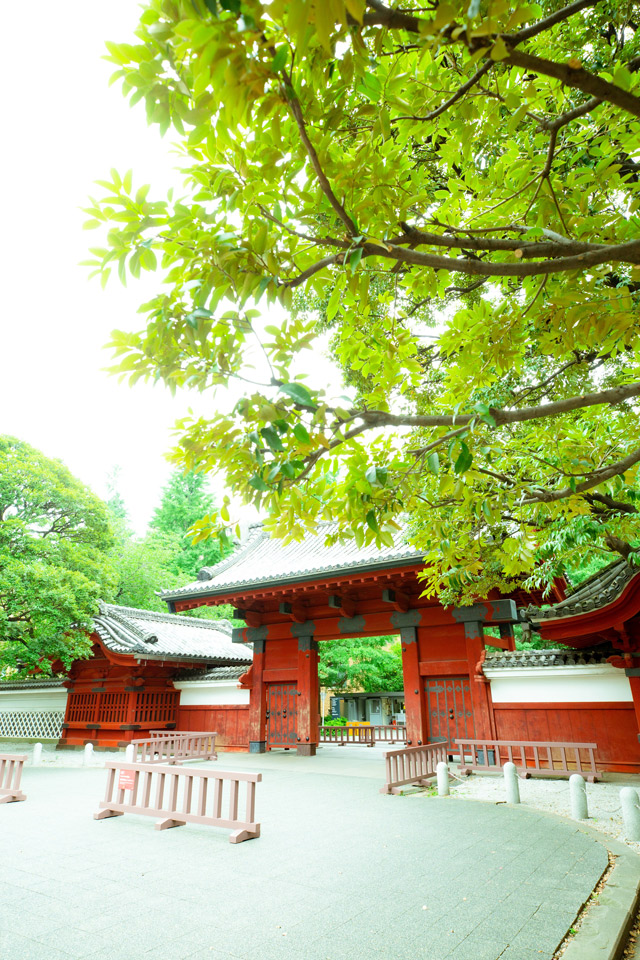
Akamon also reveals ingenious ways in which precious timber was used efficiently.
Unno pointed to one such example: “When viewed from the front, the central pillars appear remarkably wide. However, their depth is actually quite shallow. This is a technique often used in castle gates. It creates the illusion that the pillars are massive columns, when viewed from the front, and the gate takes on a castlelike quality. What I find especially fascinating is how this refined ingenuity reflects the extent to which the Maeda clan paid attention to detail in welcoming Princess Yo-hime into the family.” (As described in Part 1, Akamon was a gate built at the Edo residence of the Maeda clan of the Kaga Domain to welcome a daughter of the Tokugawa shogun, Princess Yo-hime, as the bride of the 12th lord of the domain, Maeda Nariyasu.)
Unno continued, drawing attention to the rear of the gate: “If you look at the back, you’ll notice irregularly shaped beams called ushibari. These are not neatly squared timbers, but rough, unrefined materials, called nomono, in the construction trade.
“This approach is commonly seen in castle architecture. In temples, the timber is more often carefully squared and finished. The use of such rough materials gives Akamon the robust character typical of samurai or daimyo (feudal lord) residences. Part of its appeal is that it’s not just orderly and refined.” One finds interesting things to see in the back as well.
“The guard posts, called bansho, on either side of the gate are adorned with roofs in the karahafu style, featuring an arched gable with undulating bargeboards, which are built symmetrically,” Unno added. “The gate itself is not especially large, but when you take the bansho into account, you can see how much attention went into the design of the entire frontal facade.”
We could say Akamon was built with great care and craftsmanship.
Reflecting on the meaning of erecting elaborate gates, Unno offered this analysis: “Over the course of history, grand gates have been built across all countries and eras. However, over the past century or so, their meaning has been lost significantly. In particular, the functions traditionally associated with gates, such as closing off space, asserting presence and projecting grandeur, now tend to be seen as authoritarian and are viewed negatively in the modern world.”
He also noted another important aspect. “If a grand gate were to be built today, it would very likely be met with criticism. People would question the worth of pouring so much financial resources into building such a structure. Precisely for that reason, it is all the more important to preserve and make good use of significant structures that were built in the past.”
From daimyo residence to university campus
We asked Unno what overseas visitors who may come to see Akamon should look out for.
“First of all, I would like people to appreciate that such a substantial structure was built entirely of wood. Wood is used in architecture in many countries, but often the walls are made of earth, brick or stone, with wood used mainly for roof structures. In contrast, Akamon clearly reflects a tradition of wooden architecture in which the structure is built primarily of timber from the ground up. I hope visitors will take a close look at how the wooden elements are joined together, as well as the refinement of the decorative details and the remarkable precision of the craftsmanship.
“Another important aspect is, by seeing the gate was built entirely of wood, I would like people to know that this reflects a rich tradition of wood culture in the Japanese archipelago at the time, and it was supported by abundant forests. I mentioned earlier about the use of large timbers, or design choices such as making the front view of the wood appear wider. Using large, fine-quality wood was a symbol of economic prosperity, and wealth is also expressed in the careful and detailed use of materials throughout the structure. If visitors view Akamon as a symbol of a culture rooted in wood and forests, I think they will find it all the more fascinating.”
Unno pointed to a third perspective. “Originally, this site was the Edo residence of the Maeda clan of the Kaga Domain, but today it forms part of the University of Tokyo campus. In that sense, Akamon vividly illustrates layers of history accumulated over time. Together with Sanshiro Pond on the campus, it conveys the atmosphere of the Edo period. A vast daimyo estate was transformed into a public institution, a university. In other words, one can experience Japan’s modernization, the transition from Edo to Tokyo, within the university. Standing before Akamon, visitors can sense the passage of time itself and understand the significance of the gate.” That holds true not just for visitors from overseas but anyone else who encounters Akamon and experiences that.
The conservation work on Akamon is scheduled to be completed around the autumn of 2027. A fund drive to raise 1 billion yen to cover conservation costs is now underway. According to Associate Professor Akira Matsuda, whom we interviewed in Part 1 of this series, there has been talk of holding an opening ceremony once the conservation is complete and Akamon is ready to be reopened to the public. As the gate’s massive doors are solemnly opened, one cannot help but wonder if someone will call out: “Open the gate!”
Once the conservation is complete, Akamon will resume its original role of being opened in the morning to let in university faculty, staff and students, and be closed again in the evening. Although it is designated as an Important Cultural Property of Japan, people from outside the university will also be able to see and pass through the gate. In the Edo period, when Akamon was originally built, it was an exclusive gate reserved for people of high social standing, like Princess Yo-hime. Ordinary people would not have been permitted to pass through the gate, had the social order of the Edo period remained, as Unno noted. Reflecting on how times have changed, there’s something poignant about that.
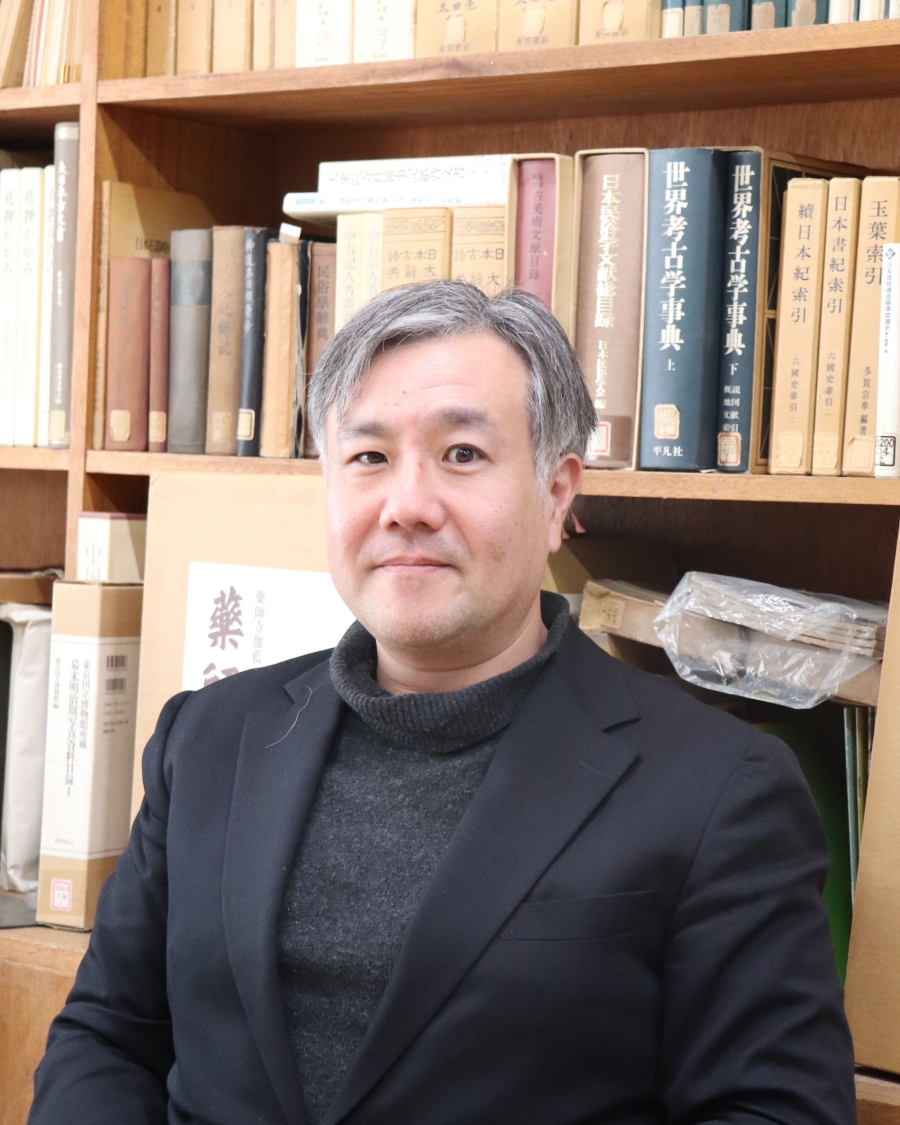
Satoshi Unno
Associate Professor, Graduate School of Engineering
Obtained Ph.D. in architecture from Graduate School of Engineering, the University of Tokyo. Specializes in history of Japanese architecture and preservation of cultural properties. Prior to current role, held position at Nara National Research Institute for Cultural Properties. Authored works include Kokenchiku wo uketsugu (“Inheriting Traditional Architecture Forward - Japanese Architectural History from the Perspective of Maintenance”) (Iwanami Shoten, 2024), Kokenchiku wo fukugen suru (“Reconstructing Ancient Constructions - A Bridge between the Past and the Present”) (Yoshikawa Kobunkan, 2017), among others.