



About the lecturer
| My research focuses on political institutions, particularly electoral systems, constitutional design, and public attitudes towards institutional change. More recently, I have been working on the effects of the COVID-19 pandemic on Japanese politics. I am an Irish national who was raised in Tokyo. I received my BA in public policy from Princeton University and PhD in political science from Stanford University, and previously taught at the University of Michigan, before moving to UTokyo in 2015. | 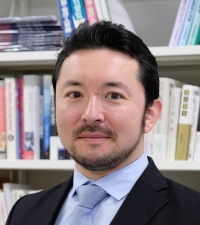
Prof. Kenneth Mori MCELWAIN
|
Introduction video
Syllabus
| 1 | Subject | Japanese Politics in a Changing World |
| 2 | Field | Political science |
| 3 | Key words | Democracy; political institutions; public opinion; political parties; policymaking |
| 4 | Global Unit | 1 |
| 5 | Lecturer | Kenneth Mori MCELWAIN |
| 6 | Period | July 13 - 27, 2026 |
| 7 | Time | 10:30 -12:00 (Japan Standard Time) |
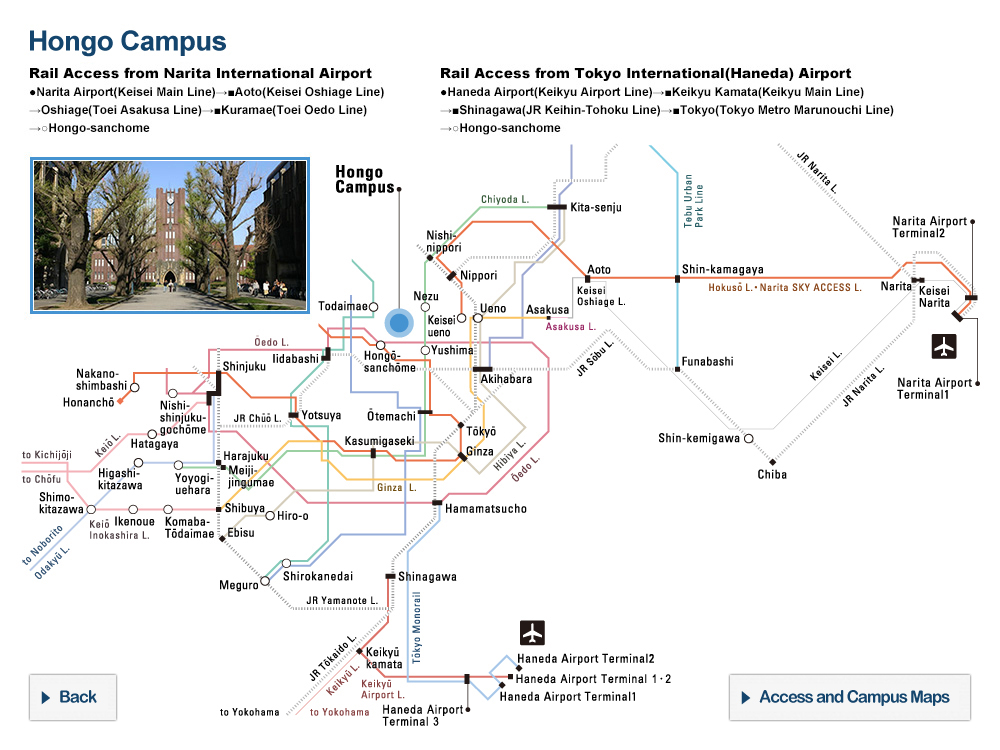
| 8 | Lecture style | In-person (on Hongo Campus) |
| 9 | Evaluation Criteria | Excellent (S) 90 –100%; Very good (A) 80–89%; Good (B) 70–79%; Pass (C) 60–69%; Fail (D) 0–59% |
| 10 | Evaluation methods | Class Participation: 50% One Research Report: 50% |
| 11 | Prerequisites | None |
| 12 | Contents |
Purpose
This course examines how Japan’s political system responds to major domestic and global challenges. Adopting a comparative perspective, we will explore how political institutions, social structures, historical legacies, and international forces have shaped Japan’s postwar development and continue to influence its policy choices today. Core themes include economic growth and stagnation, demographic change, gender and social inequality, immigration and integration, energy and environmental policy, and security in a shifting regional order. Students will analyze how political actors—voters, parties, bureaucrats, and interest groups—form preferences and make decisions within Japan’s institutional and historical context, and why meaningful reform has often proved difficult. By combining short lectures with structured discussion, the course encourages participants from diverse backgrounds to reflect on how Japan’s experience connects to broader global trends and to develop comparative insights into contemporary politics. Description
Each session blends a short lecture (~40 minutes) with small-group discussions (~20 minutes) and a concluding whole-class debrief (~30 minutes). This format introduces key concepts and empirical findings while giving students the opportunity to engage actively with the material, compare Japan with other political systems, and learn from the diverse perspectives represented in the classroom. The combination of lecture and discussion is intended to deepen understanding of both the historical foundations of Japanese politics and the contemporary challenges it faces. Schedule
1. The 1955 System: Institutions and Single-Party Dominance
2. Postwar Economic Development
3. Political Reform and Its Limits
4. Economic Stagnation and the Lost Decades
5. Gender, Families, and Demographic Change
6. Inequality and Social Mobility
7. Immigration and Social Integration
8. Energy and Environmental Politics
9. International Security and Regional Order
10. International Trade and Cooperation Assignments
Students will be evaluated on active participation in class discussions and group activities, as well as a short research report (approximately 1,000 words) submitted after the end of the term. For the report, students may choose either to assess how Japan’s level of democracy has changed over the past two decades or to analyze a contemporary policy dilemma by identifying the factors that impede effective solutions.
|
| 13 | Required readings | Will be provided through the Canvas (LMS) in advance. |
| 14 | Reference readings | - |
| 15 | Notes on Taking the Course | - |
UTokyo Global Unit Courses (GUC)
------------------------------
International Education Promotion Group, Education and Student Support Department
The University of Tokyo, 7-3-1, Hongo, Bunkyo-ku, Tokyo 113-8652 JAPAN
------------------------------
For inquiries regarding GUC
------------------------------
After carefully reviewing all information on the top page—which may address most of your questions—if you are unable to find relevant information, please direct your inquiries to the following email address:
utokyo-guc.adm(at)gs.mail.u-tokyo.ac.jp
(Please replace “(at)” with “@”.)
*Please note that, in order to ensure fairness to all applicants, the GUC Office does not provide any individual guidance beyond the information available on the website.