


令和8年度 東京大学秋季入学式 総長式辞
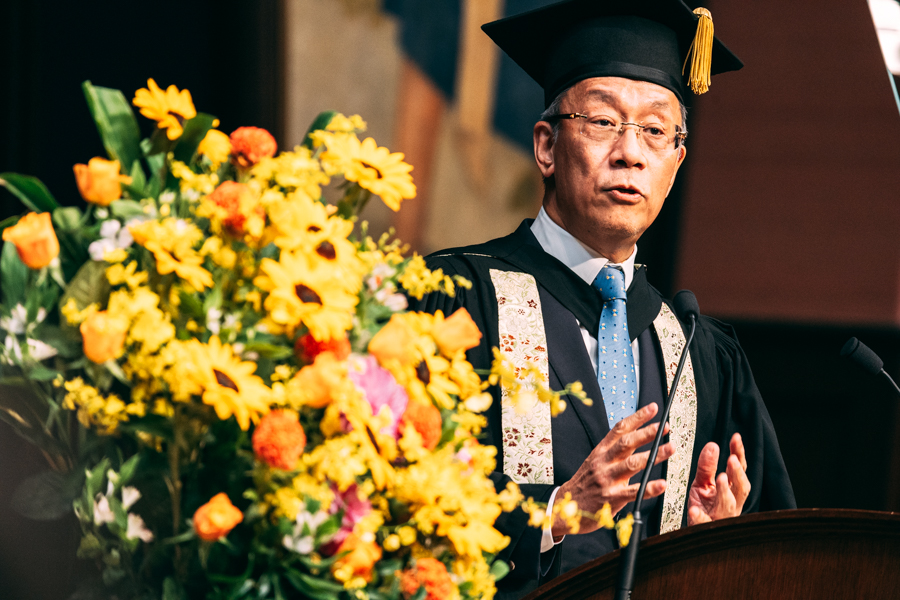
Address by the President of the University of Tokyo at the AY 2026 Autumn Semester Matriculation Ceremony
To all of our new students, congratulations on your admission. On behalf of the faculty and staff of the University of Tokyo, I offer you my warmest greetings. I am truly delighted that we can welcome you as new members of our community.
I am speaking to you now in English, and much of the research we communicate to the wider world is also in English. But just as my own first language is Japanese, many of you, too, have a first language other than English. Some of you may find yourselves using three languages in Japan: English for your academic work, Japanese for everyday life, and, with your family and some of your friends, the language you grew up with.
Languages are vital tools that support human imagination and creativity. With that in mind, I would like to reflect today on what it means to translate between languages.
In recent years, machine translation has improved greatly thanks to advances in artificial intelligence. With just a smartphone app, you can now translate text and speech in an instant. Some people even say there is no longer any need to study other languages. But we should be aware that not even the most advanced language models, nor the best human translators, can carry over, with complete accuracy, everything that a word brings with it. The cultural background and the nuances of words can be very difficult to convey.
Let me give some examples from baseball, one of the most popular sports in Japan. Some baseball terms have been translated into Japanese based on their meaning. “First base,” for example, is called ichirui, which means “one” and “base.” And the “outfield” is called gaiya. But when describing how the pitcher throws the ball, we just use transcriptions of the English words into katakana, such as kābu for a curve and suraidā for a slider.
Another pitch is called a fōkubōru, or “forkball.” Its name comes from how the pitcher grasps the ball between the forefinger and middle finger—like a fork. There’s also a pitch called the “knuckleball” in English and nakkurubōru in Japanese. It got its name from pitchers who held the ball with their knuckles when throwing it.
Does anyone know what we call the knuckles in Japanese? In fact, we don’t have any word that corresponds exactly to “knuckles.” Yes, we do have words like kansetsu and fushi, but neither is limited to finger joints. They can refer to seams and divisions of various kinds. To refer to the knuckles in Japanese, we have to use phrases like yubi no daiichi kansetsu, or “the first joint of a finger,” or yubi no fushi —“the fushi of the fingers.”
In fact, this word fushi has a wealth of meanings all its own. It can refer to a tune or melody, and it can mean a juncture in time. Indeed, we might call today’s ceremony a fushime, a turning point, in all of your lives.
Every word in a language has its own distinctive range of meanings, and each is used within its own web of associations. Even when a word is borrowed directly, it rarely carries over the exact same resonance it had in the original language.
Consider, for instance, the English word “design.” In Japanese today, it is firmly established as dezain, a katakana word based on the English pronunciation.
Why did Japanese end up borrowing “design” as dezain rather than settling on a Japanese translation?
The story goes back to the beginning of the Meiji period, about a century and a half ago. At first, “design” was translated with words written in kanji, such as zuan, which means “a drawn plan,” and ishō, meaning roughly “a creative conception.” In the late 1880s, as part of a national drive to develop industry, the government began giving legal protection to original shapes and patterns, and the term it used was ishō. That word came into common use, but its meaning gradually diverged from that of the English “design.” Today, while ishō is still used in legal contexts and in discussions of art and architecture, dezain is much more common in everyday life. Because the English word covers such a wide range of uses, most Japanese speakers today feel that simply borrowing it as dezain works better than any translation.
But how should we understand “design” in either language? Ultimately, I believe that the essence of design is the creation of new forms, whether tangible or intangible. When we design, we combine various elements and materials in new ways, sketch our ideas in drawings and plans, and evaluate the results. People do not seem to have been able to find a word in Japanese with just that meaning, so we have simply transcribed the sounds of the English “design.” But merely transcribing the English word in katakana did not lead to a deep understanding of the concept.
Now, if translation is not simply the act of replacing one word with another, then what is it?
Translation means working out, for each particular context, a meaning that our own language and another language can share. It forces us to create forms that our own language did not have before. It requires us to build enough common ground to understand one another. It is an act of imagination and interaction, the transformation of both language and ourselves. Seen in this way, what lies at the heart of translation is a kind of design through dialogue.
Translation in this sense is found not only in the cultural realm of human language. A strikingly similar pattern appears in biology. Life also depends on translation, on dialogue, on the capacity to respond and change. Indeed, biologists use the term “translation” to refer to one of life’s basic processes.
The adult human body consists of roughly thirty trillion cells. Many different types of cells share essentially the same DNA. But think how different they are: the nerve cells that carry electrical signals, the immune cells that fight pathogens, the muscle cells that move the body. How can the same genetic information give rise to cells so different and so diverse?
Inside a cell, part of the information written in the DNA is first copied out into messenger RNA. This is called “transcription”—the same word, as it happens, that I used earlier when talking about writing English words in katakana. Next, the bases lined up along the RNA are read three at a time, and the amino acids that correspond to each triplet are joined together to make a protein. This is the process biologists call “translation.” Information written in the alphabet of nucleic acids is carried over into a completely different material system: proteins, which are made of amino acids. In that respect, it resembles translating from one language into another.
But cells do not use all the information in their DNA in the same way. Depending on the type of cell, its location, and its condition, only the necessary genes will be transcribed. If we compare DNA to a vast library, the various kinds of cells have access to essentially the same collection of books. Yet each cell type consults only certain shelves, reads only specific passages, and puts that knowledge to work in distinct ways. That is why the same DNA can give rise to nerve cells, immune cells, and muscle cells, cells that differ in both their nature and their function.
Of course, the diversity of cells does not make up the whole of a living organism. A body functions as a single living being only when its diverse cells tell one another their condition and respond to each other. Dialogue among cells is essential.
Cells send signals to other cells nearby and to distant organs through chemical messengers and tiny membrane-wrapped packages, including those known as exosomes. This mechanism resembles the sending and receiving of words. Cells transmit messages to each other, and each responds based on its own condition. Through this dialogue, at many different levels, the work of the cells is coordinated, and the tissues, the organs, and finally the whole organism take on new forms in response to the changing environment.
Here we come back to the word “design.” One quality of design deserves fresh emphasis: it means to make something new, something that has not yet taken form, something that has never existed before. Just as the final form of a living organism is not determined by DNA alone, design does not mean drawing a complete blueprint at the outset and then building something according to that plan. Design is a continuing process of renewing the plan through dialogue, conceiving and creating new forms, again and again.
The same applies to dialogue between people. If each of us simply keeps transmitting our own views, that is not dialogue. We need to be ready to listen to what other people say. Dialogue is not only a means of persuading others. It is the work of taking in their responses, renewing our own understanding and ways of thinking, and coming to understand one another better.
UTokyo Compass, the statement of the University of Tokyo’s guiding principles, identifies “Creation through Dialogue” as one of our core values. Those of you joining us here this autumn bring with you different languages, cultures, fields of study, and experiences. In the weeks and months ahead, in both your academic work and your daily lives, you will encounter many words and situations that you will not understand right away and that cannot be fully translated. When that happens, I hope you will not simply give up because you do not understand. Keep pursuing what seems unclear, search for the words that will help you grasp it, and do not be afraid of being changed yourself.
Design embraces creation and dialogue at many different levels. Next year, the University of Tokyo will establish the new UTokyo College of Design, or UT/D. Its motto is “See the World Through Design. Then Change It.” In the college, students will learn entirely in English. The college will build on what traditional disciplines have established over the years at UTokyo and, through dialogue, create a vision of a future in which diverse people live together in resonance. With that vision, UT/D will send out into the world new forms that bring about just and fair change.
Translation, as we have seen, is a dialogue with others who differ from us. It is also a dialogue with the languages we carry within us.
Beginning today, all of you will share a home here at the University of Tokyo. Driven by your eagerness to learn and your lively curiosity, you will enter into dialogue with people from many different backgrounds. I am confident that this will be a wonderful experience for you, something that nothing else could replace.
Some people may be starting to forget, but six years ago the COVID-19 pandemic prevented us from gathering as we do here today. Nearly all of our classes and ceremonies were held remotely. Online meetings can be convenient, of course: they let people who are far apart have discussions in real time. But seminars, experiments, research meetings, and other gatherings held in person are irreplaceable in their own way. The dialogues we conduct in shared space and time are, I believe, like small miracles.
When this ceremony is finished, try striking up conversations with the people sitting near you. Something very valuable may emerge. Whatever the language, as long as we have the desire to understand one another, we can enter into dialogue. And dialogue, above all, is what will carry us forward.
May your learning at the University of Tokyo be filled with dialogue of every kind, and may your time here be joyful and fruitful.
Once again, congratulations on your admission.
FUJII Teruo
President
The University of Tokyo
October 1, 2026
(和文)令和8年度 東京大学秋季入学式 総長式辞
新入生の皆さん、ご入学おめでとうございます。東京大学の教職員を代表して、心よりお祝い申し上げます。みなさんを、新たな仲間として迎えられることを、たいへん嬉しく思います。
私はいま、この式辞を英語で行っていますが、世界に向けた研究活動の多くは英語でなされます。しかし、私の第一言語が日本語であるように、みなさんの多くもおそらく英語とは異なる第一言語をお持ちでしょう。ここ日本で、アカデミックな活動に使う英語、生活に使う日本語、そして自分がそのなかで育ち身につけてきた言語と、3つの言語を使うことになる方も多いかもしれません。
言語が人間の想像力と創造力を支える大切な道具であることを踏まえて、今日は複数の言語間での「翻訳」について、考えてみたいと思います。
最近はAIの発展で、機械翻訳の機能がたいへん向上しました。スマートフォンのアプリケーションを使えば、瞬時に文字や音声を翻訳してくれます。それゆえ、もう外国語を勉強する必要がなくなったという人さえいます。しかし、大規模言語モデルによる翻訳でも、言葉の文化的背景やニュアンスまでがすべて完全に移し替えられているわけではないことに注意が必要です。
たとえば、日本でたいへん広く親しまれているスポーツに野球があります。ここで使われる用語は、first base が「一塁」、outfieldが「外野」という漢字を組み合わせた熟語に訳されています。これに対してピッチャーが投げる球種については、「カーブ」や「スライダー」など、カタカナの言葉が使われます。
球の握り方から名づけられたことばに「フォークボール」がありますが、これは人差し指と中指の間に球を挟みこむ様子をフォークに喩えたものでしょう。同じように、「ナックルボール」は、指の第一関節を使ってボールを握ることに由来しています。
このknuckleに対応する日本語を、どなたかご存知でしょうか?じつは、正確に対応する単語はありません。なるほど「関節(kansetsu)」「節(fushi)」という単語はありますが、これは指に限定されたものではなく、継ぎ目や区切りを広く指しています。knuckleを日本語で表現するとしたら、「指の第一関節(yubi-no-daiichi-kansetsu)」「指の節(yubi-no-fushi)」という合成語を使うしかありません。
さらに訳語の意味をたどっていくと、「節(ふし)」という日本語は「歌の旋律」の意味でも広く使われ、区切られ意味づけられた「時間」にまでいたる厚みがあって、たとえば、今日の入学式はみなさんの人生の「節目(ふしめ)」です、というような使い方をします。
つまり、単語はそれぞれの言語のなかで個性的な意味の広がりを有しており、いかなる言葉もその固有の網の目のなかで使われています。うまく訳せたように見えても、元の言語の体系における意味やニュアンスを、まったく同じように写しだせているわけではありません。このため一見すると元の言葉のまま日本語として使われている概念が、同じ意味を伝えているわけでない、ということが起こり得ます。
たとえば、「design」は今の日本語では「デザイン」という、英語の発音を写したカタカナの言葉で定着しています。
なぜでしょうか。
漢字を組みあわせた訳語として、明治初期には「図案(zuan)」や「意匠(ishou)」などの表現が工夫されました。知的財産の保護を目的に制定された1880年代末の「意匠条例」あたりから、「意匠」という語がよく用いられるようになりますが、現代の日本でデザインの訳語として、このことばを積極的に使っている人は少ないでしょう。消費社会の発展とともに「商業美術(shōgyō bijutsu)」や「工業図案(kōgyō zuan)」という領域が生まれ、昭和の時代に入ると服の形状や柄を工夫してつくったり、広告宣伝のポスターを制作したりするひとが「デザイナー」と呼ばれたりしたため、意味のズレは気になるものの、意匠よりもデザインという単語がそのまま日本語として使われました。designの英語の辞書の定義は ‘to make or draw plans’ ですから、明治19年(1886)に工学協会の『工学字彙(こうがくじい)』が「計画 keikaku(plan)」と翻訳したのは、ひとつの見識だったのかもしれません。原語のもつ、もっと広い意味がとらえられているからです。
結局のところ、日本語でも英語でも、デザインの本質は有形無形の新たなかたちを創りあげることであり、そのためにさまざまな要素や素材を組みあわせ、設計図に描きだし、検討していく実践を指したのですが、たぶんぴったりとあてはまる日本語の訳語を工夫することができなかった。それゆえに「デザイン」という音を写した言葉のまま、使われているわけです。しかし、カタカナ表記それ自体は音を模倣しただけの転写であり、新たなとらえ方や理解の仕方を生みだしてはきませんでした。
翻訳が、単なる言葉の置き換えではないなら、それはどんな実践なのでしょうか。
それは、ある「わからなさ」をめぐって、自分の言語と、他の言語とが重なりあって共有できる意味を、そのつど、その場でつくりあげる実践です。他の言語と「共有できる意味をつくる」とは、つまり双方が、その言葉において「わかる」という状況をつくりだすことです。だから、それまでの自分の言語にはない、新しいかたちを生みだすことも求められます。自分をtransformすることが必要になるのです。
そう考えると、翻訳の根幹にあるのは、まさに対話を通したデザインであると言えるでしょう。
他者を理解し、自分自身もまた変わっていくという営みとしての翻訳は、言語という文化現象だけにみられるものではありません。物質的で身体的な生命現象もまた、翻訳と対話、そして自らの更新によって成り立っています。
人間の成人の体は、およそ30兆個の細胞からできています。それらは、ほぼ同じDNAを持っています。にもかかわらず、電気信号を伝える神経細胞、病原体と戦う免疫細胞、体を動かす筋肉細胞など、なぜ同じ遺伝情報から、これほど異なる多様な細胞が生まれるのでしょうか。
細胞の中では、まずDNAに書かれた情報の一部がRNAへと写し取られます。これを「転写」といいます。次に、RNAに並ぶ塩基を三つずつ読み取り、それに対応するアミノ酸をつなげて、タンパク質を作ります。この過程が、生物学でいう「翻訳」です。核酸という文字で書かれた情報を、アミノ酸からなるタンパク質という別の物質の体系へと移し替える、まさに一つの言葉を別の言葉へ翻訳するような過程です。
しかし、細胞はDNAに書かれた情報を一律に転写、すなわち直訳しているわけではありません。その時、その場所、その状態に応じて、必要な遺伝子だけが転写され、翻訳されます。DNAを大きな図書館にたとえるならば、細胞はまず、どの本を手に取るかを選びます。しかし、その本のどの部分を読み、どのように用いるかは、それぞれ異なります。同じ図書館ですが選ぶ本と読み方が異なるからこそ、同じDNAから神経細胞、免疫細胞、筋肉細胞といった性質も働きも異なる多様な細胞がうまれるのです。
もちろん、細胞の多様性が存在するだけで、生命体の全体が成り立つわけではありません。多様な細胞が互いの状態を伝え、応答しあって初めて、一つの生命として機能します。その鍵となるのが、細胞同士の対話です。
細胞は、ホルモンやサイトカイン、神経伝達物質による伝達、さらにはエクソソームなどの細胞外小胞などを介して、周囲の細胞や離れた臓器へと情報を伝えています。このメカニズムは、言葉の発信や受信になぞらえることができます。細胞は互いにメッセージを送りあい、受け取った細胞は自らの状態に応じて応答します。まさにdialogue、対話です。そうした、いくつものレベルにおける対話の積み重ねによって、細胞の働きが調整され、組織や臓器、さらには生命全体の状態、すなわち新しいかたちが、その時々の環境に応じてつくられていきます。
ここに、designという言葉の、あらためて強調すべき特質を見ることができます。すなわち、まだ「形」になっていない新しいものを作りだす、これまでにないものを描き出すということです。生命におけるdesignとは、最初に完成図を描き、その通りにすべてをつくることではないからです。DNAという設計図だけで生命の完成形が決まるわけでもありません。対話を通して計画を更新し、新しいかたちを構想し作りつづける営みでもあります。
人と人の対話も、同じでしょう。自分の考えを発信し続けるだけでは、対話になりません。相手の言葉を受けとめる用意が必要です。対話とは、相手を説得するためだけのものではありません。相手の応答を受けとめて、自分の理解や考え方を更新し、わかりあう営みです。
東京大学の基本方針であるUTokyo Compassにおいても、「対話から創造へ」を、そのコアバリューの一つに掲げています。異なる言語、文化、専門、経験を携えて、この秋、東京大学に集まったみなさんは、学術的にも日常的にもこれから多くの、すぐには理解できない、翻訳しきれない言葉や出来事に出会うでしょう。その時、わからないとあきらめてしまうのではなく、理解するための言葉を探し、時に自分自身が変わることを恐れず、向きあうことが大切です。
すこしふりかえっただけでも、「デザイン」とはさまざまなレベルでの創造と対話を含む言葉であることがわかります。東京大学では、2027年にUTokyo College of Design(UT/D)を設立する予定ですが、その標語は See the World Through Design. Then Change It.です。すべての学びを英語で行い、既存のさまざまなディシプリンの蓄積を継承しつつ、対話を通じた響存の未来ビジョンを創りあげることを通じて、公正な変革のための新しいかたちを世界に発信していく、UT/Dはそうした取り組みです。
すでにお話ししたように、翻訳は自分と異なる他者と対話することであり、自分のなかにすでに身につけている言葉と対話することでした。
みなさんは、これから東京大学という同じ場所を共有し、高くまた強い向学心と旺盛な好奇心とをもって、さまざまな友人たちと対話することになるでしょう。それは、何にも代えがたい素晴らしい経験になると、私は確信しています。
もうすでに忘れかけている人が多いかもしれませんが、6年前はCOVID-19のパンデミックの影響で、授業も式典もほとんどがオンラインで行われました。もちろん、オンライン会議は遠く離れた場所にいる人々が同時に議論することができる、たいへん便利なツールです。しかし、対面でなされる演習や実験や研究会などにもまた、かけがえのない価値があります。同じ時間と空間とを共有してなされる対話は、じつは小さな奇跡のようなものだと思います。
この式が終わったら、すぐにでも隣の人と話してみると、なにかが始まるかもしれません。どの言語であっても、お互いを理解しようとする意思がある限り、私たちは対話することができます。そして対話こそが、前に進む原動力になるでしょう。
みなさんの東大での学びが、さまざまな対話に満ち、楽しく稔り多いものとなることを願っています。
入学、おめでとうございます。
令和8(2026)年10月1日
東京大学総長
藤井 輝夫
関連リンク
- カテゴリナビ